





Restoring an old light safely: cable, lampholder, earth
 By the Alméa team
7 min read
Sommaire
Restoring an old light safely is possible: clean rewiring, a new lampholder, an earth connection when the light is metal, and the good sense to know when to give up. Here is the method for bringing a family lamp or a second-hand chandelier back to life without taking risks.
Lights from the past often have beautiful materials and real presence. Their electrical parts, on the other hand, have aged: hardened insulation, worn lampholders, no earth wire. The good news is that these parts are easy and cheap to replace.
This guide helps you make the diagnosis, choose the right parts and decide whether to do it yourself or hand the job over.
Contents
1. Restoring an old light: start with the diagnosis
Before buying a single part, examine the light unplugged, in good light. The diagnosis decides everything: a simple rewire, a more extensive restoration, or a light to keep as a decorative object.
| What you see | Diagnosis | Action |
|---|---|---|
| Stiff, cracked or sticky cable | Insulation at the end of its life | Rewire completely |
| Blackened, cracked or loose lampholder | Worn lampholder | Replace the lampholder |
| Metal light with 2-core cable | No earth | Rewire with 3-core cable and earth |
| Deeply rusted structure, broken weld | Questionable strength | Have it repaired or give up |
| Switch that sticks or crackles | Worn contact | Replace the switch |
2. What wears out over time
Three things age badly. Rubber insulation hardens and then cracks, especially near the lampholder, where the heat of old bulbs baked it for years. Bakelite lampholders become brittle. Connections oxidise and work loose. A light can seem to work perfectly while having cracked insulation inside the base.

To place your piece in its era, our guide to the vintage wall light describes the styles, from Art Deco to the 1970s.
3. Dismantling without breaking anything
Take photos at every step: when reassembling, they are worth more than any instructions. Keep screws and small parts in little dishes, in order. Glass parts and shades come off first. If the light is still fixed to the wall or ceiling, follow our method for removing a wall light without breaking anything.
4. Choosing the new cable
For a light, flexible cable of 0.75 mm² per conductor is the standard. Choose 2 cores for a Class II or all-insulated light, and 3 cores including green and yellow for a metal light that needs to be earthed.
| Cable | Use | Look |
|---|---|---|
| Flexible PVC cable 2 x 0.75 mm² | Insulated light, wooden or ceramic lamp | Discreet, white, black or clear |
| Flexible PVC cable 3 x 0.75 mm² | Metal light with earth | Discreet |
| Fabric cable 2 or 3 x 0.75 mm² | Exposed pendant, retro lamp | Very decorative, many colours |
Fabric cable gives an old piece back all its character: see when to show off exposed fabric cable. Always replace the cable along its whole length, never in pieces.
5. Replacing the lampholder
Identify the original fitting, most often E27 or E14, and choose a new lampholder with the same fitting, suited to the material and the diameter of the tube. Thermoplastic or ceramic lampholders are perfectly suitable. Connect the live to the centre contact of the lampholder and the neutral to the screw thread: this is the recommended practice, because the centre contact stays out of reach of your fingers when you screw in the bulb. For the fitting, see our guide to the E27 bulb.
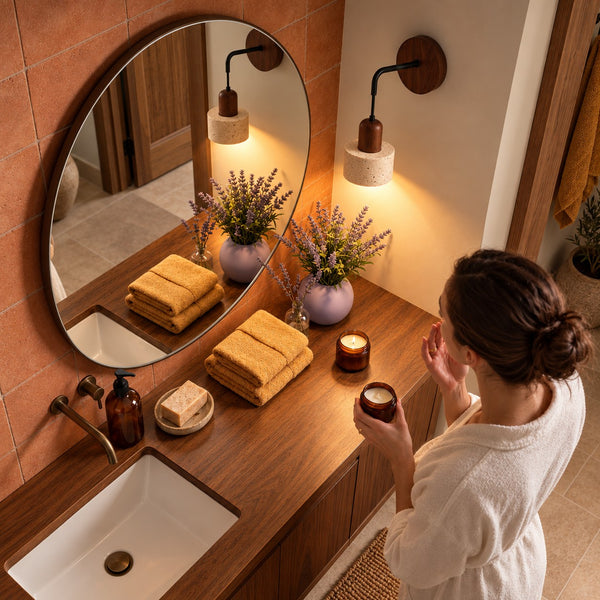
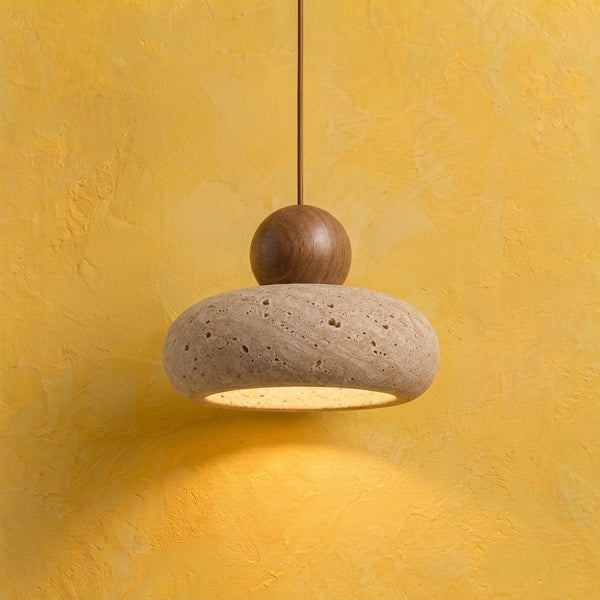
A light with a retro spirit, with a modern-day installation.
Discover our pendant lights6. The cord grip: the part people forget
If the cable is pulled, the lampholder screws should not take the strain. A cable clamp or cord grip, often built into the lampholder, holds the cable before the connections. On a pendant, it carries the weight of the shade. Never replace it with a simple knot jammed into a metal part with sharp edges.

7. Earthing metal lights
A light with a metal structure must be earthed, unless it is double insulated. The green and yellow wire connects to the earth terminal or screw provided on the structure. If there is none, an electrician can add one. Leave the earth wire slightly longer than the other two: if the cable is ever pulled out, it will be the last to go.
| Light | Cable | Connection |
|---|---|---|
| Metal (brass, iron, copper) | 3 cores | Earth on the structure, compulsory |
| Wood, ceramic, glass, stone with no accessible metal part | 2 cores possible | Live and neutral |
| Mixed with accessible metal parts | 3 cores | Earth on each accessible metal part |
Our articles on Class I and Class II, on wiring with 3 wires and without an earth wire complete this point.

8. Reassembling and testing
Reassemble following your photos. Tighten each terminal firmly without crushing the copper, and check that no strands are sticking out. With a multimeter, check that there is no continuity between the live or neutral and the metal structure, then that the earth is continuous right through to the metal. For connecting to the ceiling, a plug-in ceiling connector (DCL) makes fitting and removal easier.
9. Choosing the bulb for the restored light
An old light was designed for bulbs that gave off a lot of heat. Switching to LED is kinder to the new wiring, the lampholder and fragile materials. An LED filament bulb keeps the period look with warm light and less heat.

10. When to give up
Some lights are not worth the risk. Give up, or hand the job to a professional, in these cases:
- the structure is deeply rusted, cracked or can no longer take the weight;
- the light contains old heat insulation of unknown composition: do not touch it and do not sand it;
- the original paint is flaking and would need sanding: protect yourself or have it done;
- the glass is cracked near the bulb;
- the wall or ceiling fixing is not suited to the weight.
A light that can no longer give light can still be a beautiful object. And to replace it, our guide to replacing an old light with a modern wall light takes you through it step by step.
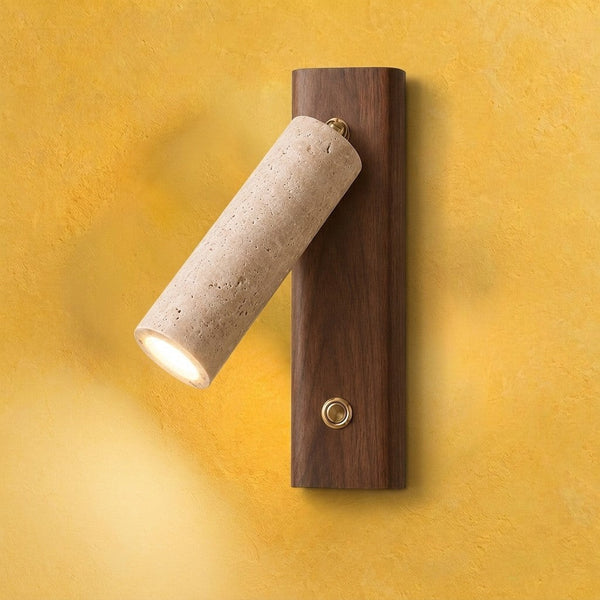
The charm of vintage metal and wood, without the wiring worries.
See our wall lights11. In short
Restoring an old light safely comes down to five steps: diagnose, rewire completely in 0.75 mm², change the lampholder, connect the earth if the light is metal, then test before plugging it back in. And know when to give up if the structure or materials raise questions. Reread the 8 electrical safety reflexes before you start.
Frequently asked questions
How do you rewire an old lamp?
Unplug it, dismantle it while photographing each step, replace the cable along its whole length in 0.75 mm², change the lampholder if it is worn, then reassemble and test before plugging it back in.
What cable size for a light?
Flexible cable of 0.75 mm² per conductor suits household lights. Use 3 cores if the light is metal.
Does an old chandelier need an earth?
Yes, if it is metal and not double insulated. The green and yellow wire connects to the metal structure.
How can you tell if an old light is dangerous?
A cracked cable, a split lampholder, scorch marks or a metal light with no earth are clear warning signs. In these cases, do not plug it back in before restoring it.
Can you put an LED bulb in an old light?
Yes, and it is even recommended. An LED runs cooler and is kinder to the wiring and the materials. Just check the fitting.
Where does the live go on a lampholder?
On the centre contact of the lampholder, with the neutral going to the screw thread. This is the recommended practice to limit the risk of contact when screwing in the bulb.
How much does it cost to restore an old light?
The parts, cable, lampholder and cable clamp, are inexpensive. The cost depends mainly on the time involved if you hand the job to a professional.
Do you need an electrician to restore a light?
It is not compulsory for a plug-in lamp, but it is recommended if in doubt. Connecting to the ceiling or wall follows the same rules as any installation: see our article on when to call an electrician.
Our lights for your home
Stone, wood, metal, rattan: real materials. Free delivery across the UK, returns within 90 days.
 -36 %
Marble wall light for bedroom, natural stone, alabaster white
£110.00
 -38 %
Natural stone wall light for living room, ambient lighting
£101.00
 -42 %
Travertine wall light for bedroom, natural stone, retro
£129.00
 -38 %
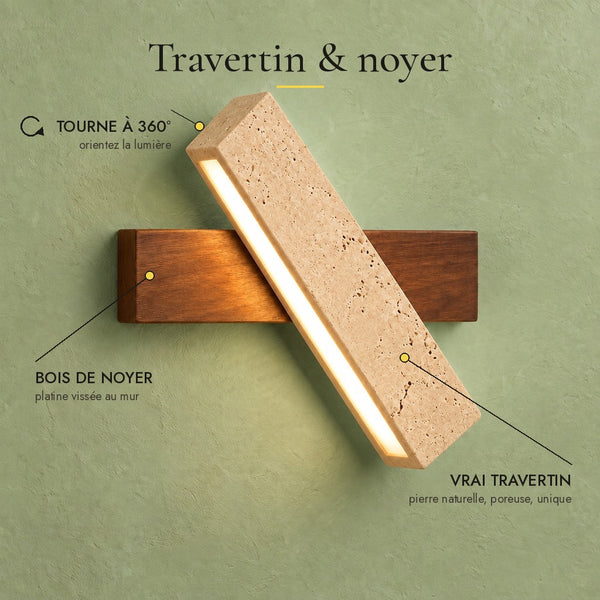
Travertine wall light for living room, natural stone, wabi-sabi
From £101.00
 Guide pratique
 Guide pratique
 Guide pratique