



Beige pendant light and beige chandelier: sand, linen, rattan or travertine
 By the Alméa team
7 min read
Sommaire
A beige pendant light is the softest way to dress a ceiling: it warms the light without imposing a colour. Sand, linen, rattan or travertine, single pendant or beige chandelier: this guide helps you choose the right shade and match it with your walls and woods.
Beige long had a reputation as a safe, almost bland colour. Natural interiors have rehabilitated it: pale stone, washed linen, woven fibres and light wood now make up calm, bright rooms.
On the ceiling, beige has an advantage that white does not: when lit, it gives the light a slightly warm tint. You still need to choose the right material and shade to avoid the dull effect of a badly matched beige.
Contents
- Why choose a beige pendant
- The shades of beige to know
- Which material for a beige light
- Linen and beige fabric
- Rattan and natural fibres
- Travertine and beige stone
- Matching a beige pendant with your walls
- Matching beige with wood
- The beige chandelier: when to choose several sources
- Which light under a beige shade
- In short
- Frequently asked questions
1. Why choose a beige pendant
A white light blends into a white ceiling, a black light cuts a sharp outline against it. A beige pendant sits between the two: it is visible without being stark, and it links the ceiling to the materials of the floor, furniture and textiles.
Beige is also an ally of warm light. A sand or linen shade, lit by a 2700 K bulb, gives a golden glow that flatters skin and wood. That is why it is found in every natural style, from Japandi style to boho. If you are torn between beige and a lighter shade, our guide to the white pendant light compares the two approaches.
2. The shades of beige to know
“Beige” covers a whole family. Identifying the shade of a light stops it looking yellow next to a grey sofa or pinkish next to an oak floor.

| Shade | Undertone | Typical materials | Effect |
|---|---|---|---|
| Cream, ivory | Very slight yellow | Light linen, paper, ceramic | Bright, almost white |
| Sand | Golden yellow | Rattan, light travertine | Warm, sunny |
| Natural linen | Soft grey | Raw linen, jute | Calm, soothing |
| Greige | Grey and brown | Fabric, matt ceramic | Contemporary, chic |
| Honey, straw | Orange | Dark rattan, bamboo, raffia | Rustic, holiday feel |
3. Which material for a beige light
The material decides how the light passes through or around the shade.
| Material | Light | Style | Watch out for |
|---|---|---|---|
| Linen, fabric | Diffuse, velvety | Classic, cocoon | Dust |
| Rattan, woven fibres | Filtered, shadows on the ceiling | Boho, natural | LED bulb essential |
| Travertine, stone | Mineral glow, downwards | Wabi-sabi, pared back | Check the weight |
| Paper | Milky | Japanese, minimalist | Fragility |
| Matt ceramic | Directed downwards | Handcrafted, kitchen | Opaque, lights the room less |
4. Linen and beige fabric
The linen shade is the beige light par excellence. Its slightly irregular weave softens the light and gives the ceiling a textile presence. Thick, dark linen filters more: it creates atmosphere but lights less, which you can make up for with lamps and wall lights. Pleated, straight or drum: the shapes are detailed in our guide to the fabric and linen pendant light.
5. Rattan and natural fibres
Rattan, bamboo, straw or seagrass offer a living beige, never uniform: each strand has its own shade. When lit, the pendant draws a network of shadows on the ceiling that brings the room to life. A tight weave gives a softer light, an open weave sharper patterns. Our guide to the rattan pendant light details shapes and sizes, and the one on straw, raffia and jute the other weaves.
A natural, woven beige that draws shadows on the ceiling: discover our rattan pendant lights.
See our rattan pendant lights6. Travertine and beige stone
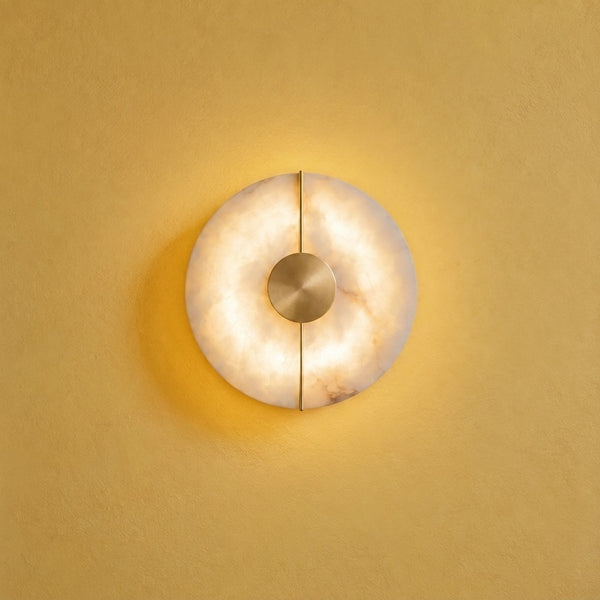
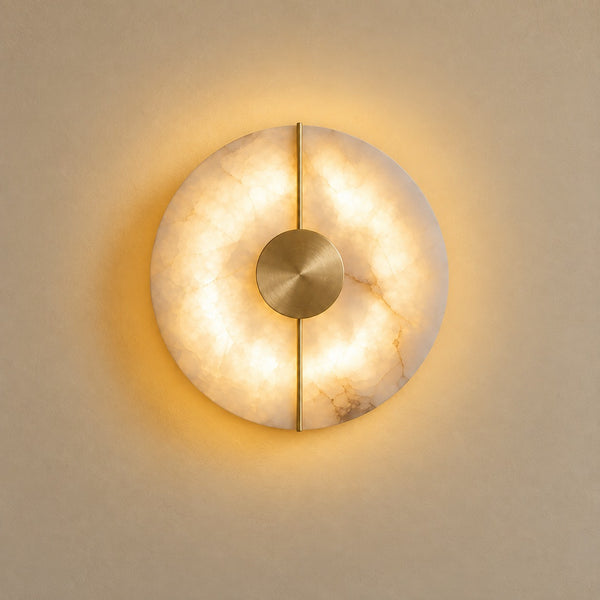
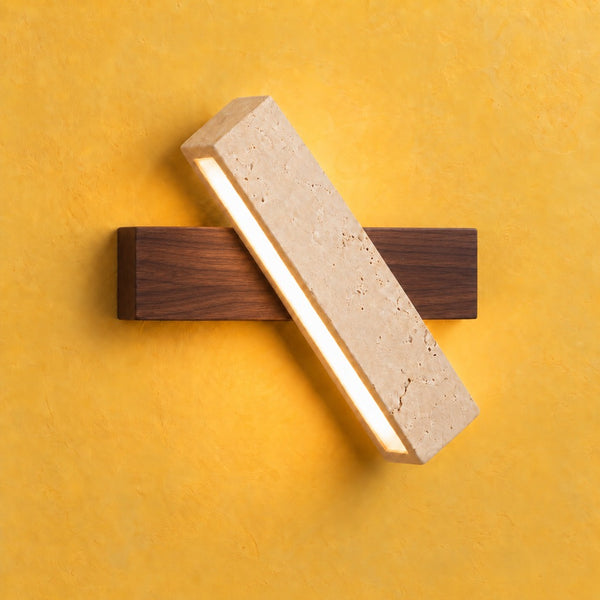
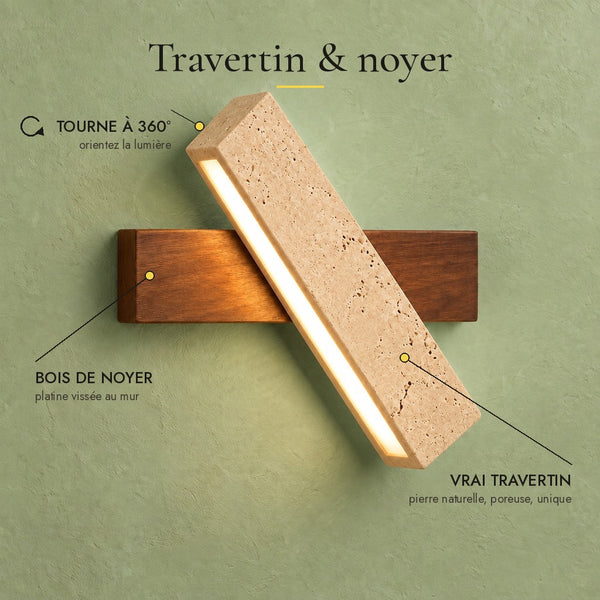
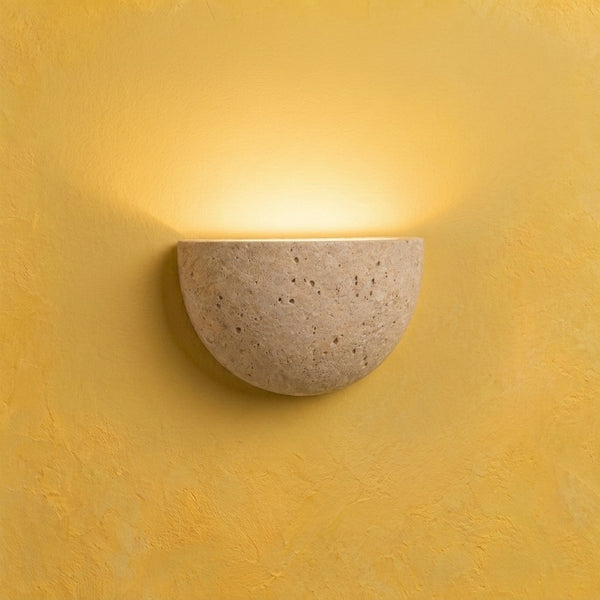
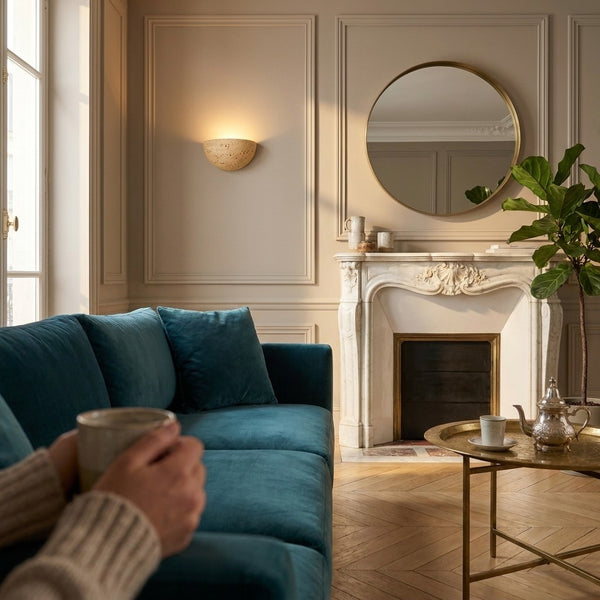
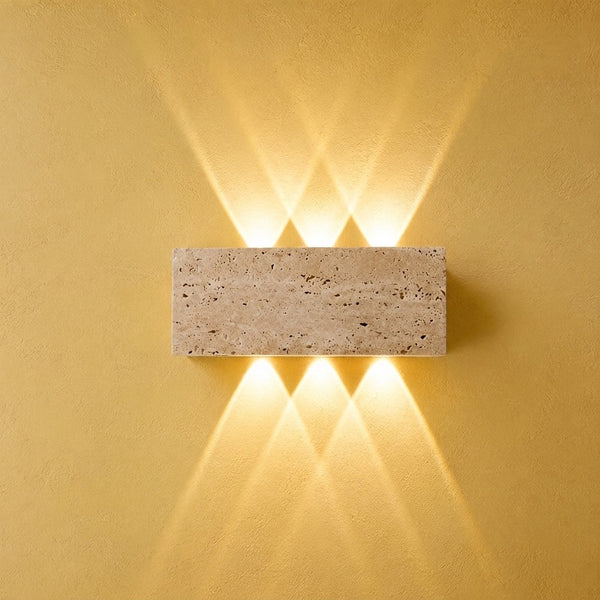
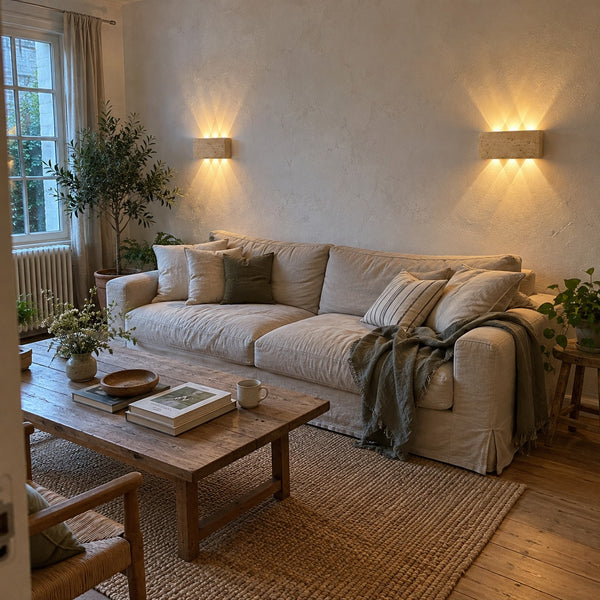
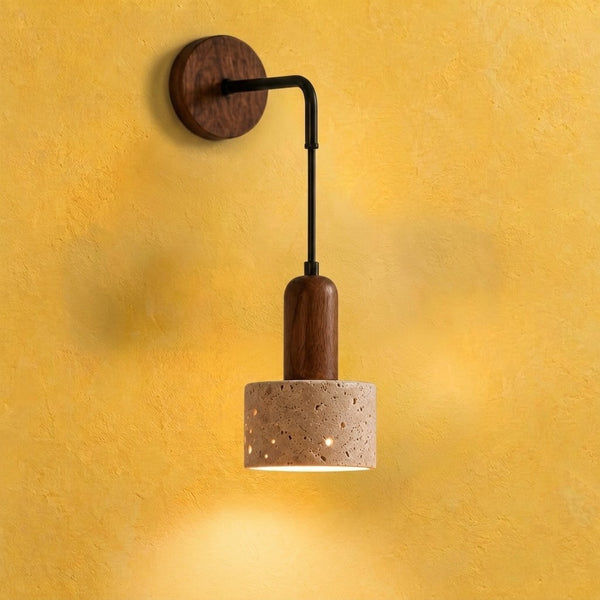
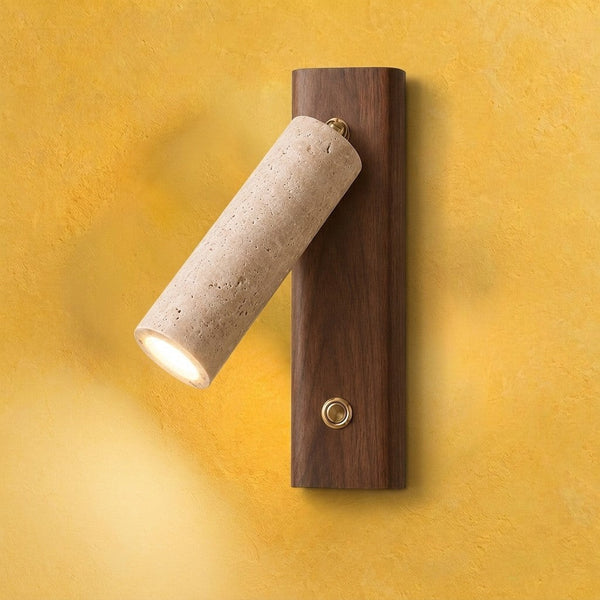
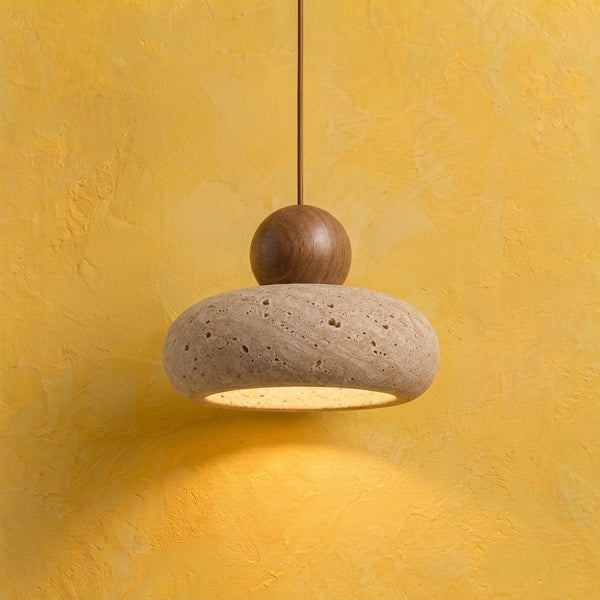
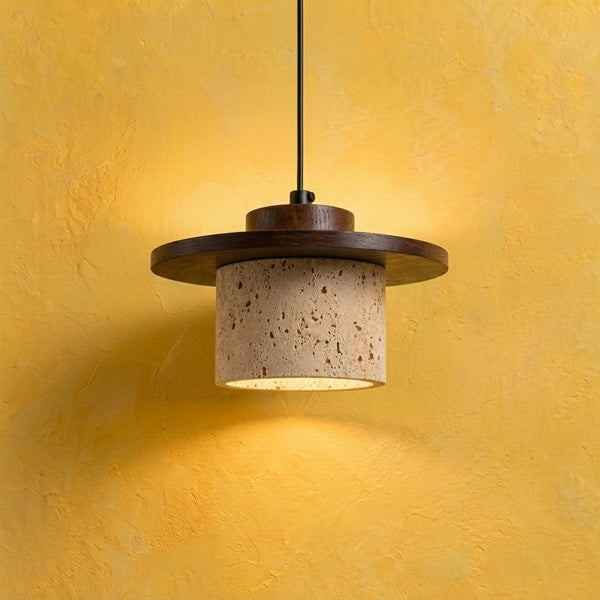
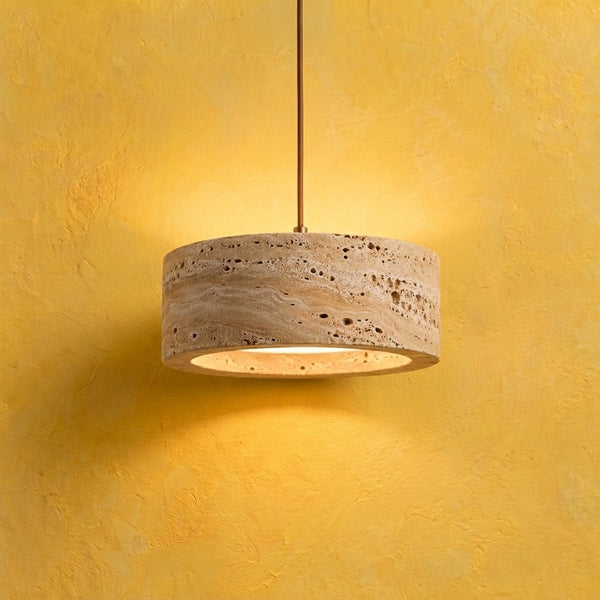
Travertine is a mineral beige: sand, cream or golden yellow, veined and dotted with small cavities. As a pendant, it gives a calm light, often directed downwards, with a glow at the edges when the stone is cut thin. It is the most architectural choice of beige, very well suited to pared-back interiors. Our Japanese-style travertine pendant and our yellow travertine pendant show two sides of this stone.

To understand the shades of this stone, see the colours of travertine, and to compare it with other stones, our guide to the stone pendant light.
7. Matching a beige pendant with your walls
The wall is the backdrop for the pendant. Depending on its colour, the same beige light will look bright, dull or elegant.
| Wall colour | Recommended beige | Why |
|---|---|---|
| Pure white | Sand, rattan, travertine | A clear beige avoids a washed-out look |
| Off-white, cream | Natural linen, greige | A cooler tone adds depth |
| Beige, taupe | A lighter or darker tone | Avoid a flat tone-on-tone effect |
| Sage, olive green | Honey rattan, travertine | Plant and mineral harmony |
| Terracotta, dusty pink | Cream, light linen | Softens warm tones |
| Blue, dark grey | Sand, honey | Warm and cool contrast |
A dark wall absorbs more light: our article getting the light right for the colour of your walls shows how to adjust the output. For pairings around stone, see the colours that go with travertine.

8. Matching beige with wood
Wood and beige are made for each other, as long as you play on contrast in lightness rather than matching exactly.
- Pale wood (whitewashed oak, ash, birch): choose a stronger beige, sand or honey rattan, so the pendant does not disappear against the floor.
- Natural oak: natural linen, greige or light travertine, which tone down the yellow of the oak.
- Walnut and dark woods: cream and ivory create a lovely contrast. Our guide to the pendant and dark woods goes further.
9. The beige chandelier: when to choose several sources
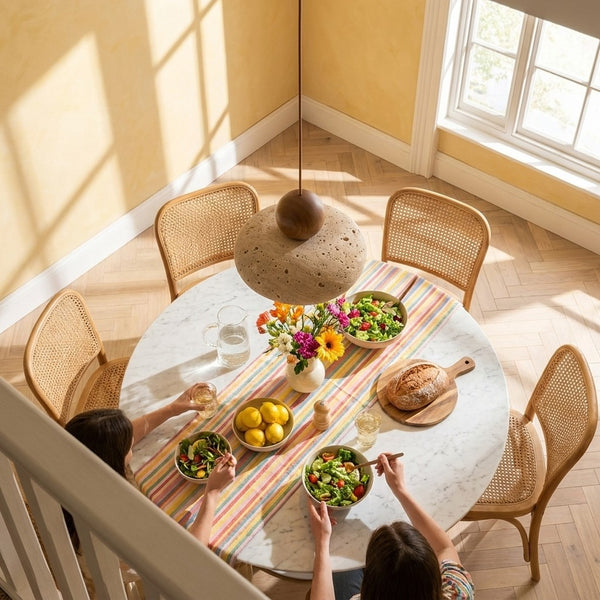
A beige chandelier brings together several fabric shades, several woven spheres or several stone elements on a single frame. It makes sense in a room of more than 20 m², above a large table or under a ceiling of at least 2.50 m. In a smaller room, a single well sized beige pendant, with wall lights alongside, is often more harmonious.

| Room | Pendant or chandelier | Indicative size |
|---|---|---|
| Bedroom of 10 to 14 m² | Single pendant | 35 to 50 cm |
| Dining room, table for 6 | Wide pendant or 2 to 3 small ones | 50 to 70 cm in total |
| Living room of 25 to 35 m² | Beige chandelier or large pendant | 60 to 90 cm |
To size a living room chandelier, see our guide to the living room chandelier.
Sand, cream or golden travertine: discover our natural stone lights, for a mineral and timeless beige.
Discover our travertine lights10. Which light under a beige shade
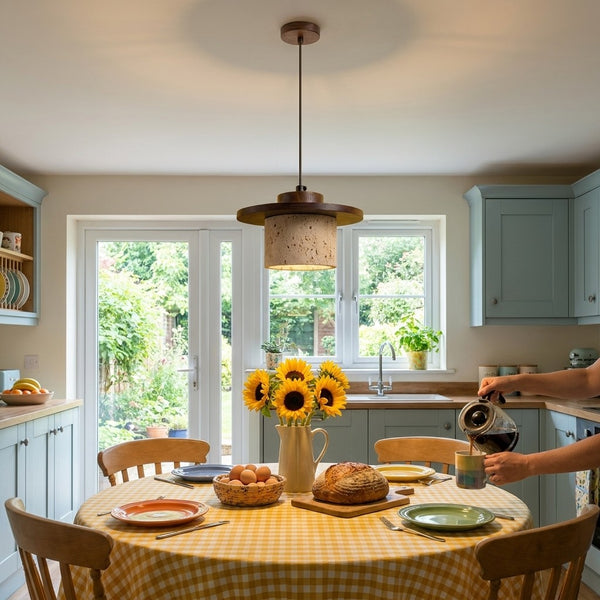
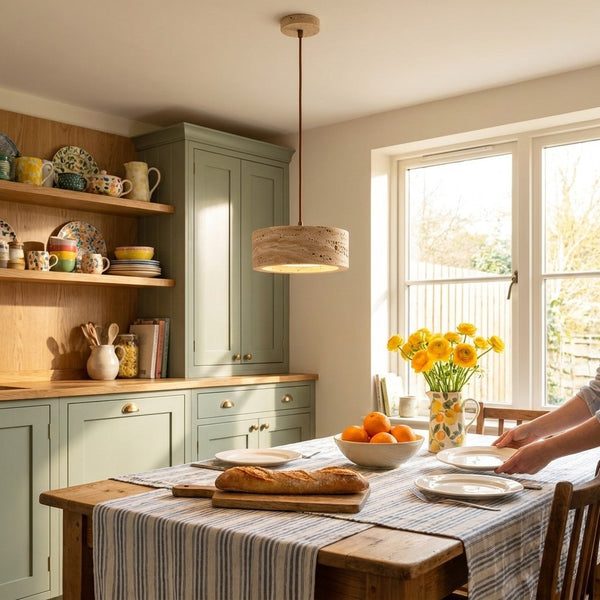
Beige already warms the light: a 2700 K bulb gives a cocoon atmosphere, 3000 K stays warm while rendering colours more faithfully, useful in a kitchen or dining room. Avoid 4000 K, which makes beige look greyish. Everything is explained in 2700K, 3000K or 4000K.
11. In short
To get a beige pendant right, first identify the shade (cream, sand, linen, greige or honey), then the material: linen for softness, rattan for shadows, travertine for a mineral feel. Choose a beige that contrasts slightly with your walls and woods, repeat it in the room and stay at 2700 to 3000 K. To keep a light interior without coldness, also read decorating a neutral interior without making it cold.
Frequently asked questions
What wall colour goes with a beige pendant?
White, off-white, sage green and terracotta go very well with beige. On a beige wall, choose a pendant one shade lighter or darker to avoid a flat tone-on-tone effect.
Does a beige pendant give less light than a white one?
Slightly, especially in thick linen or tight fibres. Make up for it with a slightly more powerful bulb or with extra sources such as wall lights.
What is the difference between beige, greige and sand?
Sand leans towards golden yellow, greige mixes grey and brown, linen beige leans towards soft grey. Sand warms, greige adds a more contemporary touch.
Does beige go with an oak floor?
Yes, as long as you play on contrast: a natural linen, greige or light travertine tones down the yellow of the oak, whereas a beige identical to the floor disappears.
Which colour temperature for a beige pendant?
Between 2700 and 3000 K. Above that, beige looks grey and the room loses its warmth.
How do you care for a beige linen shade?
Dust it every month with a soft brush or the brush attachment of the vacuum cleaner. Our guide to dusting a linen shade also covers stains.
Beige pendant or beige chandelier for a living room?
A multi-light chandelier makes sense above 20 m² or under a high ceiling. In a smaller living room, a large beige pendant and wall lights are enough.
Is beige out of fashion in interior design?
No, sand, linen and stone tones are at the heart of today's natural interiors. The key is to pair them with living materials, wood, fibres and stone, to avoid a dull effect.
Our lights for your home
Stone, wood, metal, rattan: real materials. Free delivery across the UK, returns within 90 days.
 -8 %
Travertine pendant light for living room, Japanese wabi-sabi, stone Ø 15 cm
£141.00
 -21 %
Travertine and wood pendant light for living room and dining room, Ø 20 cm
£141.00
 -25 %
Yellow travertine pendant light for living room, natural stone Ø 20 cm
£154.00
 3-light pendant light for living room, black metal, vintage, E27 fitting
£73.00
 Pendant lights
 Pendant lights
 Pendant lights