




Master bedroom chandelier: mood and choice, from cocoon to hotel
 By the Alméa team
9 min read
Sommaire
A master bedroom chandelier is not there to give bright light: it sets the tone of the room. Soft cocoon, hotel room, stone or natural feel: this guide helps you choose the chandelier that creates the mood you want, through its material, its shape and the quality of its light.
In a master bedroom, the chandelier is often the only visible object on the ceiling, and the first thing you see as you walk in. Switched on in the evening, it colours the walls, casts shadows and brings calm, or restlessness.
Questions of number, height and output are covered in our bedroom chandelier guide. Here, we talk about mood: which chandelier for which master bedroom, and how to match it to the rest of the room.
Contents
- A mood chandelier, not a ceiling light
- Define the mood before the model
- The cocoon mood: filtered light and soft materials
- The hotel mood: symmetry and controlled light
- The stone mood: natural stone and travertine
- The natural mood: rattan, wood and fibres
- The contemporary mood: metal and clean lines
- Materials and quality of light
- Matching the chandelier to the headboard and bedside lights
- Evening light: intensity and scenes
- Mistakes that spoil the mood
- In short
- Frequently asked questions
1. Master bedroom chandelier: a mood piece, not a ceiling light
In a master bedroom, general lighting is little used: a few minutes in the morning, a bit of tidying in the evening. The rest of the time, the bedside lamps and wall lights do the work. The chandelier can therefore afford to be less powerful, more filtering and more sculptural than a kitchen ceiling light.
That is what sets the master bedroom light apart from a child's bedroom light: you choose an atmosphere first, then an output. To build the whole scheme, our master bedroom lighting plan shares out the roles between ceiling, bedside and mood lighting.
2. Define the mood before the model
Before looking at models, put a word to the bedroom you want: it guides the material, the shape and the colour of the light.

| Mood | Typical chandelier | Materials | Light |
|---|---|---|---|
| Cocoon | Fabric shade, dome in tightly woven fibres | Linen, cotton, paper, fibres | 2,700 K, heavily filtered |
| Hotel | Compact chandelier, opal globe, brass | Brass, glass, velvet | 2,700 K, directed and controlled |
| Stone | Stone pendant, simple shape | Travertine, marble, alabaster | 2,700 to 3,000 K, warm glow |
| Natural | Rattan, woven bamboo or wood dome | Rattan, bamboo, light wood | 2,700 K, play of shadows |
| Contemporary | Branch chandelier, geometric cage | Black metal, smoked glass | 2,700 to 3,000 K, graphic light |
3. The cocoon mood: filtered light and soft materials
The cocoon bedroom is about feeling wrapped up: you want light that seems to come from everywhere and nowhere. The ideal chandelier hides its source completely behind a linen shade, a dome of tightly woven fibres or a paper diffuser. The light passes through the material and takes on its colour.
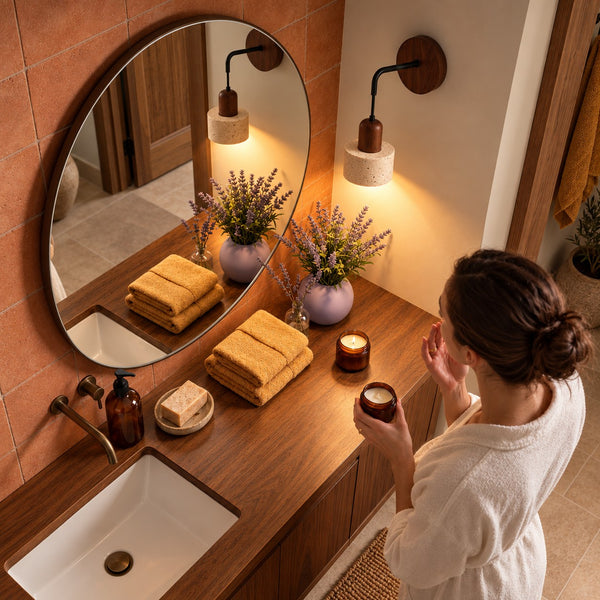
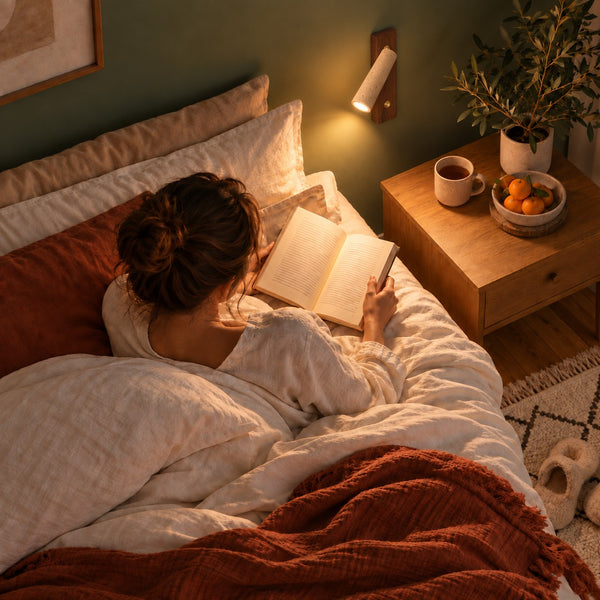
Linen and fabric are the natural allies of this mood: our guide to the fabric and linen pendant light details shapes and sizes. Add soft wall lights on each side of the bed, as our article on wall lights in a master bedroom shows, and thick textiles that absorb light instead of reflecting it.
4. The hotel mood: symmetry and controlled light
A successful hotel room rests on three principles: perfect symmetry around the bed, fine materials and light that is always indirect. The chandelier plays a signature role there: compact, precious, often in brass or glass, it never hangs too low and never shows a bare bulb.
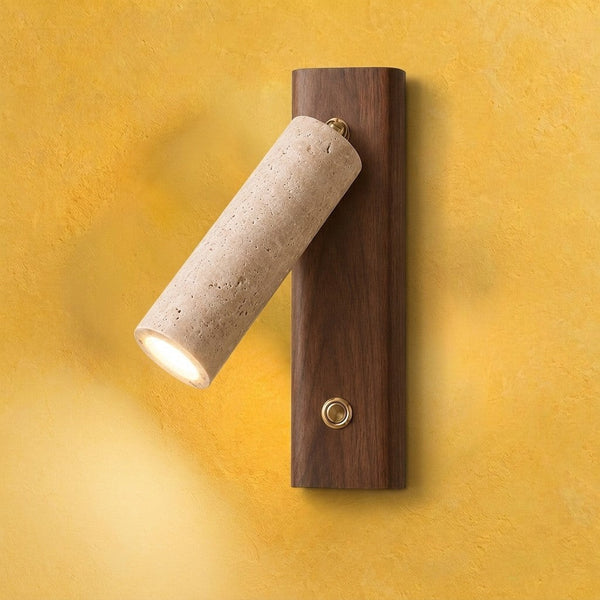
Brushed brass is the emblematic material of this mood; our guide to the gold chandelier and gold pendant light helps you choose the finish. To go further, our article on lighting a hotel-style bedroom at home describes the whole set-up, from reading lights to bedside switches.
5. The stone mood: natural stone and travertine
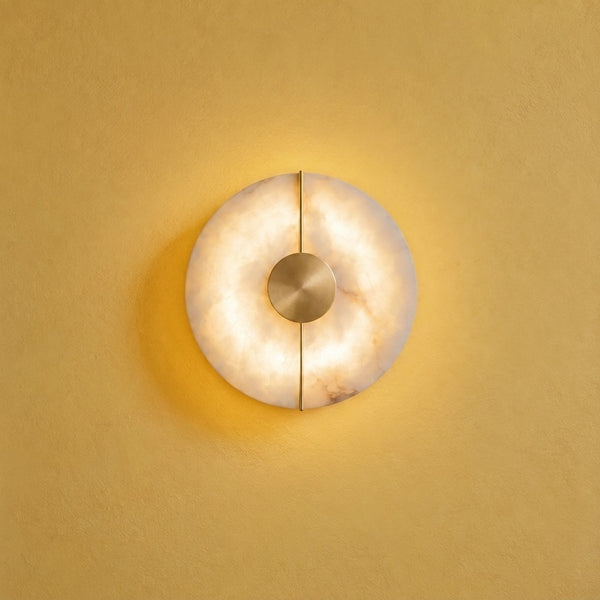
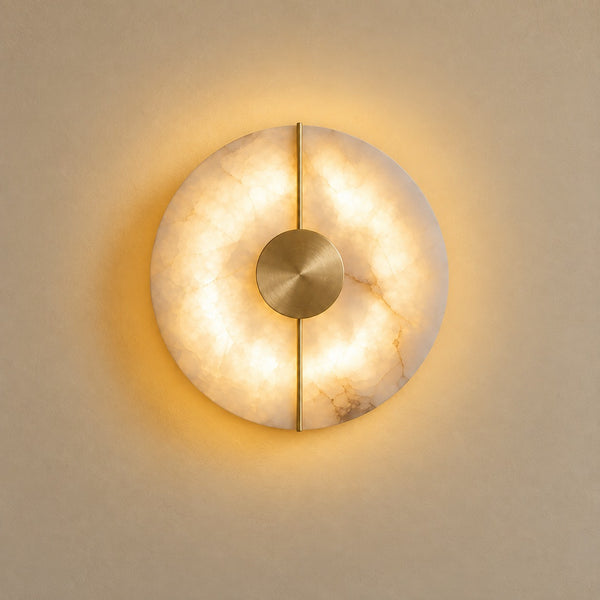
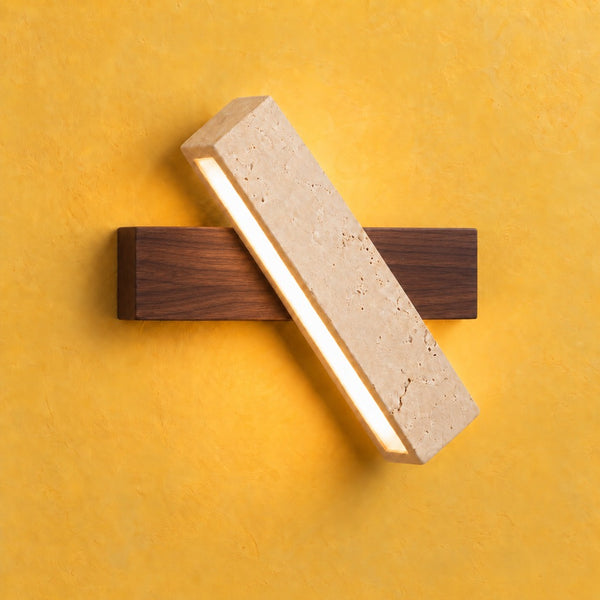
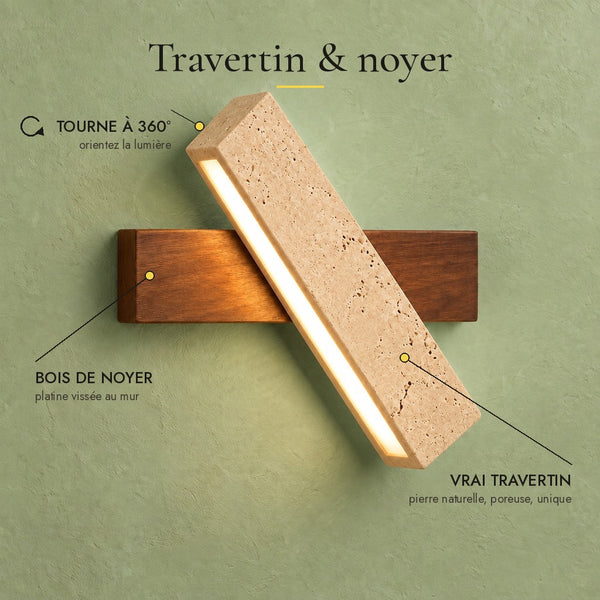
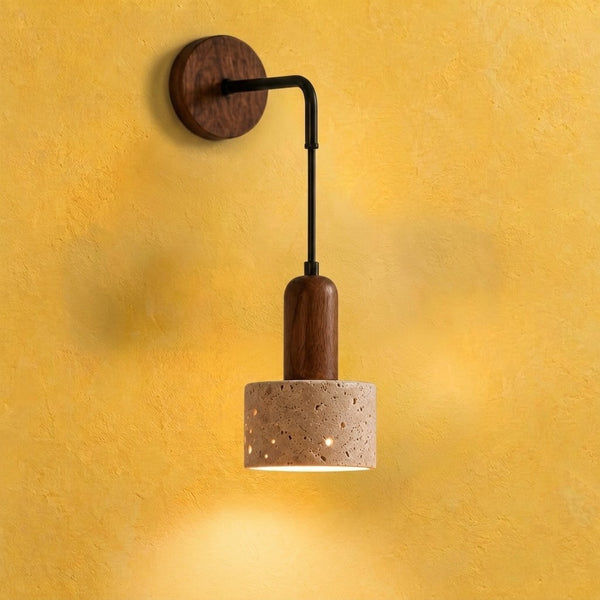
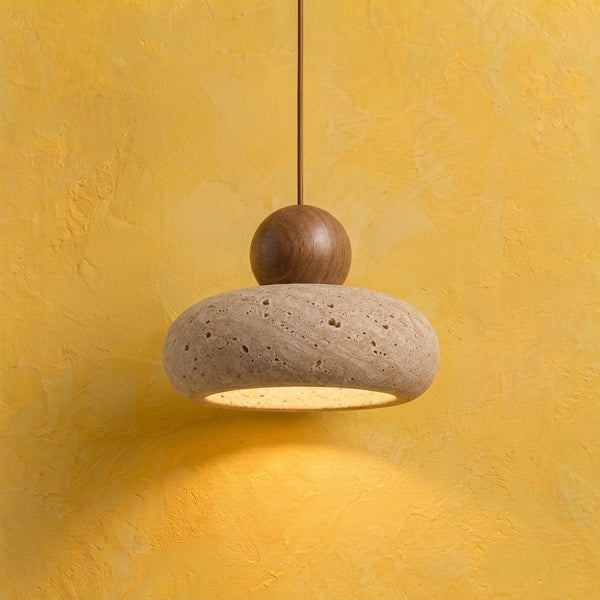
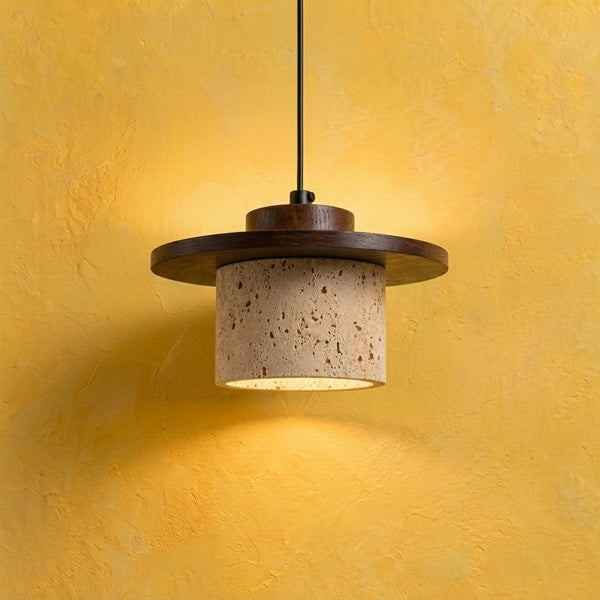
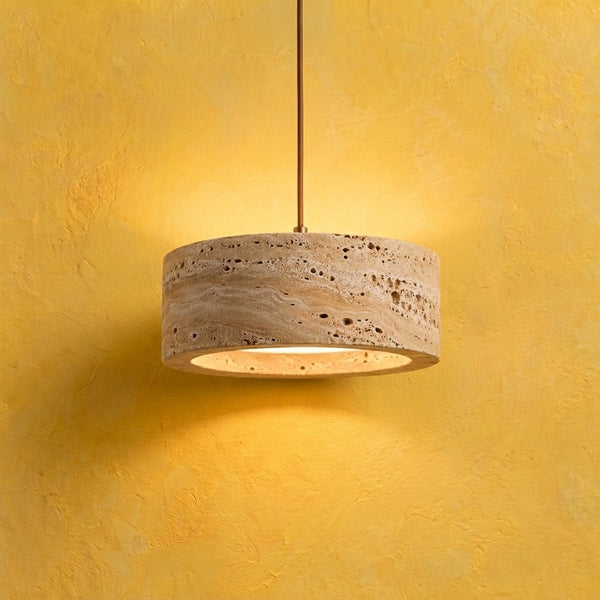
Stone brings a particular calm to the bedroom. Travertine, with its veins and small cavities, catches warm light and gives it back softly, almost golden. A stone pendant in a simple shape, dome or cylinder, is enough: the material makes the piece.
In a master bedroom, stone goes with washed linen, light or dark wood and limewashed or sand-coloured walls. A small pendant like our 20 cm yellow travertine pendant light works well as a pair above the bedside tables. For large rooms, our guide to the stone pendant light compares travertine, marble and alabaster.
Travertine, marble, alabaster: natural stone gives the bedroom warm light and a mineral calm.
See our stone and travertine lights6. The natural mood: rattan, wood and fibres
Rattan, woven bamboo and wood create a warm, slightly bohemian bedroom with a holiday feel. Their weave casts shadow patterns on the ceiling and walls that move as you look: a much-loved effect in the evening, less so in the morning if the weave is too open.

For a master bedroom, go for a tight weave or a lined dome, which softens these shadows. Our vintage woven rattan pendant light illustrates this style. Sizes and good pairings are in our guide to the rattan pendant light.
7. The contemporary mood: metal and clean lines
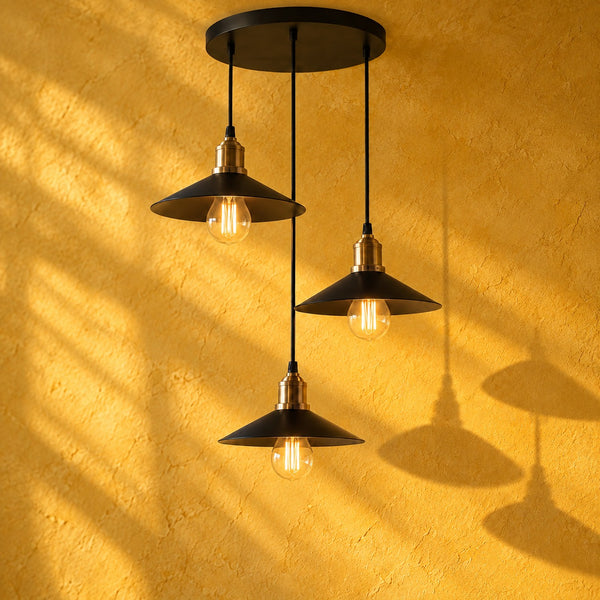
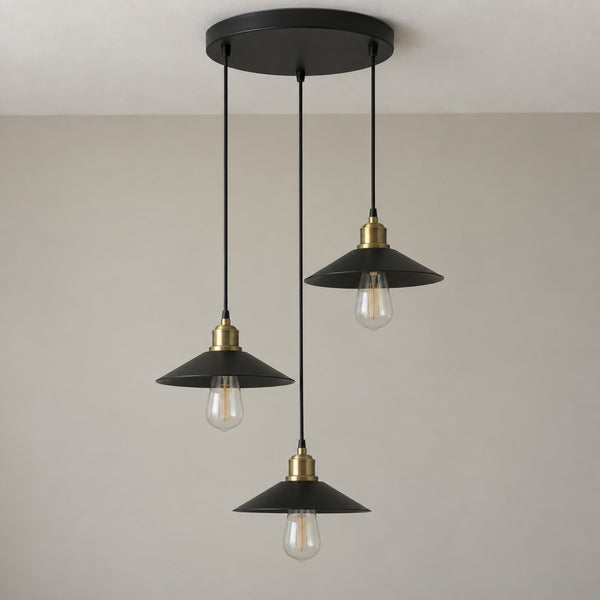
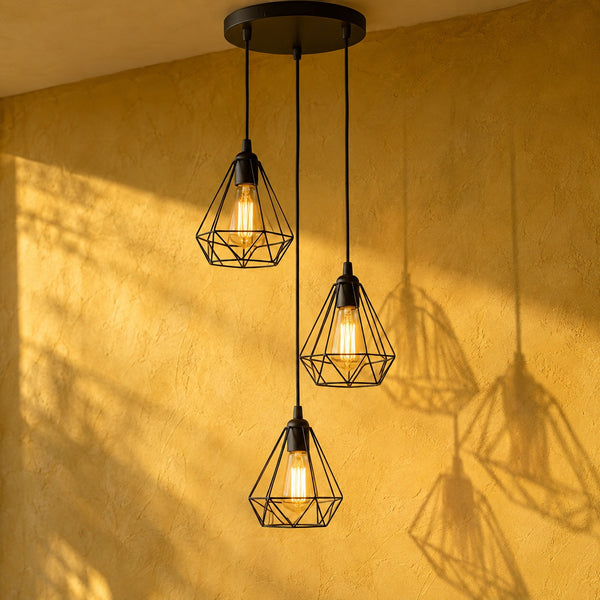
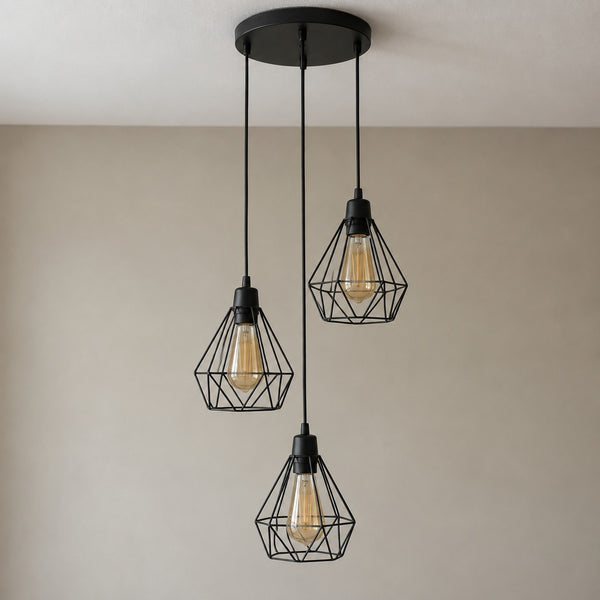
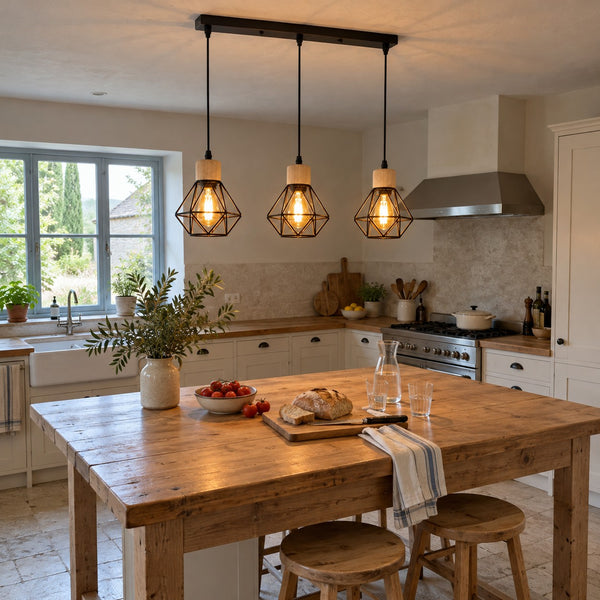
For a more graphic bedroom, a multi-branch chandelier or a black metal geometric cage draws a strong silhouette on the ceiling. The risk is glare: these models often leave the bulbs visible. In that case, choose opal bulbs or globes, never powerful clear bulbs. Our guide to the black chandelier helps you choose the finish to suit the colour of the walls.

8. Materials and quality of light
At the same output, two materials give two very different bedrooms.
| Material | What it does to the light | Effect in the bedroom |
|---|---|---|
| Linen, fabric | Diffuses and softens | Enveloping, muted |
| Paper | Diffuses widely, milky light | Light, soothing |
| Stone, travertine | Warms, brings out the texture | Calm, mineral |
| Rattan, bamboo | Filters and casts patterns | Warm, lively |
| Opal glass | Diffuses evenly | Elegant, classic |
| Metal | Directs and blocks | Graphic, contrasting |
9. Matching the chandelier to the headboard and bedside lights
A chandelier on its own, unrelated to everything else, looks out of place. To blend it in, repeat at least one element elsewhere in the bedroom: the same material in the bedside wall lights, the same finish on the furniture handles, the same colour in the bedding.
The headboard is the natural focal point of the bedroom: the chandelier should talk to it, not steal the show. Our article on the headboard wall offers ten set-ups, and the one on wall lights on each side of the bed settles the question of symmetry.
10. Evening light: intensity and scenes
A master bedroom comes alive mostly in the evening. Think in scenes rather than switches.

| Moment | Lights switched on | Chandelier intensity |
|---|---|---|
| Tidying, getting dressed | Chandelier only | 100 % |
| Relaxing evening | Chandelier and wall lights | 30 to 50 % |
| Reading in bed | Reading lights or bedside lamps | Off |
| Going to sleep | One very soft bedside lamp | Off |
A dimmer is therefore almost essential. With a compatible bulb, it turns a functional chandelier into mood lighting. Our article on creating a cosy mood in winter gives more ideas for scenes on long evenings.
Pendant lights with clean lines, designed for today's interiors and beautiful mood lighting.
Discover our modern design collection11. Mistakes that spoil the mood
- Light that is too cold: above 3,000 K, the bedroom loses its warmth, even with a beautiful chandelier.
- A bulb visible from the bed: glare ruins the cocoon effect.
- A chandelier too big for the room: it overwhelms the bedroom instead of dressing it.
- Too many mixed styles: a baroque chandelier, industrial wall lights and a Scandinavian headboard contradict each other.
- The chandelier as the only source: without bedside lamps or wall lights, no mood is possible.
12. In short
A master bedroom chandelier is chosen by mood: cocoon with linen and filtered light, hotel with brass and strict symmetry, stone with natural stone, natural with rattan, contemporary with metal. The material makes the quality of the light, warm white makes it soft, and the dimmer does the rest. Finally, link the chandelier to the bedside lights and the headboard through at least one shared material.
Frequently asked questions
Which chandelier to choose for a master bedroom?
Start from the mood you want: a linen shade for a cocoon, brass for a hotel feel, stone for a mineral bedroom, rattan for a natural one. In every case, choose a model that hides its source from below.
Which light for a cosy master bedroom?
A chandelier with filtered light, in fabric, paper or tightly woven fibres, paired with soft wall lights on each side of the bed. Keep to a warm white of 2,700 K and a dimmer to lower the light in the evening.
Which light colour for a master bedroom?
A warm white, around 2,700 K, and 3,000 K at most. It is the shade closest to late-afternoon light, which prepares you for rest.
Is a chandelier old-fashioned in a bedroom?
No. Heavy chandeliers with drops are less common, but stone, fibre or brass pendants are very much present in today's bedrooms. What looks dated is mainly cold light and a bare bulb.
How do you create a hotel feel in your bedroom?
With symmetry around the bed, reading lights or wall lights on each side, a compact brass or opal glass chandelier, and only indirect light in the evening. Switches within reach of the bed complete the effect.
Which chandelier material for a bedroom?
Linen and paper give a soft, enveloping light, stone a warm, calm glow, rattan a lively play of shadows, metal a more graphic effect. Choose the material that already appears in the room.
Does a bedroom chandelier need a dimmer?
It is strongly recommended. It lets you use the chandelier at full power for tidying, then at 30 or 50 % in the evening. Check that the bulb is dimmable.
Chandelier or wall lights in a master bedroom?
The two complement each other: the chandelier sets the tone and provides general light, the wall lights handle reading and the evening mood.
Our lights for your home
Stone, wood, metal, rattan: real materials. Free delivery across the UK, returns within 90 days.
 -8 %
Travertine pendant light for living room, Japanese wabi-sabi, stone Ø 15 cm
£141.00
 -21 %
Travertine and wood pendant light for living room and dining room, Ø 20 cm
£141.00
 -25 %
Yellow travertine pendant light for living room, natural stone Ø 20 cm
£154.00
 3-light pendant light for living room, black metal, vintage, E27 fitting
£73.00
 Room by room
 Inspiration
 Room by room