




Travertine, alabaster, marble, onyx: which stone for which light?
 By the Alméa team
8 min read
Sommaire
Travertine, alabaster, marble or onyx: which stone for which light? These four natural stones differ in translucency, durability and where they belong in the home. Here is a complete comparison, with tables, so you can choose with confidence.
We have already written detailed guides on each of these stones. This article puts them side by side, criterion by criterion, to answer the question you ask yourself when buying: which one will give me the light I want, in the room where I want to put it?
Contents
- Two families: stones that filter, stones that glow
- The big stone comparison table
- Travertine: warmth and texture
- Alabaster: the brightest and the most fragile
- Marble: veining and elegance
- Onyx: the stone that lights up
- On or off: how each stone looks
- Which stone for which room?
- Weight, fixing and fragility
- Care: the right habits for each stone
- In short
- Frequently asked questions
1. Which stone for a light: two families of light
For a light, the key question is how the stone behaves with light. Alabaster and onyx are translucent stones: when switched on, they glow through their whole mass and reveal their veins. Travertine and most marbles are more opaque: they filter, colour and shape the light, especially at the edges and where the stone is thin.
All four are calcium-based stones, so they are soft compared with granite and sensitive to acidic products. This is an important point in common when it comes to care. To tell real stone from an imitation, read our article natural stone or reconstituted stone.
2. The big comparison table: travertine, alabaster, marble, onyx

| Criterion | Travertine | Alabaster | Marble | Onyx |
|---|---|---|---|---|
| Nature | Limestone deposited by springs | Usually gypsum | Recrystallised limestone | Banded limestone in layers |
| Appearance | Pores, horizontal veins | Milky white, cloudy | Crisp veining, plain background | Wavy bands of colour |
| Translucency | Low, halo where thin | Very high | Low to medium (white marbles) | Very high |
| Hardness | Soft | Very soft, scratches with a fingernail | Soft | Soft, brittle |
| Sensitivity to water | Medium, porous stone | High, keep dry | Medium | Medium |
| Common colours | Beige, honey, walnut, grey, black | White, ivory, cream | White, grey, black, green | Honey, green, white, pink |
| Style | Wabi-sabi, Mediterranean | Classic, muted | Chic, art deco, contemporary | Spectacular, luxurious |
| Ideal use | Wall lights, pendant lights | Ambient wall lights, bowls | Bases, thin shades | Statement piece |
These are general guidelines: every block of stone is different, and the thickness it is worked to changes the translucency a great deal.
3. Travertine: warmth, texture and filtered light
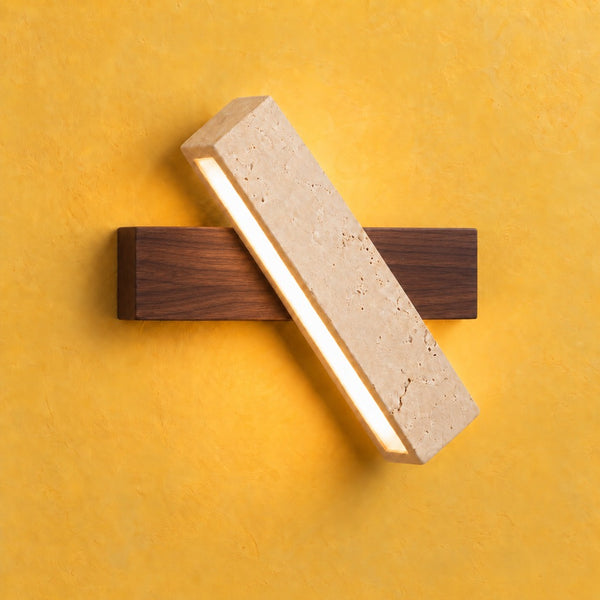
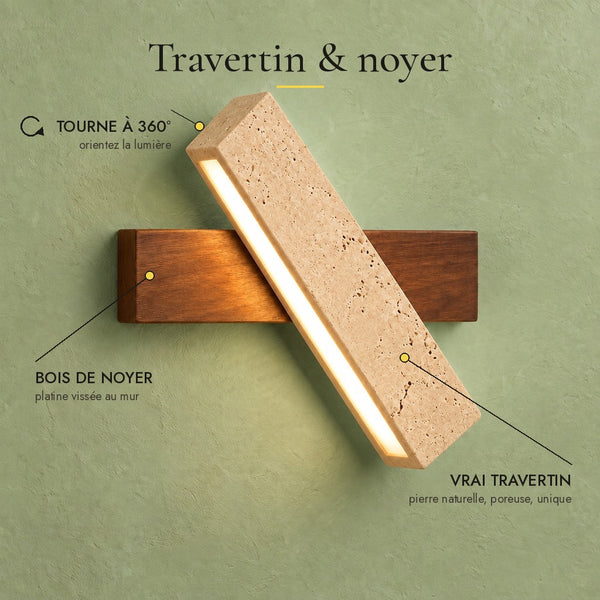
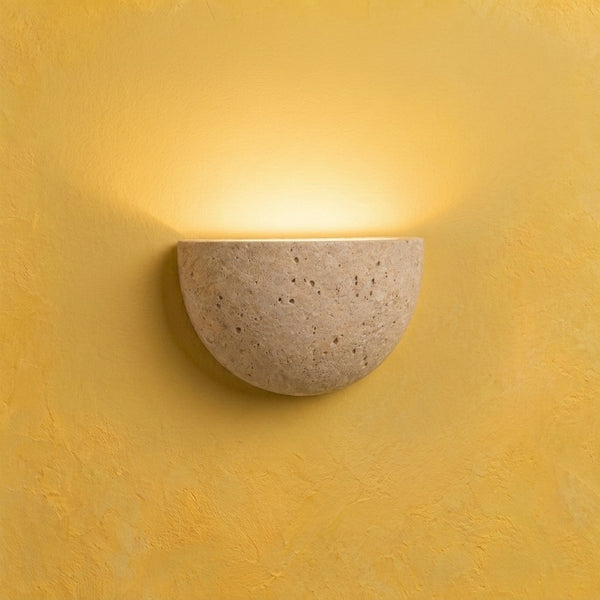
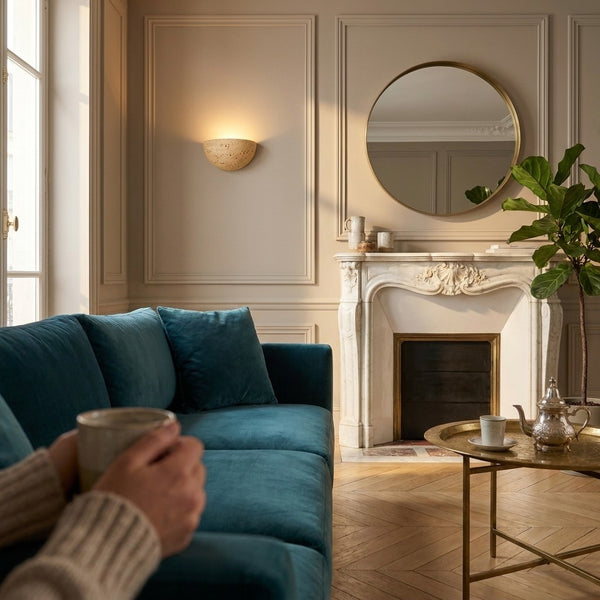
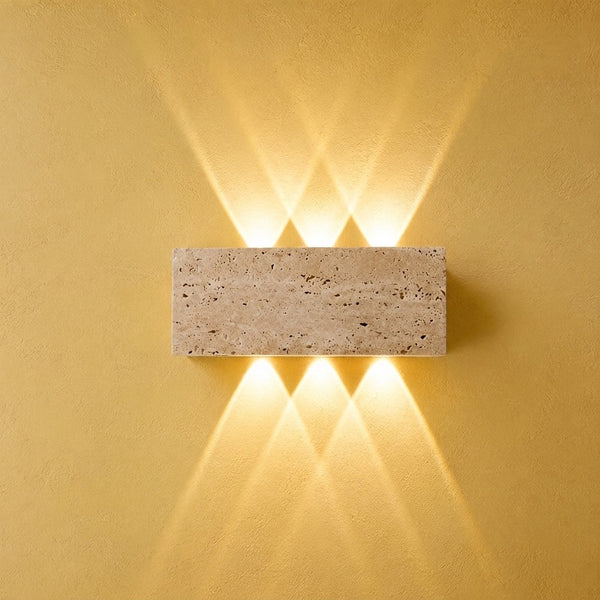
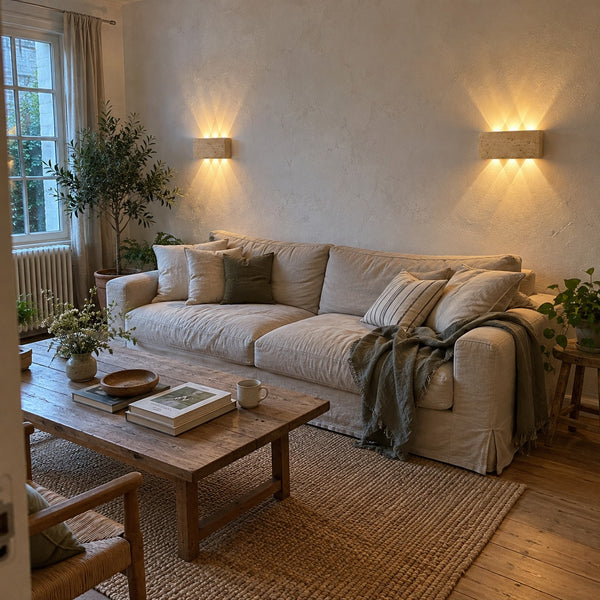
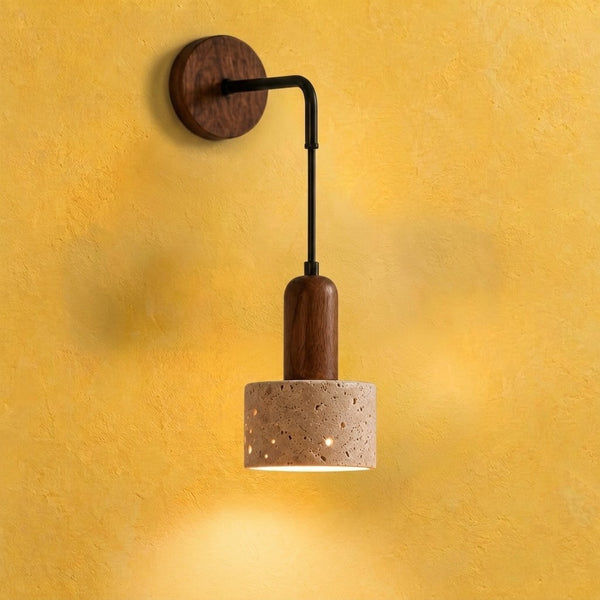
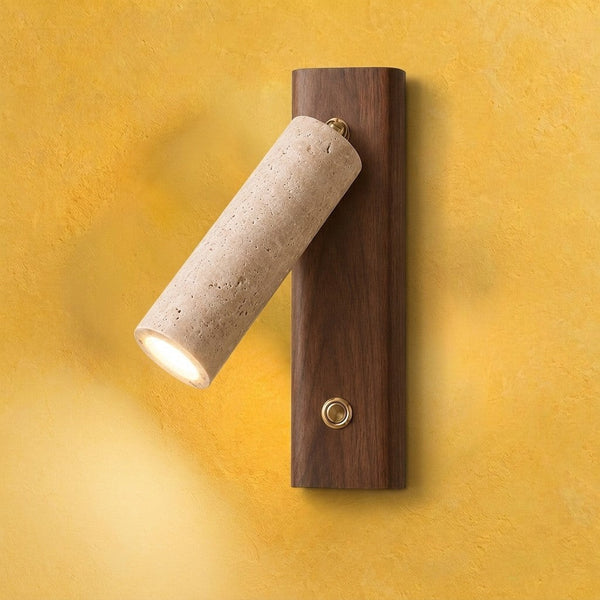
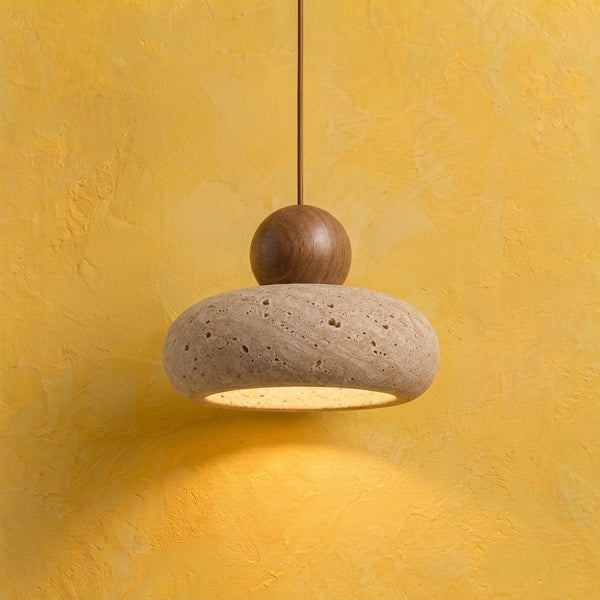
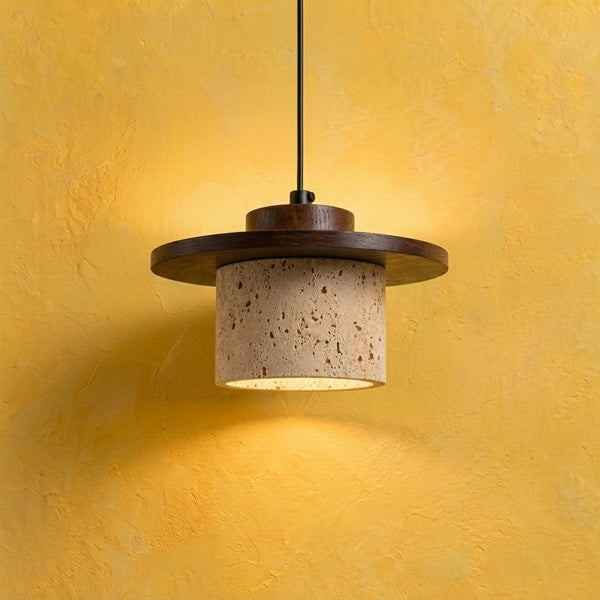
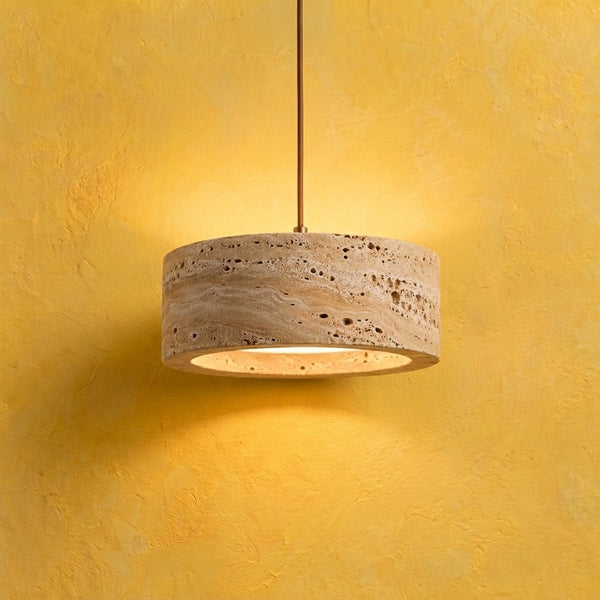
Travertine forms from limestone deposited around hot springs. Its small pores and horizontal veins give it a lively texture, much loved in wabi-sabi and Mediterranean interiors. It does not glow through its mass like alabaster, but its surface catches grazing light and its edges light up where the stone is thin. Our article why travertine lets light through explains this effect.
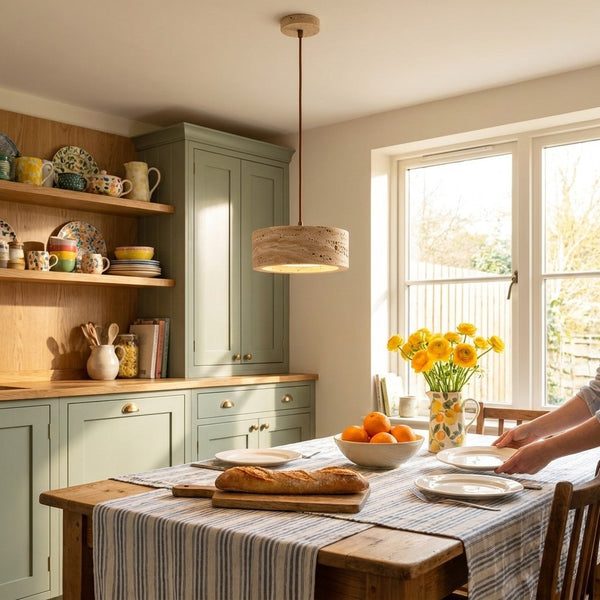
It is the most versatile stone for home lighting: wall lights, pendant lights, lamps. Its colours range from beige to black, and the complete guide to the travertine wall light covers choosing and fitting.
4. Alabaster: the brightest and the most fragile
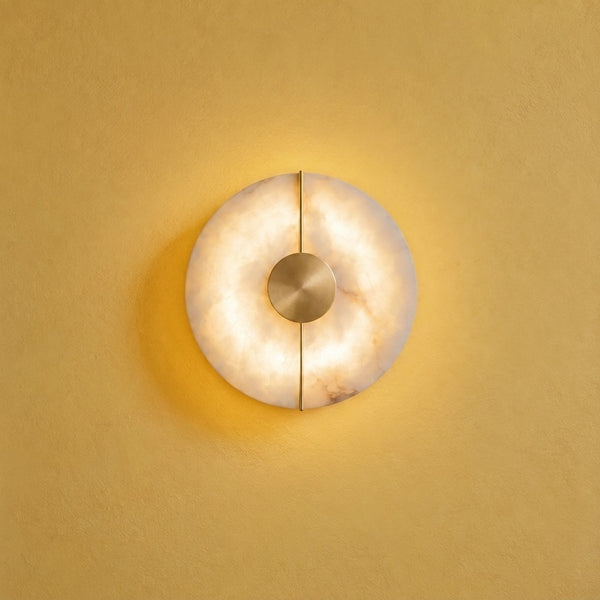
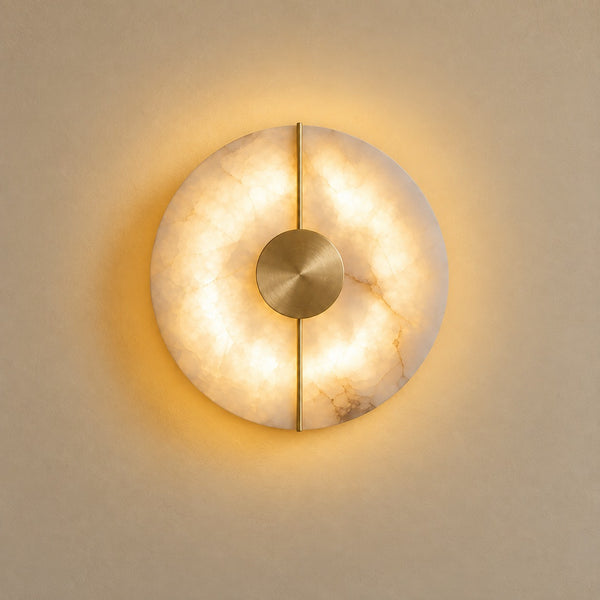
The alabaster used in lighting is usually gypsum, a stone so soft that it scratches with a fingernail. In return, it is the most translucent: when lit, it gives a milky, soft and even light. It is kept for dry rooms and ambient wall lights, never for areas exposed to splashes.
For how it looks and the precautions it needs, see our alabaster wall light, the brightest stone and the face-off alabaster or travertine.
5. Marble: veining and elegance
Marble is limestone transformed by heat and pressure, hence its finer grain and crisp veining. White marbles let a little light through when thin; dark marbles stay opaque and are mostly used for bases or frames. Polished, it reflects light; honed, it softly absorbs it.
It suits chic, art deco or contemporary interiors. Our comparison travertine or marble and our guide to the white marble light go into more detail.
6. Onyx: the stone that lights up from within
In interior design, onyx refers to limestone deposited in successive layers, forming wavy bands of colour. When light passes through it, it is literally transformed: the honey, green or white bands appear with an intensity no other stone can match. It is a rare, brittle stone, best shown off as a statement piece rather than in series.

All its secrets are in our article on the onyx light.
Beige, walnut or black travertine: discover our natural stone lights, each one unique thanks to its veining.
Discover our stone and travertine lights7. On or off: how each stone looks
A stone light lives twice: by day as a decorative object, in the evening as a light source. The table below sums up both sides and the bulb colour temperature that suits each one best.
| Stone | Off, by day | On, in the evening | Recommended colour temperature |
|---|---|---|---|
| Travertine | Texture, pores, warm tones | Golden halo, glowing edges | 2700 to 3000 K |
| Alabaster | Matt white, cloudy | Milky, even glow | 2700 K |
| White marble | Graphic veining | Subtle glow where thin | 3000 K |
| Onyx | Wavy bands, reflections | Intense colours, stained glass effect | 2700 to 3000 K |
Why these warm colour temperatures? Our article why 3000K is the right temperature for stone explains it in detail.

8. Which stone for which room?
| Room | Recommended stone | To avoid |
|---|---|---|
| Living room | Travertine, onyx, marble | Nothing, dry room |
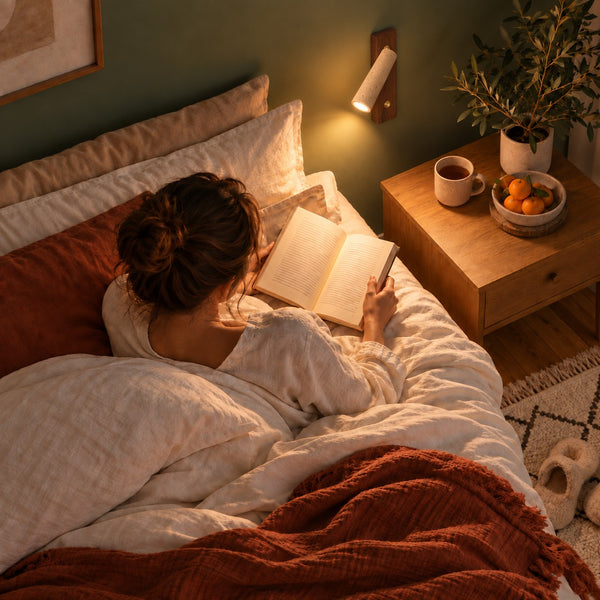
| Bedroom | Alabaster, travertine | Light that is too bright with onyx |
| Dining room | Travertine, marble | Alabaster above hot dishes |
| Kitchen | Travertine, marble, away from the hob | Alabaster, grease splashes |
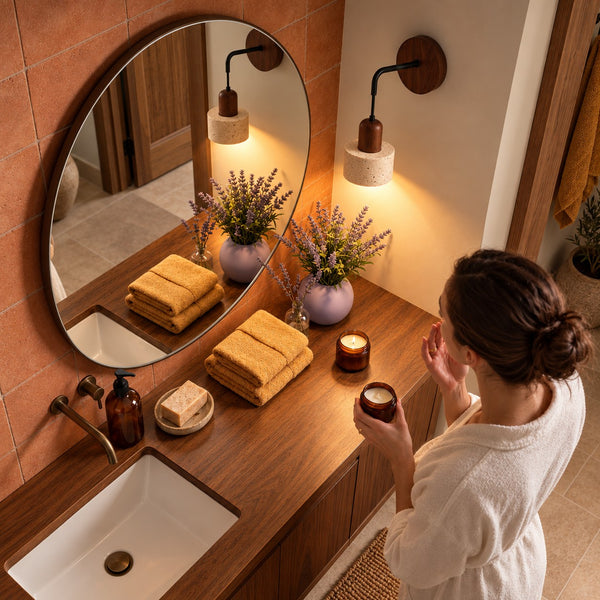
| Bathroom | Travertine outside the zones, ventilated | Alabaster |
The bathroom calls for a real trade-off: read a stone light in the bathroom before you decide.
9. Weight, fixing and fragility
Stone is heavy: a few centimetres of thickness are enough to double the weight of a wall light. Travertine and marble are the densest of the four, alabaster a little lighter. Check the wall (plasterboard, brick, concrete) and use wall plugs suited to the stated weight. Our article on the weight of a stone wall light gives the right habits.

As for fragility, onyx and alabaster dislike knocks and twisting: handle them with both hands, never by the shade alone.
10. Care: the right habits for each stone
A rule common to all four: never use vinegar, lemon or descaler, which attack limestone and dull the surface. Dust with a soft, dry cloth. Travertine and marble can take a barely damp, well wrung cloth; alabaster is cleaned dry only. A colourless water repellent can protect travertine exposed to humidity.
The full method is in our guide to cleaning and protecting a stone light.
A natural stone wall light to dress a wall, a headboard or a hallway? Browse our selection.
See our stone wall lights11. In short
Travertine is the versatile, warm stone, alabaster the brightest but the most fragile, marble the most elegant and graphic, onyx the most spectacular. Choose according to the light you want, the room and the level of humidity, then pair it with a warm white bulb to bring out the material.
Frequently asked questions
Which is the most translucent stone for a light?
Alabaster and onyx are the most translucent: when lit, they glow through their whole mass. White marble lets a little light through where thin, travertine mainly at the edges.
What is the difference between travertine and marble?
Travertine is a spring limestone, full of pores with a lively texture. Marble is limestone transformed by heat and pressure, with a fine grain and crisp veining. The first is more rustic and warm, the second more chic and graphic.
Is alabaster sensitive to water?
Yes. Gypsum alabaster is slightly soluble and very soft: repeated humidity dulls and damages it. It is kept for dry rooms and cleaned dry only.
What is onyx in interior design?
In interior design, onyx refers to limestone formed in layers, with wavy bands of colour. Very translucent, it reveals its patterns when lit from behind or from within.
Can you put a stone light in a bathroom?
It is possible outside the zones close to water, in a well ventilated room, with a light that has a suitable IP rating. Treated travertine is better suited than alabaster, which should be avoided.
How can you tell if a stone is real?
Real stone shows irregular variations, feels cool to the touch and is heavy. Identically repeated patterns or an overly uniform look point to an imitation.
Which bulb for a stone light?
A warm white LED between 2700 and 3000 K, which warms up the tones of the stone. Avoid cool white, which makes it look grey and dull.
How do you clean a marble or travertine light?
With the light off and cool, wipe it with a soft cloth, dry or barely damp. Avoid vinegar, lemon and descaler, which attack limestone.
Our lights for your home
Stone, wood, metal, rattan: real materials. Free delivery across the UK, returns within 90 days.
 -36 %
Marble wall light for bedroom, natural stone, alabaster white
£110.00
 -38 %
Natural stone wall light for living room, ambient lighting
£101.00
 -42 %
Travertine wall light for bedroom, natural stone, retro
£129.00
 -38 %
Travertine wall light for living room, natural stone, wabi-sabi
From £101.00
 Materials
 Inspiration
 Pendant lights