




12 lighting mistakes that make a room feel gloomy (and how to fix them)
 By the Alméa team
9 min read
Sommaire
A few lighting mistakes are enough to make a room feel gloomy, even when it is well furnished and nicely painted. Here are the 12 most common ones, easy to spot in a single evening, each with a practical fix, often with no building work.
A room that looks dull in the evening does not necessarily need new furniture or a fresh coat of paint. Most of the time, the light is badly distributed, too cool, too weak in the wrong place or too strong where you are looking.
Use this list as a diagnosis: switch the lights on after dark, sit in your usual spot and tick off the mistakes you recognise. Three or four well chosen fixes are enough to change the atmosphere.
Contents
- Relying entirely on the central ceiling light
- Light that is too cool in the evening
- The wrong amount of lumens
- Walls left in shadow
- Bare bulbs that dazzle
- Mixed colour temperatures
- One brightness for every moment
- Ignoring the colour of the walls
- Lights that are too small
- Forgotten dark corners
- All light sources at the same height
- Bulbs that dull colours
- In short
- Frequently asked questions
1. A classic lighting mistake: relying entirely on the central ceiling light
A single light point in the middle of the ceiling flattens the room: the light falls vertically, flattens shapes, deepens the shadows under the eyes and leaves the edges in semi-darkness. It is the most common cause of the “gloomy room” effect.
The fix: keep the ceiling light for cleaning and tidying, and create at least two other, lower sources, for example a wall light and a table lamp. This is the principle of the three layers of light: ambient, task and accent. If your living room has no central light point at all, our 12 ways to light a living room without a ceiling light show how to do without one.
2. Light that is too cool in the evening
A bulb at 4,000 K or more gives a white, neutral light, perfect for a worktop or a workshop, but it makes a living room feel clinical after sunset. Wood looks grey, skin pale, textiles washed out.

The fix: switch to warm white in living spaces. The guide to colour temperature: 2700K, 3000K or 4000K covers each case in detail; here are the key guidelines:
| Room or use | Recommended temperature | Effect |
|---|---|---|
| Living room, bedroom (evening) | 2,700 K | Warm, enveloping |
| Dining room, entrance | 2,700 to 3,000 K | Warm and crisp |
| Kitchen (worktop) | 3,000 to 4,000 K | Precise, without harshness |
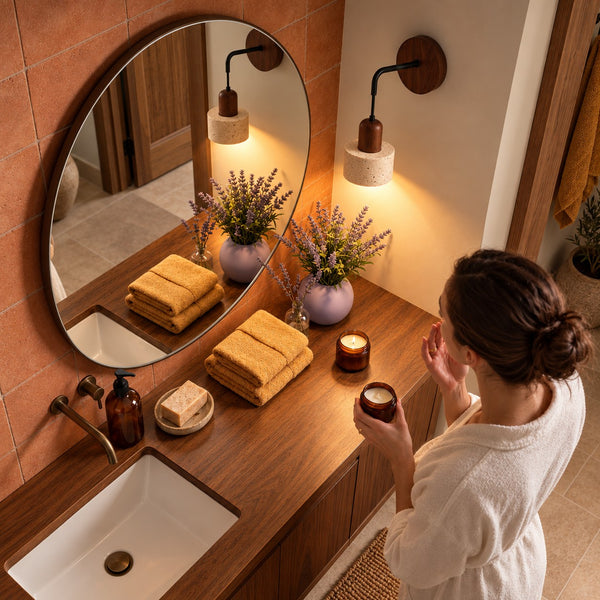
| Bathroom (mirror) | 3,000 to 4,000 K | True to life for make-up |
| Study, workshop | 4,000 K | Neutral, stimulating |
3. The wrong amount of lumens
Two opposite mistakes lead to the same gloomy result. Too little light, and the room looks dark and small. Too much light from a single source, and it becomes harsh and flat. People often still think in watts, whereas only lumens measure the amount of light.
The fix: aim for a total that suits the floor area, then spread it over several points. Our article how many lumens per room explains the calculation. As a simple guideline:
| Room | Indicative illuminance | Total for 15 m² |
|---|---|---|
| Living room (ambient) | 100 to 150 lux | 1,500 to 2,250 lm |
| Bedroom | 100 lux | about 1,500 lm |
| Kitchen | 200 to 300 lux | 3,000 to 4,500 lm |
| Study | 300 to 500 lux | 4,500 to 7,500 lm |
4. Walls left in shadow
The eye judges how bright a room is mainly by its vertical surfaces. A well lit floor surrounded by dark walls feels like a cave, even with plenty of lumens.
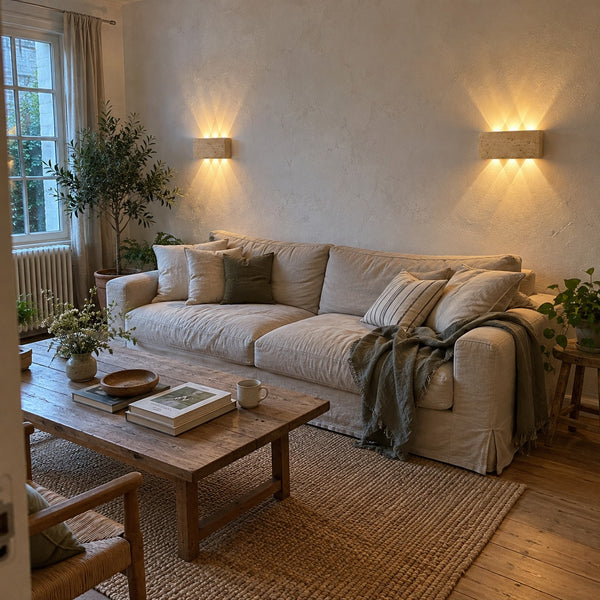
The fix: light the walls. A wall light that shines up and down, a floor lamp aimed at the ceiling or some backlighting is enough to open up the space. All the techniques are gathered in our guide wall lighting: every way to light a wall.
5. Bare bulbs that dazzle
A bulb visible at eye level, a badly angled spotlight or an LED without a diffuser tires the eyes.
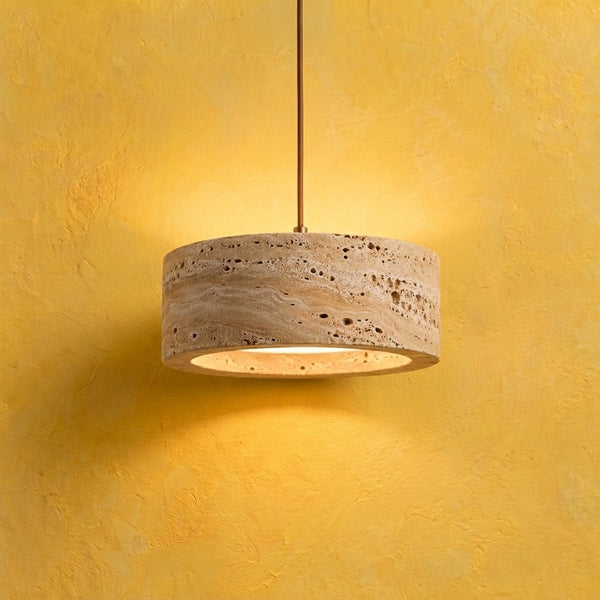
The fix: choose lights that hide the source (shade, stone, frosted glass, diffuser), aim spotlights at the walls rather than at the seating, and fit wall lights above eye level. The topic is covered in depth in glare, the criterion nobody talks about.
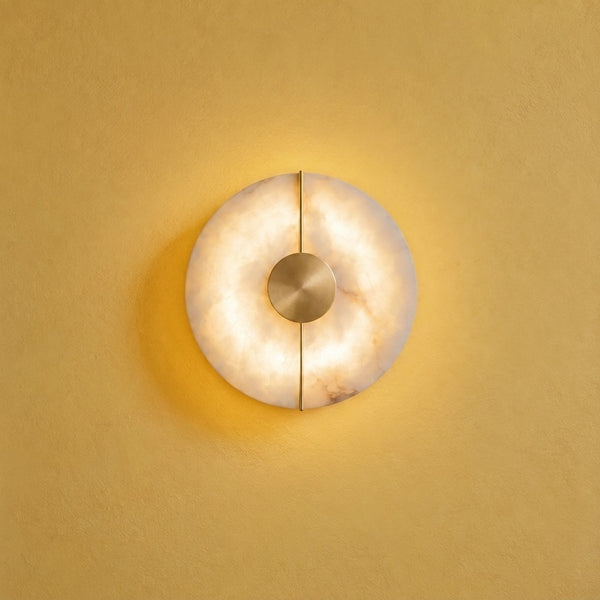
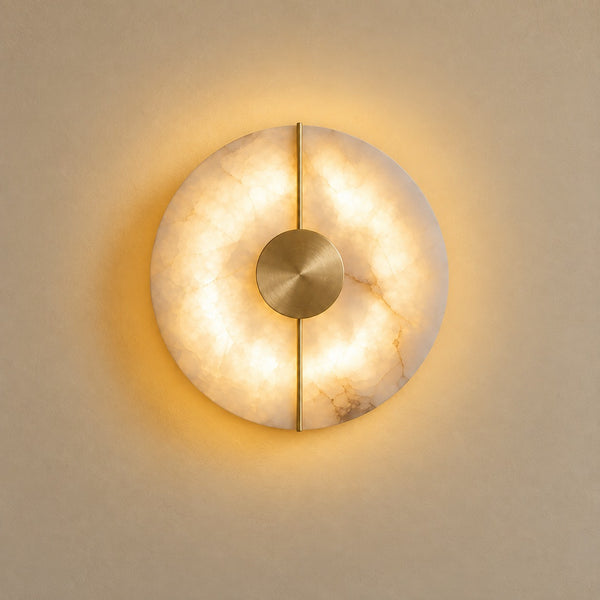
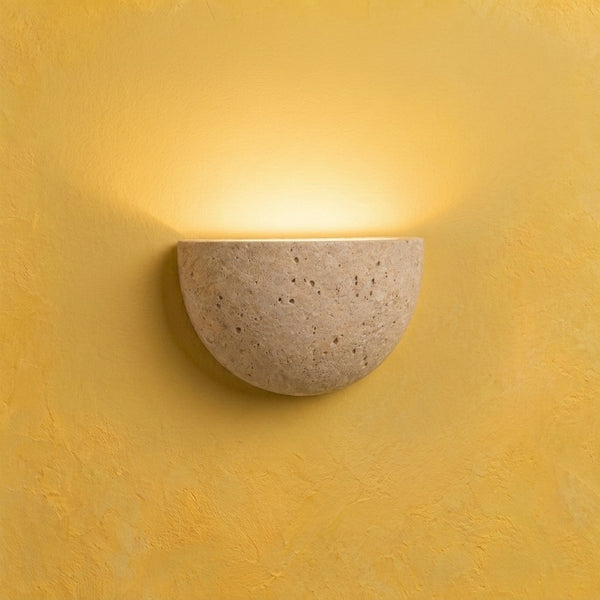
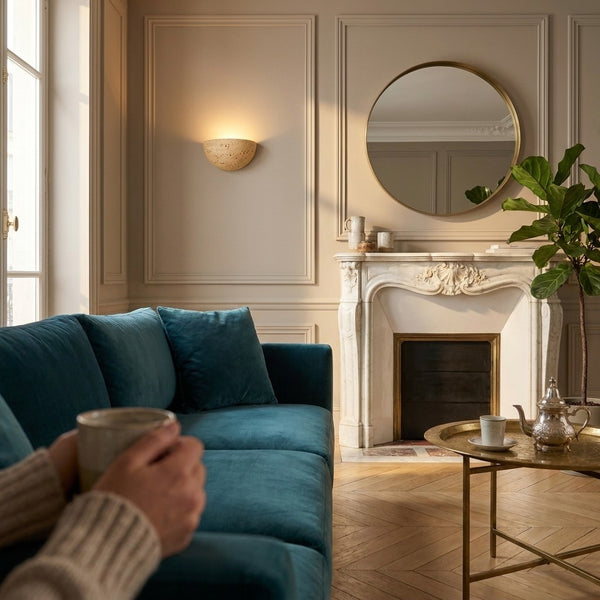
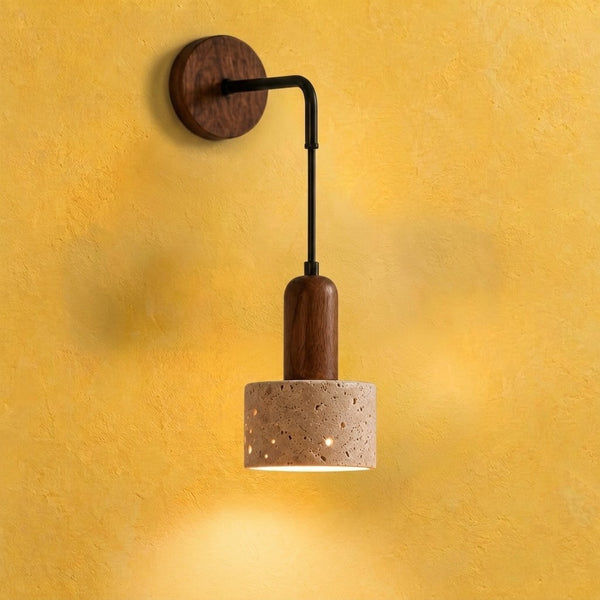
A wall light that spreads its glow against the wall warms a room without ever dazzling.
Discover our wall lights6. Mixed colour temperatures
A 2,700 K lamp next to a 4,000 K ceiling light creates orange and bluish patches on the walls.
The fix: match all the sources in a room, with no more than 300 K difference. In practice, choose a single value per room and write it down so you buy the same bulbs again.
7. One brightness for every moment
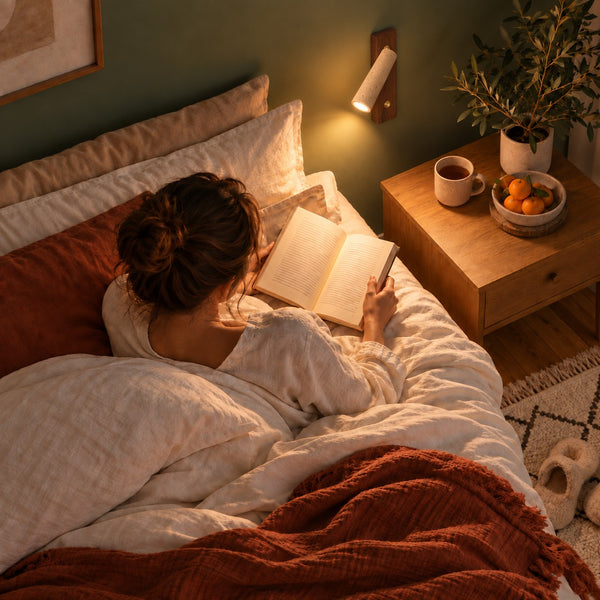
The light that suits tidying up or having guests is too bright for watching a film or reading quietly. If everything comes on at full power with one switch, the room has only one mood, often the least cosy one.

The fix: separate the controls (ceiling light on one side, accent lamps on the other) and install a dimmer or dimmable bulbs. Before buying, read wall lights and dimmers: the pitfalls to avoid, because an incompatible LED buzzes or flickers.
8. Ignoring the colour of the walls
A white wall reflects a large share of the light, a forest green or midnight blue wall absorbs most of it. With the same lighting, a room painted in a dark colour will look noticeably darker.
The fix: increase the lumens and add more sources in rooms with dark walls, and favour grazing light that brings the surface to life. The right amounts are detailed in getting the light right for the colour of your walls.

9. Lights that are too small
A small pendant lost above a large table, a tiny wall light on a four metre wall: the lighting looks temporary and the room feels empty.
The fix: size your lights in relation to the furniture and the wall. A dining room pendant is generally half to two thirds of the width of the table. Our guide what size of light to choose gives all the rules of proportion.
10. Forgotten dark corners
Corners often stay in the dark. Yet they are what define the limits of the space: in shadow, they make the room feel smaller.
The fix: a floor lamp in a corner, a low lamp on a console table or a wall light near a window is enough. In a room with little natural light, also see our advice on lighting a room without a window.
11. All light sources at the same height
If all the lights are on the ceiling, or all on low furniture, the room lacks depth. The eye needs points of light at different levels to perceive depth.

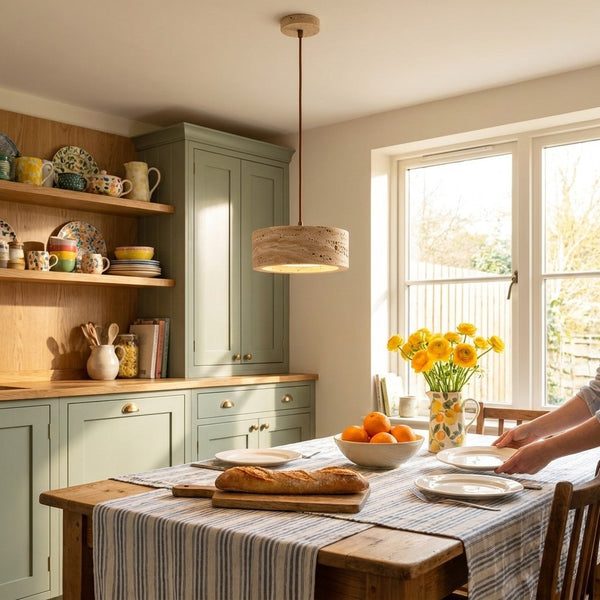
The fix: combine three heights: a high source (ceiling or pendant light), a mid-height source (wall light at about 1.60 to 1.80 m from the floor) and a low source (table lamp at about 0.80 to 1.20 m).
| Level | Indicative height | Examples |
|---|---|---|
| High | Ceiling or 75 to 85 cm above a table | Pendant light, ceiling light |
| Middle | 1.60 to 1.80 m from the floor | Wall light |
| Low | 0.80 to 1.20 m from the floor | Table lamp, bedside lamp |
12. Bulbs that dull colours
Some cheap bulbs have a low colour rendering index: the red of a cushion turns brownish, wood looks dull, plants lose their sparkle. The room looks grey for no apparent reason.
The fix: check the CRI on the packaging. At least 80 for everyday use, 90 or more for rooms where colours matter. The principle is explained in CRI explained simply.
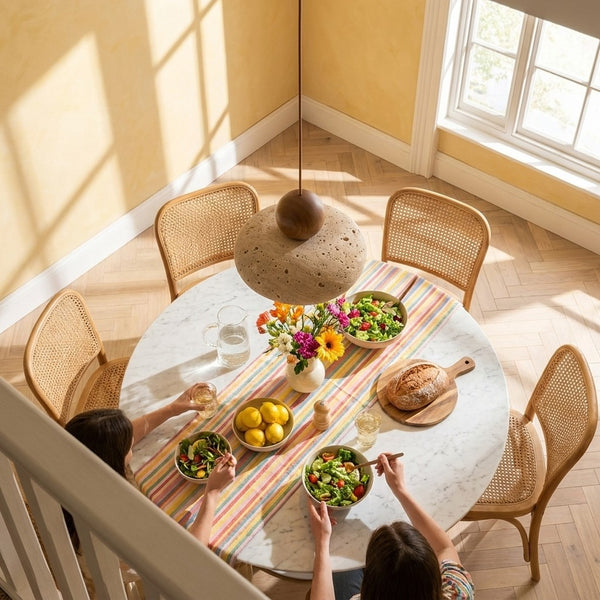
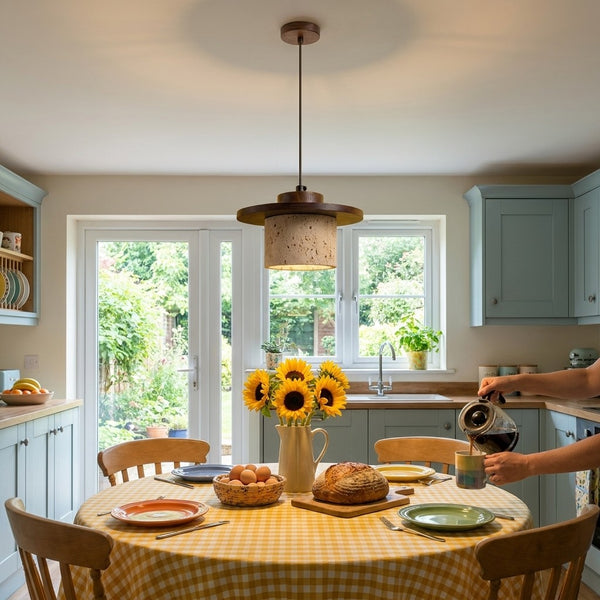
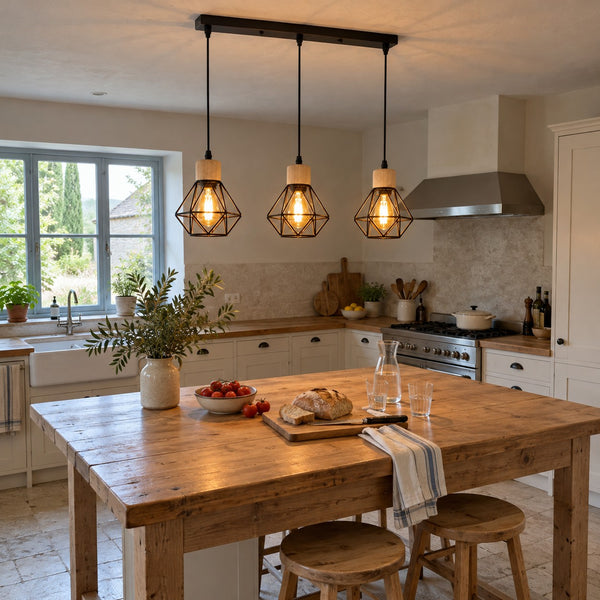
A well sized pendant light, hung at the right height, gives the room a real focal point.
See our pendant lights13. In short
A gloomy room rarely suffers from just one flaw. Start with the simplest fixes: warm white bulbs, matched throughout the room, then one or two accent sources that light the walls and corners. Then add a dimmer and, if needed, a better sized light. To take the atmosphere further, our guide to creating a warm atmosphere with light builds on these tips.
Frequently asked questions
Why does my room feel gloomy in the evening?
Most often because it is lit only by a central ceiling light, with light that is too cool. The walls and corners stay dark and the light falls vertically. Add two low sources in warm white and you will see the difference straight away.
Which colour temperature for a warm atmosphere?
2,700 K in the living room and bedroom, 2,700 to 3,000 K in the dining room and entrance. Above 3,000 K, the light becomes more neutral and is better suited to work areas.
How many light points does a living room need?
Allow at least three sources in a medium-sized living room, at different heights: one high, one at mid-height and one low. In a large room, four to six points spread around are more comfortable.
How can you make a dark room brighter without building work?
Replace the bulbs with higher lumen models, add a floor lamp aimed at the ceiling, a plug-in wall light and a mirror facing a light source. Pale textiles also help to reflect light.
Can you mix warm and cool light?
In the same room, it is not recommended: the differences create patches of different colours on the walls. Keep no more than 300 K between sources, and keep neutral light for separate work areas.
What is the difference between lumens and watts?
Watts measure electricity consumption, lumens the amount of light produced. With LEDs, a bulb of about 8 W produces roughly 800 lumens, the equivalent of an old 60 W incandescent bulb.
Do you need a dimmer in every room?
Not everywhere, but it is very useful in the living room, dining room and bedroom, where you move from one activity to another. Check that the bulbs are marked dimmable and compatible with the chosen dimmer.
How do you light a room with dark walls?
Plan for more lumens than in a white room and add more sources. Wall lights that wash the wall with grazing light bring out deep colours instead of deadening them.
Our lights for your home
Stone, wood, metal, rattan: real materials. Free delivery across the UK, returns within 90 days.
 -36 %
Marble wall light for bedroom, natural stone, alabaster white
£110.00
 -38 %
Natural stone wall light for living room, ambient lighting
£101.00
 -42 %
Travertine wall light for bedroom, natural stone, retro
£129.00
 -38 %
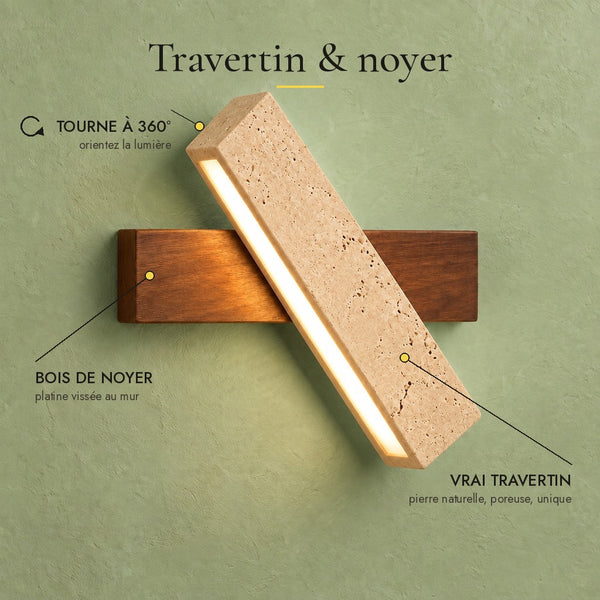
Travertine wall light for living room, natural stone, wabi-sabi
From £101.00
 Pendant lights
 Wall lights
 Inspiration