




Oak, walnut, pine, driftwood, bamboo: which wood for a light?
 By the Alméa team
7 min read
Sommaire
Oak, walnut, pine, driftwood or bamboo: which wood for a light? Each species has its own colour, grain, weight and way of ageing in the light. Here is a clear comparison, with tables, to choose the wood for your wall light, pendant light or ceiling light.
Wood warms up a room like no other material, but not all species behave the same way around a bulb. Solid oak does not give the same effect as pale pine, and driftwood has nothing in common with laminated bamboo. The right wood depends on the style you want, the room and the type of light.
Contents
- What matters when choosing a wood
- The big wood comparison table
- Oak: sturdy and timeless
- Walnut: deep and elegant
- Pine: pale, light and warm
- Driftwood: the one-off piece
- Bamboo: the odd one out that is not a wood
- Solid, veneered, oiled, varnished: the finishes
- Which wood for which room?
- Wood, heat and bulbs
- In short
- Frequently asked questions
1. Which wood for a light: the criteria that matter
Four criteria make the difference. Colour, which tints the reflected light: a pale wood returns a brighter light, a dark wood absorbs it. Grain, more or less pronounced, which gives character. Density, which affects weight and resistance to knocks. And finally stability in the face of changes in humidity and heat, essential for a piece that surrounds a light source.
For an overview of wall lights, our guide to the wooden wall light details styles and shapes.
2. The big comparison table: oak, walnut, pine, driftwood, bamboo

| Criterion | Oak | Walnut | Pine | Driftwood | Bamboo |
|---|---|---|---|---|---|
| Family | Hardwood | Medium hardwood | Softwood | Various species | Grass |
| Colour | Blond to honey | Veined chocolate brown | Creamy white to yellow | Silver grey, bleached | Straw blond |
| Grain | Pronounced, figured | Fine, wavy | Visible knots | Weathered, smooth | Parallel fibres, regular nodes |
| Density | High | Medium | Low | Variable | High when laminated |
| Ageing | Darkens towards honey | Warms up slightly | Yellows, turns amber | Stable once dry | Turns lighter |
| Effect on light | Warm, golden | Muted, intimate | Bright, luminous | Soft, natural | Light, graphic |
| Styles | Modern rustic, country | Mid-century, Japandi | Scandinavian, chalet | Seaside, boho | Japanese, Zen |
| Typical use | Arms, bases, beams | Wall lights, adjustable arms | Wall lights, light pendants | Chandeliers, sculptural pendants | Ceiling lights, woven slats |
3. Oak: sturdy and timeless
Oak is a dense, hard-wearing hardwood with a clearly visible grain. Its blond tone gently darkens towards honey over the years. It copes well with small knocks and handling, which makes it a good choice for wall light arms, bases and beam pendants. Rich in tannins, it turns black after prolonged contact with damp iron: the fixings must be protected.
It pairs naturally with stone, a duo explained in combining stone and wood in a room.
4. Walnut: deep, elegant and warm
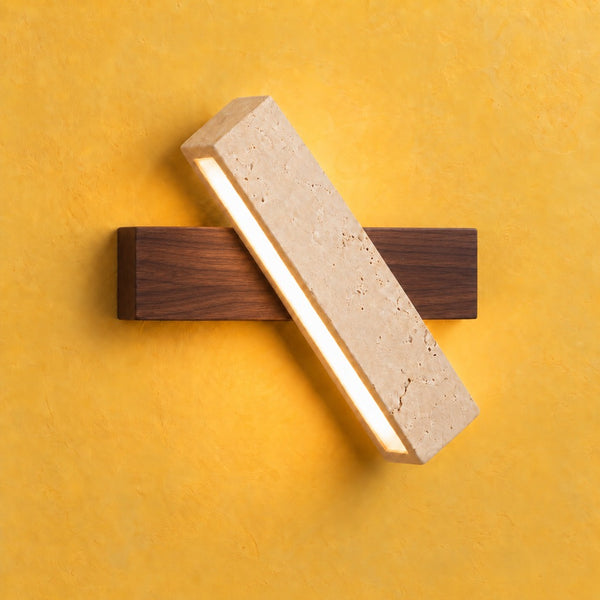
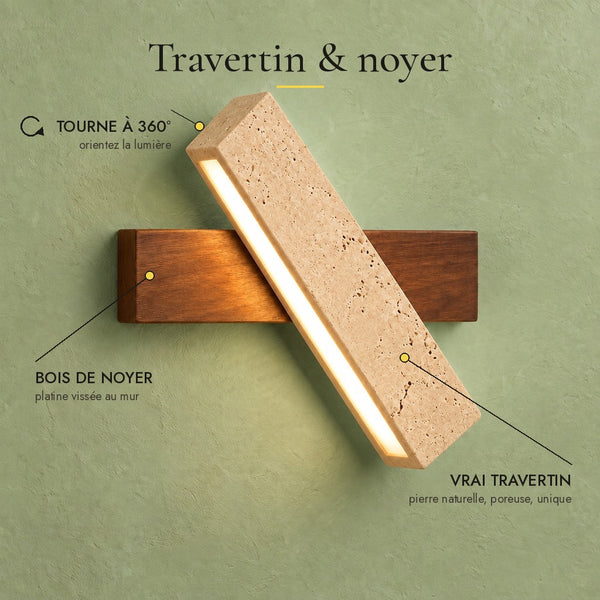
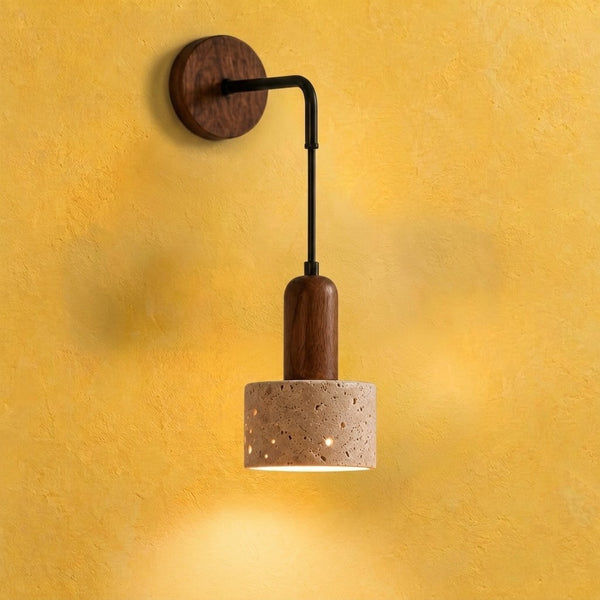
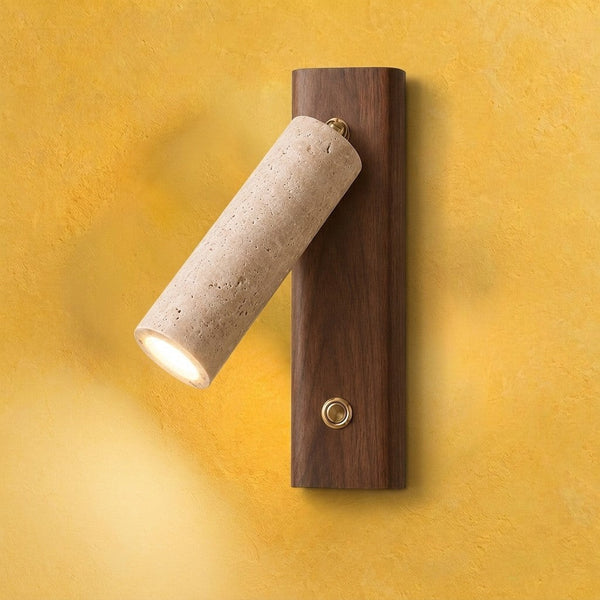
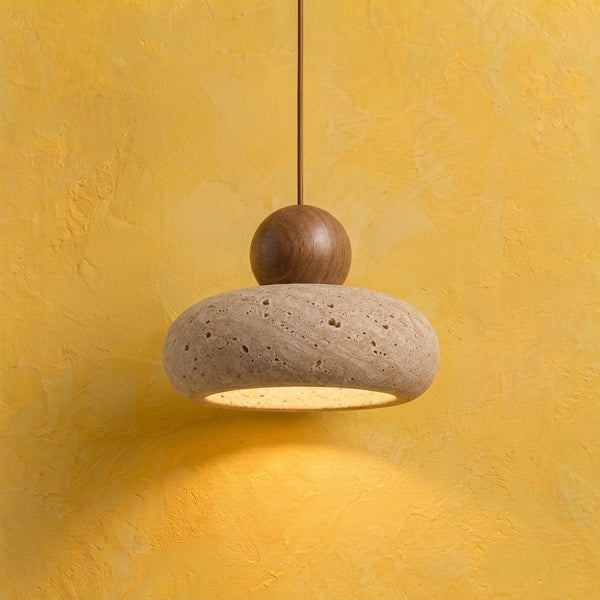
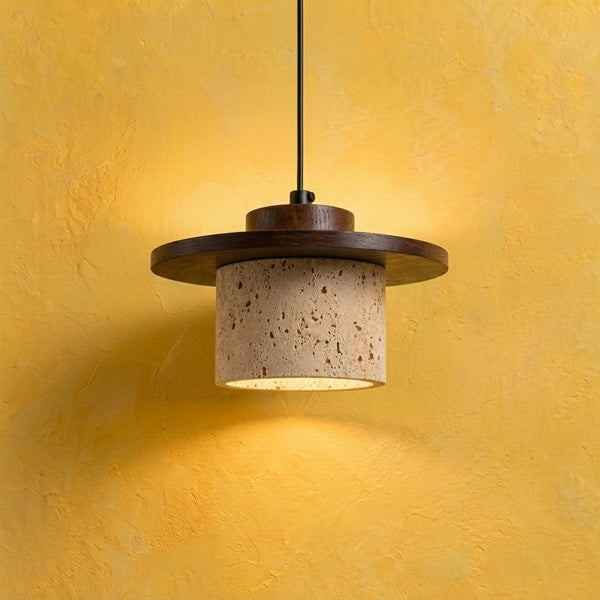
Walnut offers a veined chocolate brown, a fine grain and a silky feel. It is the wood of elegant mid-century or Japandi interiors. It absorbs more light than a pale wood: pair it with a well diffused light source, or with a pale material that reflects light, such as the travertine of our travertine and walnut wall light with adjustable head.
For pendant lights, our guide to the walnut and dark wood pendant light gives the right colour pairings.
5. Pine: pale, light and warm
A softwood, pine is light and easy to work. Its cream tone yellows over time and turns amber, and its knots add rustic charm. It is the signature wood of Scandinavian and chalet styles. Softer than oak, it dents easily: keep it for lights that are rarely handled.
Near a heat source, the knots can ooze a little resin: one more reason to use LEDs only. The atmosphere it creates is described in Scandinavian style, pale wood and warm light and chalet style.
6. Driftwood: the one-off piece
Driftwood is not a species but a state: branches rolled by the sea or rivers, polished and bleached by water and sun. Every light is unique, with shapes that cannot be reproduced. It must be thoroughly desalted and dried before use, otherwise it can split or mark the walls.

Its weight depends on the original species: a large chandelier can be heavier than it looks. Our guide to the driftwood pendant light covers dimensions and fixing.
Oak, walnut, pale or crackled wood: discover our wooden lights, for a warm and natural light.
Discover our wooden lights7. Bamboo: the odd one out that is not a wood
Botanically, bamboo is a grass, not a tree. It grows very fast and is worked in two ways: as thin woven slats, for openwork ceiling lights and shades, or as laminated board, dense and stable, for solid pieces. Its straw blond colour and regular nodes instantly evoke a Japanese feel.
Once glued or varnished, it is very stable when humidity changes. For its use in pendant lights, see our guide to the bamboo pendant light.

8. Solid, veneered, oiled, varnished: the finishes
| Finish | Look | Protection | Care |
|---|---|---|---|
| Raw | Very natural, matt | Low, prone to stains | Dry dusting |
| Oiled | Satin matt, grain brought out | Good, can be renewed | Oil every one to two years |
| Waxed | Soft, slightly glossy | Medium | Occasional waxing |
| Varnished | Satin or gloss | High, resists humidity | Damp, well wrung cloth |
| Crackled or aged | Patinated look | Depends on the top coat | Dry cloth |
Solid wood can be sanded and refinished; a veneer, a thin sheet of wood glued onto a backing, looks beautiful but cannot take deep sanding.
9. Which wood for which room?

| Room | Recommended wood | Why |
|---|---|---|
| Living room | Oak, walnut, driftwood | Character and presence |
| Bedroom | Walnut, pine, bamboo | Muted or soft atmosphere |
| Dining room | Oak, driftwood | Generous pendants above the table |
| Kitchen | Varnished oak, bamboo | Resists greasy vapours |
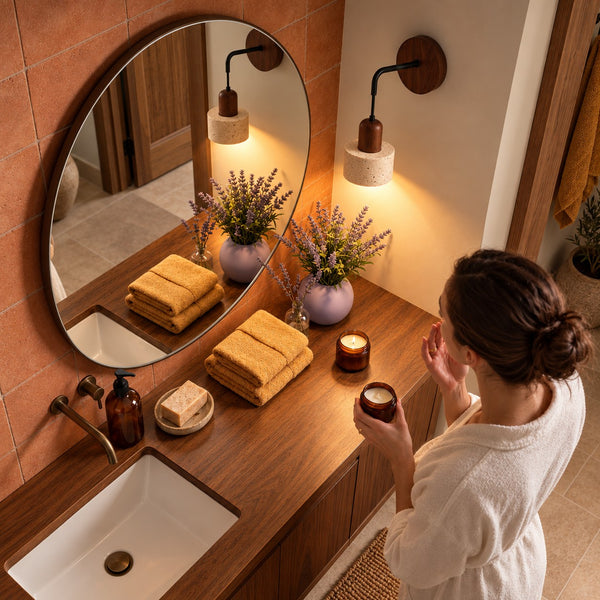
| Bathroom | Varnished bamboo or oak, outside the zones | Withstands humidity with the required IP rating |
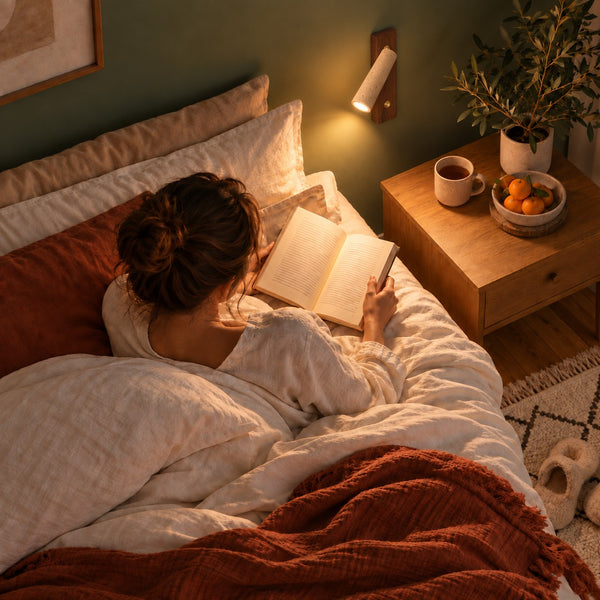
For a matching headboard, read wooden headboard and wall lights.
10. Wood, heat and bulbs: the safety rules
Wood is combustible and sensitive to heat, which dries it out and can split it. Use LED bulbs only, which give off little heat, in warm white 2700 to 3000 K to bring out the tones of the wood. Leave an air gap between the bulb and the wooden parts, and respect the maximum wattage stated by the manufacturer.
The detailed habits are in lights and heat: wood, rattan, paper and fabric.
A wooden wall light for a headboard, a hallway or a living room? Browse our models.
See our wooden wall lights11. In short
Oak for sturdiness and golden warmth, walnut for muted elegance, pine for brightness and a Scandinavian feel, driftwood for the one-off piece, bamboo for graphic lightness. Choose the species according to the light in the room, the finish according to the humidity, and always pair it with a warm white LED.
Frequently asked questions
Which wood should I choose for a pendant light?
There is no universal wood. Oak suits sturdy pendants, pine light models, woven bamboo openwork shapes. The weight and the style of the room guide the choice.
Can wood burn because of a bulb?
With a correctly rated LED, the risk is very low because it gives off little heat. Halogen or incandescent bulbs should never be used in a wooden light.
What is the difference between oak and walnut?
Oak is blond to honey, dense, with a pronounced grain. Walnut is chocolate brown, with a fine grain and a more elegant look. Oak brightens a room more, walnut makes it more intimate.
Is bamboo a wood?
No, it is a grass. Worked as laminated board, it behaves like a hard, stable wood; as woven slats, it is used for openwork shades and ceiling lights.
How do you look after a wooden light?
Dust it with a dry cloth or a soft brush, with the light switched off. Oiled wood is fed every one to two years; varnished wood is cleaned with a damp, well wrung cloth.
Can you put a wooden light in a bathroom?
Yes, outside the zones close to water, in a ventilated room, with varnished wood and a light that has a suitable IP rating.
Does pine yellow over time?
Yes, pine takes on an amber tone under the effect of light. A colourless UV-resistant finish slows this yellowing down without stopping it completely.
How do you prepare driftwood for a light?
It must be rinsed for a long time in fresh water to remove the salt, then dried for several weeks. Poorly dried wood can split or stain. For the electrical part, call a professional.
Our lights for your home
Stone, wood, metal, rattan: real materials. Free delivery across the UK, returns within 90 days.
 -36 %
Marble wall light for bedroom, natural stone, alabaster white
£110.00
 -38 %
Natural stone wall light for living room, ambient lighting
£101.00
 -42 %
Travertine wall light for bedroom, natural stone, retro
£129.00
 -38 %
Travertine wall light for living room, natural stone, wabi-sabi
From £101.00
 Inspiration
 Pendant lights
 Wall lights