



Wall lights in a child's bedroom: safety and atmosphere
 By the Alméa team
9 min read
Sommaire
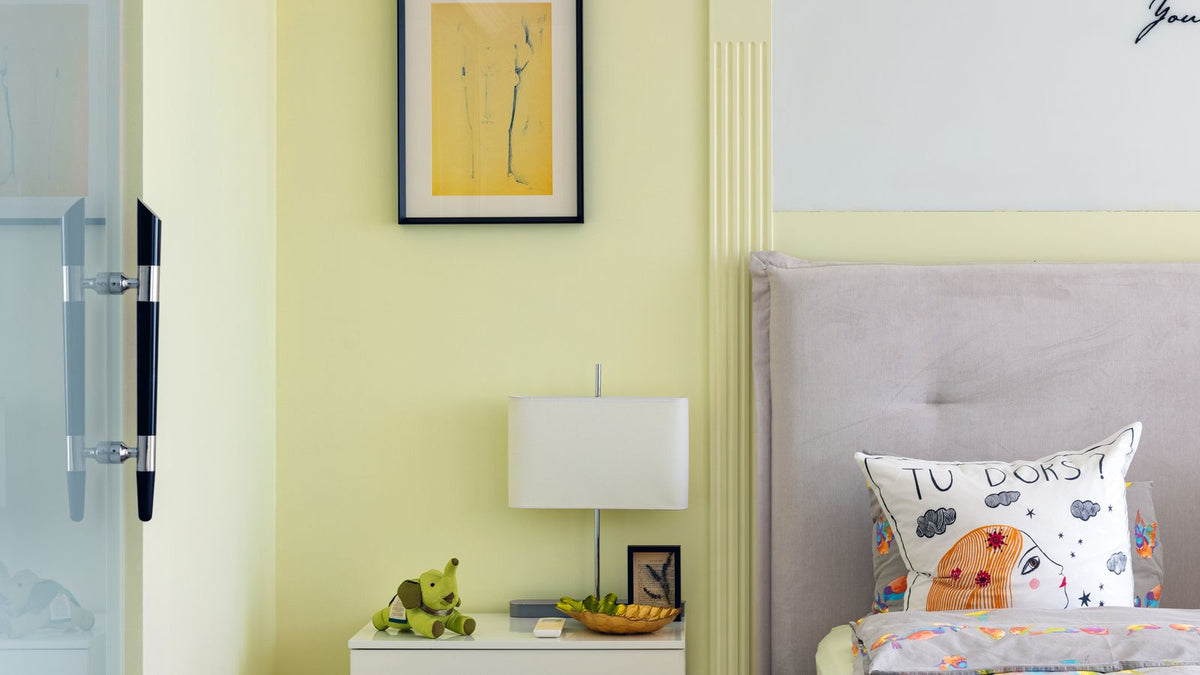
A wall light in a child's bedroom must be as safe as it is soft: firmly fixed, with no cable within reach, with a source that stays barely warm to the touch and a light that helps prepare for sleep. Here are the safety points to check one by one, followed by the settings that create a real evening atmosphere.
A child climbs, pulls, grabs, throws things and tests everything that sticks out. A light that is perfect for an adult's bedroom can become dangerous in theirs. Yet the wall light has real advantages: it frees up the bedside table, cannot be knocked over and can be placed out of reach.
For choosing the style and position in the room, our guide to the child's bedroom wall light covers everything. Here, we focus on safety, then on atmosphere.
Contents
- The specific risks in a child's bedroom
- Out of reach: the right heights
- A fixing that does not move
- No cable within reach
- LED: a source that stays barely warm
- Materials and shapes
- Switches and sockets
- Cordless and rechargeable wall lights
- A light that prepares for sleep
- Night light and reading
- In short
- Frequently asked questions
1. Wall lights in a child's bedroom: the risks to know
Four risks come up again and again: the light coming loose when the child hangs from it or knocks it, the cable they pull or get tangled in, the hot source they touch, and the small parts they take apart. Each of the choices below addresses one of these risks.
| Risk | Prevention |
|---|---|
| Light falling | Fixing suited to the wall, out of reach, not above the head of the cot |
| Cable pulled or wrapped | Cable recessed or in trunking, no dangling cord |
| Burns | LED, source enclosed in a diffuser |
| Small parts, breakage | Model with no removable parts, materials that do not shatter |
2. Out of reach: the right heights
The simplest rule is to place the wall light where the child cannot reach it, even standing on the bed. A three-year-old standing on a mattress can easily reach 1.40 m; a six-year-old, more than 1.60 m.

| Age | Recommended height for the bottom of the wall light | Note |
|---|---|---|
| Baby, cot | At least 1.80 m, never above the cot | Move the wall light to the side of the cot |
| 2 to 6 years | 1.70 to 1.90 m | Out of reach even standing on the bed |
| 7 to 11 years | 1.20 to 1.50 m for a reading light | The child can switch it on and adjust it alone |
| Bunk bed or cabin bed | Away from the rails and the climbing area | Never on the ladder or guard rail |
For the youngest children's rooms, see also our guide to lighting a nursery. For older children, our article on lighting a teenager's bedroom takes over.
3. A fixing that does not move
A wall light in a child's bedroom must withstand a ball, a thrown soft toy and sometimes a hand grabbing hold of it. The backplate must be fixed with wall plugs suited to the wall, with at least two fixing points, and must have no play once tightened.
- Plasterboard: metal cavity anchors, or screwing into a stud. See the right fixing for plasterboard.
- Brick or concrete: nylon plugs of the right diameter, screws of the right gauge.
- Heavy wall light: reinforcement behind the plasterboard, as explained in reinforcing a plasterboard wall before fitting.
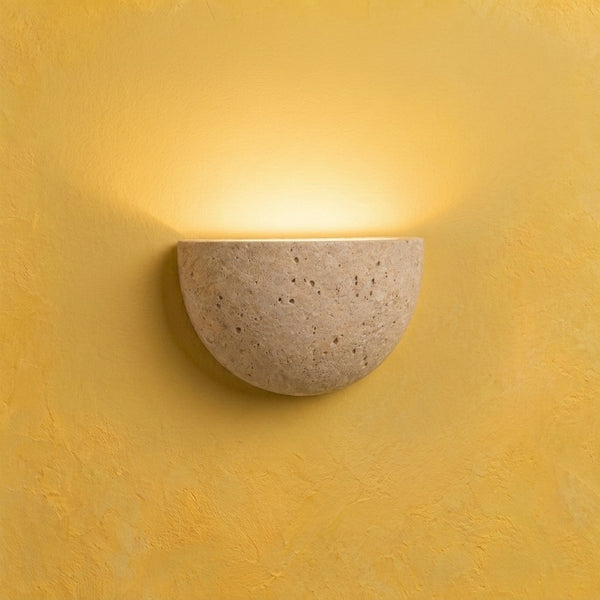
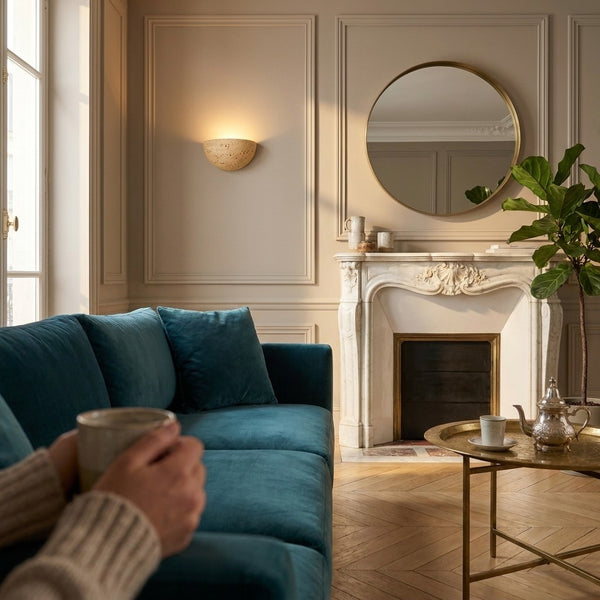
A stone wall light can quite happily go in a child's bedroom, as long as it is firmly fixed, out of reach and never above the head of the bed. The weight of stone does change the fitting; our article on the weight of a stone wall light details the precautions.
4. No cable within reach
A dangling cable is both a risk of the light being yanked down and a strangulation risk for a young child. In a child's bedroom, the cable must disappear: a recessed cable outlet in the right place, or trunking screwed to the wall up to a height that is out of reach.
Also beware of pull-cord switches or dangling switches near a cot. If the wall light is a plug-in model, run the cable in trunking and place the socket behind a heavy piece of furniture. Our 7 tips for hiding a wall light cable give all the solutions.
5. LED: a source that stays barely warm to the touch
An incandescent or halogen bulb quickly reaches a temperature that burns skin. An LED converts far more energy into light and far less into heat: for the same light output, its surface stays barely warm. It is now the only sensible choice in a child's bedroom.
Choose an LED enclosed in a diffuser, a shade or a closed body, rather than a bare bulb. If a wall light feels hot to the touch, read our article is it normal for a wall light to get hot?. For electrical safety, a Class II double-insulated light is a real plus; see Class I and Class II.
LED wall lights with a soft glow, for a safe and cosy bedroom.
Discover our wall lights6. Materials and shapes to favour
In a child's bedroom, favour rounded shapes with no sharp edges or points, and materials that do not shatter: wood, metal, acrylic, fabric. Thin glass is best avoided within reach. Also avoid models with small removable parts, such as drops or decorative beads.

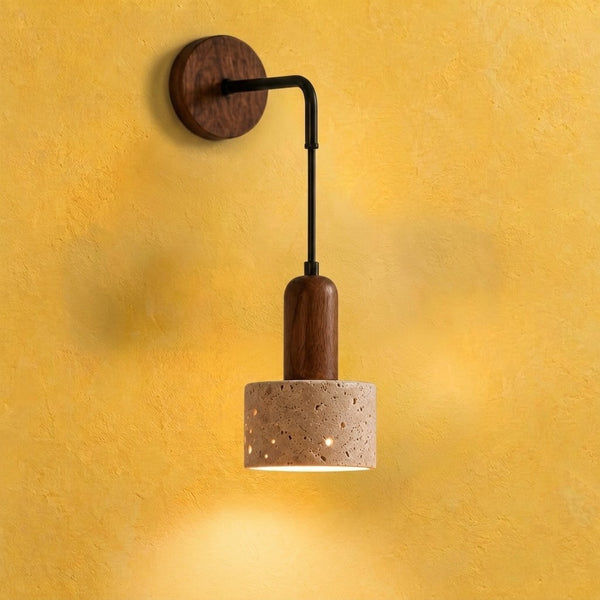
Wood is an excellent choice: warm, light and sturdy. Our round Nordic-style wooden wall light shows the kind of soft shapes that suit a child's bedroom well.
7. Switches and sockets
The wall light switch should be within the child's reach as soon as they are old enough to use it, at around 90 to 110 cm from the floor, near the door or the bed. That way they do not climb to reach the light. All the heights are in our article on switches and sockets near a wall light.
Standard UK sockets have built-in shutters: check that those in the bedroom are in good condition, especially if you plug in a wall light.

8. Cordless and rechargeable wall lights
A cordless wall light avoids building work and removes any cable. In return, it contains a battery and often comes off its bracket to be charged. In a child's bedroom, it must therefore be fixed out of reach, on a bracket that cannot be removed in one movement, and charged by an adult. Its limits are detailed in cordless wall lights.
9. A light that prepares for sleep
Evening light affects falling asleep: a warm, low light tells the body the day is ending, a cool, bright light keeps it awake. Our article on light and sleep goes into this in more detail.

| Moment | Output | Colour temperature |
|---|---|---|
| Playing, getting dressed | 300 to 500 lumens | 2700 to 3000 K |
| Bedtime story | 150 to 300 lumens | 2700 K |
| Night light | A few lumens up to 20 lumens | 2200 K or less, amber |
A dimmer lets you move from one moment to the next with a single wall light. Check its compatibility with the LED to avoid flicker; see wall lights and dimmers.
10. Night light and reading corner
Many children sleep better with a little light. A very low-intensity wall light, aimed at the wall or ceiling, reassures without lighting the face. Place it away from the bed rather than above it, so that it acts as a guide towards the door at night.
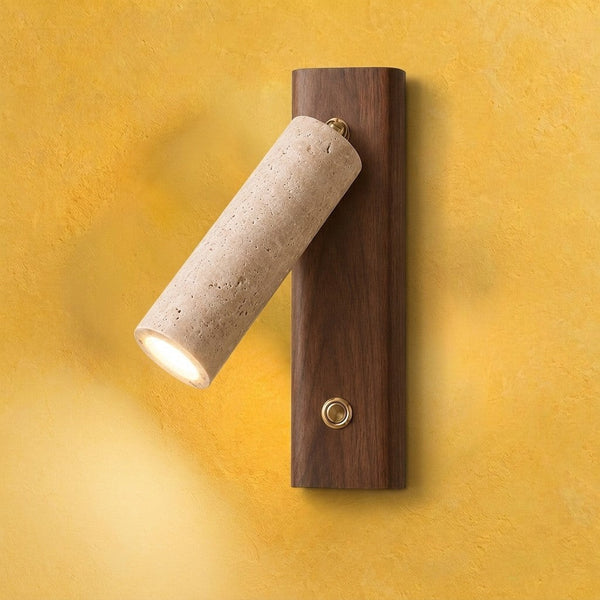
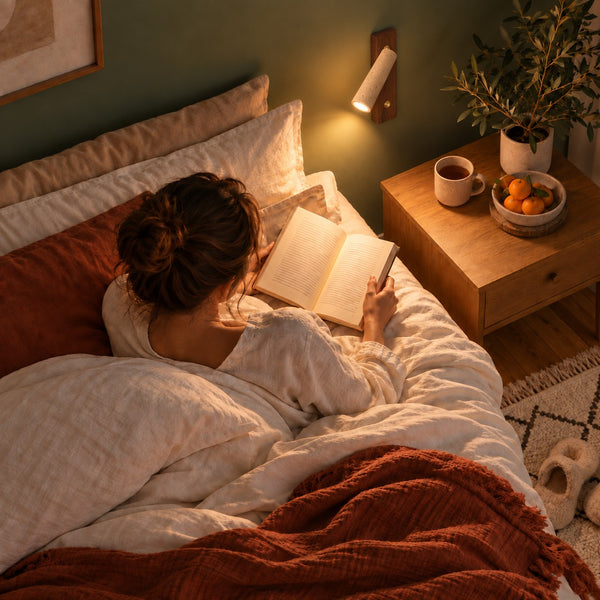
From around seven or eight, a reading light near the bed becomes useful: a beam aimed at the book, 250 to 400 lumens, an adjustable head the child sets alone. See our advice on creating a reading corner.
Simple shapes and soft lines for a bedroom that grows with the child.
See the modern and design collection11. In short
In a child's bedroom, the wall light goes out of reach, never above a cot, with a fixing suited to the wall and no accessible cable. Choose an enclosed LED that stays barely warm, rounded shapes and materials that do not shatter. For atmosphere, a dimmable warm white and an amber night light see the child through to sleep.
Frequently asked questions
At what height should a wall light go in a child's bedroom?
Between 1.70 and 1.90 m for a child aged 2 to 6, so that they cannot reach it standing on their bed. For an older child, a reading light can come down to around 1.20 to 1.50 m.
Can you put a wall light above a baby's cot?
It is best avoided: a falling object or a cable within reach is a risk. Move the wall light to the side of the cot, at least 1.80 m from the floor.
Does an LED wall light get hot?
Very little: for the same light, an LED produces much less heat than a standard bulb and its surface stays barely warm. It is the right choice for a child's bedroom.
Which colour temperature for a child's bedroom?
2700 to 3000 K during the day, 2700 K for the bedtime story and 2200 K or less for the night light. Cool light should be avoided in the evening.
How do you hide a wall light cable in a child's bedroom?
Recess it into the wall or run it in screwed-on trunking up to a height that is out of reach. No cord should dangle near the bed.
Is a cordless wall light suitable for a child's bedroom?
Yes, if it is fixed out of reach on a bracket that cannot easily be removed, and charged by an adult. It removes any cable.
Which wall light for reading in bed as a child?
A reading light with an adjustable head, 250 to 400 lumens, in warm white, that the child can switch on and adjust alone. From around seven or eight years old.
Is a stone wall light dangerous in a child's bedroom?
No, if it is firmly fixed with wall plugs suited to its weight, out of reach and never above the head of the bed. Simply avoid areas where the child climbs.
Our lights for your home
Stone, wood, metal, rattan: real materials. Free delivery across the UK, returns within 90 days.
 -36 %
Marble wall light for bedroom, natural stone, alabaster white
£110.00
 -38 %
Natural stone wall light for living room, ambient lighting
£101.00
 -42 %
Travertine wall light for bedroom, natural stone, retro
£129.00
 -38 %
Travertine wall light for living room, natural stone, wabi-sabi
From £101.00
 Wall lights
 Wall lights
 Wall lights