




Wall light above a door: front door, garage, interior
 By the Alméa team
9 min read
Sommaire
A wall light above a door lights the doorstep, the lock and the face of whoever is coming in, while making the house easy to spot in the evening. Front door, garage door or interior door: the height, IP protection and output change in each case. Here are the guidelines for choosing and placing it well.
Above a door, the wall light works in a tight space: little height between the lintel and the ceiling or eaves, a door that sweeps the space, and often rain. This guide goes through the three most common situations, with the useful figures for each.
Contents
1. Wall light above or beside a door?
A wall light centred above a door is the clearest solution: a single, symmetrical point of light that lights the doorstep evenly. It suits single doors and clear lintels. Side wall lights, one or two at face height, light the lock and the face better but need space on either side.
| Layout | When to choose it | Watch out for |
|---|---|---|
| One wall light above | Single door, canopy, little side space | Possible shadow on the lock if the light is too high |
| One wall light beside | Clear space on the lock side, doorbell to light | Place it on the handle side |
| Two wall lights, one each side | Wide door, double door, symmetrical outside wall | About 30 cm of clear space needed on each side |
For a whole outside wall, our guide to the exterior wall light helps you spread the light points.
2. The fitting height above the door
A standard door is about 2.04 to 2.15 m high. The wall light is generally fixed with its bottom 10 to 20 cm above the lintel, so between 2.15 and 2.40 m from the ground. Higher, it lights the tops of heads and leaves the lock in shadow; lower, it gets in the way of the door or of a canopy.

Indoors, the constraint comes from the ceiling: with a 2.50 m ceiling and a 2.04 m door, about forty centimetres remain. A low, flat wall light leaving at least 15 cm below the ceiling is then the answer. Our article on the distance between a wall light and the ceiling gives the other guidelines.
3. Above an outside front door
This is the most common case. The wall light has three jobs: finding the lock, recognising a visitor and marking the entrance from the street. So you need light directed downwards, which lights the doorstep and steps without dazzling the person waiting at the door.
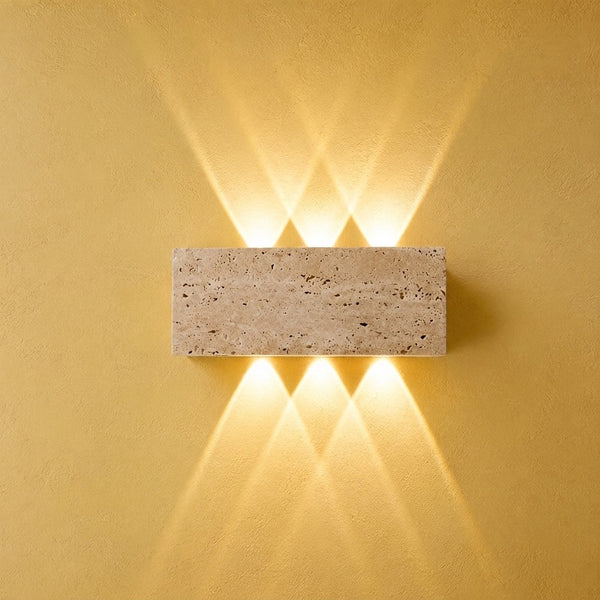
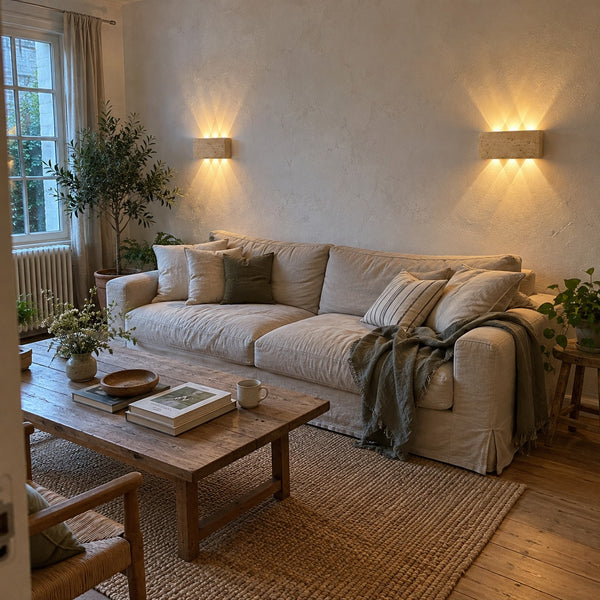
Downlight models, or double-beam models shining up and down, work particularly well on an outside wall: they draw a line of light on the wall while lighting the ground. See our article on the up and down wall light. If the path from the street is long, add lighting for the gate and the path, as detailed in lighting a gate and a house entrance.
4. Which IP rating for a wall light above an outside door
Outdoors, the protection rating determines how long the wall light lasts. The second digit of the IP rating shows its resistance to water.
| Situation | Recommended minimum rating |
|---|---|
| Door under a deep canopy or enclosed porch | IP44 |
| Door under small eaves | IP54 |
| Door in an outside wall exposed to driving rain | IP65 |
| Interior door, dry room | IP20 |
These guidelines are explained in our article to understand IP ratings. A natural stone wall light placed outdoors also needs a little attention in winter; see how to protect a stone wall light from frost.
Wall lights with a warm glow to welcome you right from the doorstep, inside and out.
Discover our wall lights5. Above a garage door
A garage door is wider, often 2.40 to 3 m, and taller. A wall light centred above it lights the manoeuvring area and lets you see the door as it rises. It is fixed 20 to 30 cm above the door panel, checking the space taken by the rail and housing if the door is sectional or roller.
For a door over 3 m, two wall lights on either side light the corners and the drive better. The output goes up: 800 to 1,500 lumens in total, with a motion sensor so you do not have to look for a switch from the driving seat. Our guide to the garage wall light also covers the inside of the garage.
6. Above an interior door and in a hallway
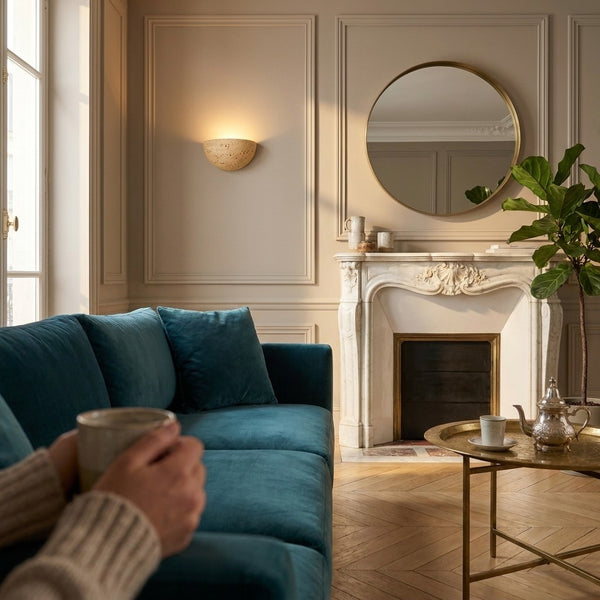
Indoors, a wall light above a door mainly serves as a visual marker: at the end of a hallway, above the door of a bedroom or study, it creates a perspective and avoids a dark tunnel. Choose a flat model with less than 10 cm projection, with indirect light towards the ceiling or a double beam.

In a narrow hallway, a wall light above each door creates a regular rhythm, more elegant than a row of spotlights. See our advice on lighting a narrow, dark hallway and on spacing wall lights in a row.
7. Output and colour of light
| Door | Recommended output | Colour temperature |
|---|---|---|
| Interior door, hallway | 200 to 400 lumens | 2700 to 3000 K |
| Outside front door | 400 to 800 lumens | 2700 to 3000 K |
| Garage door | 800 to 1,500 lumens | 3000 to 4000 K |
| French window onto a terrace | 300 to 600 lumens | 2700 to 3000 K |
At a front door, warm white remains the most welcoming and the most discreet for the neighbours. A very powerful, cool light dazzles the visitor and flattens the outside wall. Our guide to the outdoor LED wall light details the outputs for each use.

8. Motion sensor, timer or switch
Above a front door or garage door, a motion sensor is often the best choice: the light comes on as you approach, with no need to look for a switch in the dark, then switches itself off. Set the detection zone on the path rather than the street, to avoid it being triggered by every passer-by. All the advice is in wall lights with a motion sensor.
For ambient light in the evening, an indoor switch or a timer is preferable. Some models combine a low night-light mode with full power when someone passes.
9. Size and style of the wall light
Size is judged in relation to the door: a wall light above a single door is about a third to half of its width, or 25 to 45 cm for a 90 cm door. A wall light that is too small disappears on the outside wall, especially seen from the street.

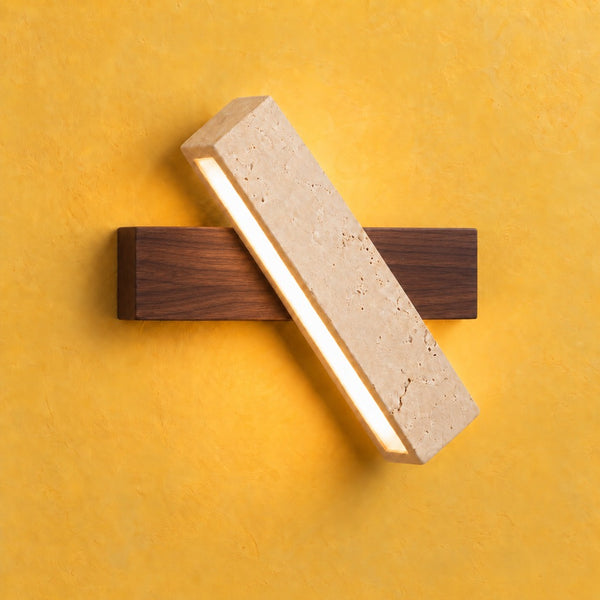
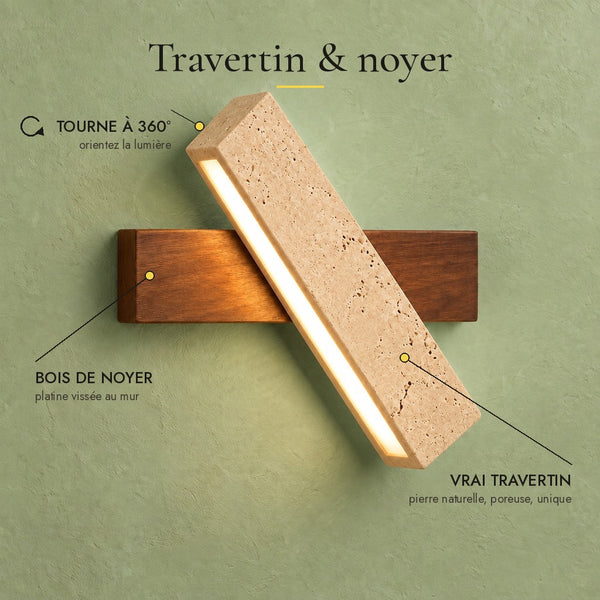
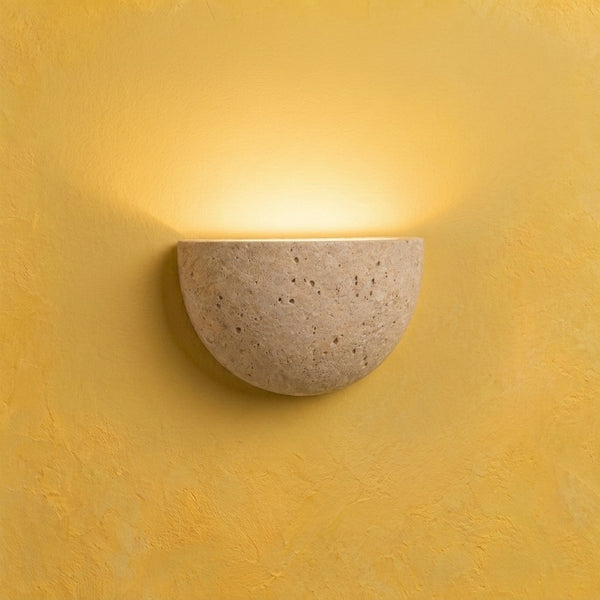
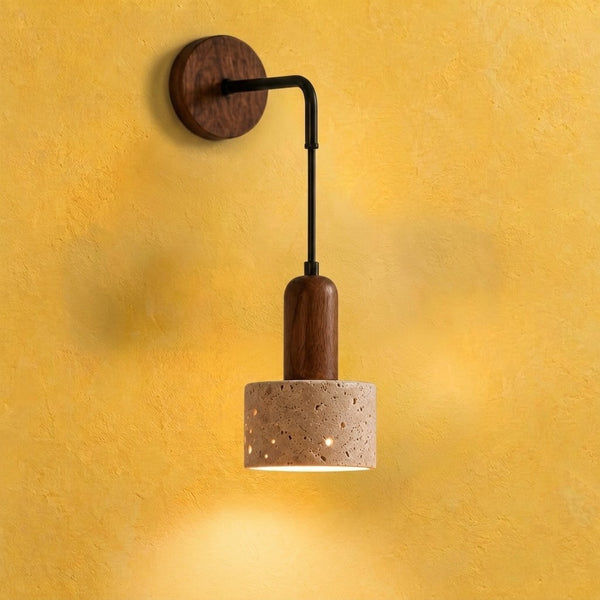
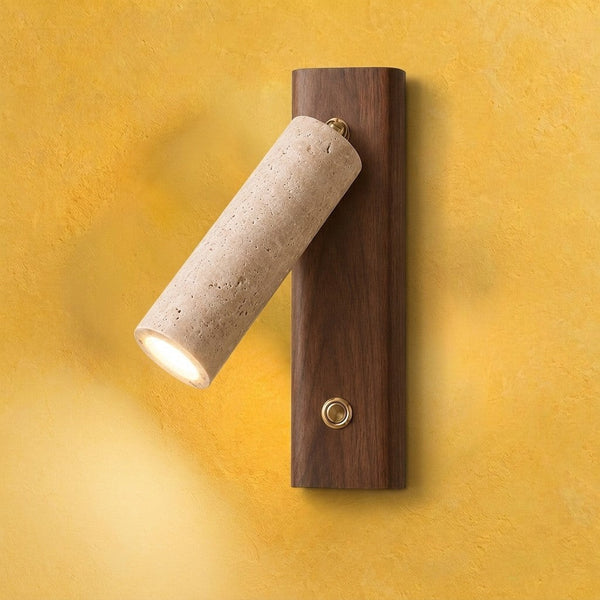
In terms of style, the wall light should work with the door and the outside wall: black metal with anthracite joinery, natural stone with pale render or a stone frontage. Our guide to modern or traditional outdoor wall lights helps you decide. Our travertine wall light with an 18 W LED bar, designed for indoor and outdoor use, shows the pairing of stone and entrance well.
10. Fixing and weatherproofing on an outside wall
Above an outside door, water runs down the wall. Bring the cable in through the bottom of the housing, never the top, and leave a small drip loop. A bead of silicone along the top and sides of the backplate, leaving the bottom open, stops water getting trapped behind it. The details are in weatherproofing and fixing on an outside wall.
The texture of stone under grazing light: a welcome like no other.
See our stone and travertine lights11. In short
A wall light above a door is fixed 10 to 20 cm above the lintel, and 20 to 30 cm above a garage door. Outdoors, aim for IP44 under a canopy and IP65 on an exposed outside wall, 400 to 800 lumens in warm white at the entrance, and a motion sensor for everyday access points. Indoors, a flat, discreet model acts as a marker in the hallway.
Frequently asked questions
At what height should a wall light go above a front door?
The bottom of the wall light goes 10 to 20 cm above the lintel, or about 2.15 to 2.40 m from the ground for a standard door. Check that a canopy or shutter does not get in the way.
Which IP rating for a wall light above an outside door?
IP44 at least under a deep canopy, IP54 under small eaves and IP65 if the door is exposed to driving rain.
Is it better to have a wall light above or beside the door?
Above, it lights the doorstep symmetrically. Beside it, on the handle side, it lights the lock and the face better. Two side wall lights suit wide doors.
How many lumens to light a front door?
Between 400 and 800 lumens is enough, in warm white. Any more dazzles visitors without helping you see better.
Which wall light above a garage door?
A wall light with 800 to 1,500 lumens in total, an IP rating suited to the exposure, fixed 20 to 30 cm above the door panel, ideally with a motion sensor.
Can you put a wall light above an interior door?
Yes, it is a lovely way to create a marker in a hallway. Choose a flat model with less than 10 cm projection and keep 15 cm below the ceiling.
Do you need a motion sensor above the front door?
It is very handy for coming home with your hands full and keeping energy use down. Set the detection on the path to avoid it being triggered from the street.
Is a solar wall light above a door a good idea?
It helps out with no building work, but how long it runs depends on sunlight, which is often low under a canopy or on a north-facing wall. See our article on the solar wall light.
Our lights for your home
Stone, wood, metal, rattan: real materials. Free delivery across the UK, returns within 90 days.
 -36 %
Marble wall light for bedroom, natural stone, alabaster white
£110.00
 -38 %
Natural stone wall light for living room, ambient lighting
£101.00
 -42 %
Travertine wall light for bedroom, natural stone, retro
£129.00
 -38 %
Travertine wall light for living room, natural stone, wabi-sabi
From £101.00
 Wall lights
 Pendant lights
 Pendant lights