




Living room pendant light: the rules for successful lighting
 By the Alméa team
9 min read
Sommaire
A successful living room pendant light follows a few simple rules: light an area rather than the whole room, choose between one pendant and several, respect the right heights and never dazzle anyone on the sofa. Here are those rules, with figures, for lighting the seating area with one or more pendant lights.
The living room is where you spend most of your waking hours at home, and where lighting shows the most. A pendant that is badly placed, hung too high or too bright is enough to make the room feel cold. Set up well, it gives the space structure and becomes the centrepiece of the decor.
For choosing the model, style and diameter of a chandelier, our living room chandelier guide covers everything. Here, we focus on positioning above the seating area.
Contents
- Light an area, not a room
- One pendant or several
- Centre on the seating area
- The right heights for each area
- Above the coffee table
- Multiple pendants: spacing and alignment
- Cluster or multi-light pendant
- The right output
- Never dazzle from the sofa
- Coordinating pendant, wall lights and lamps
- In short
- Frequently asked questions
1. Living room pendant light: light an area, not a room
The first rule for a living room pendant is to know what it is lighting. In an open-plan living space, there are often three areas: the seating area around the sofa, the dining area and the kitchen. A single pendant in the geometric centre lights none of them properly.
The living room pendant therefore belongs to the seating area: the sofa, the armchairs and the coffee table. The other areas get their own light. This zoning approach is at the heart of our living room lighting plan and our guide to lighting a kitchen open to the living room.
2. One pendant or several
The choice depends on the size of the seating area, its shape and the ceiling height.

| Situation | Recommended solution | Why |
|---|---|---|
| Compact seating area, straight sofa | A single pendant | One point is enough to give the area structure |
| Corner sofa or large seating area | One large pendant or two medium ones | Cover a wider area |
| Long, narrow living room | Two or three pendants in a row | Follow the shape of the room |
| High ceiling, double height | Cluster or very large pendant | Fill the volume without disappearing |
| Ceiling under 2.40 m | Short pendant or ceiling light | Keep the walkway clear |
A single pendant creates a strong focal point, ideal in a medium-sized living room. Multiple pendants spread the light better and suit large spaces. For high ceilings, our guide to the large pendant light gives the right dimensions.
3. Centre on the seating area
The original light point is rarely in the right place: it is in the centre of the room, whereas the seating area is often against a wall or in front of a window. Centre the pendant on the coffee table, or failing that on the middle of the space defined by the sofa and armchairs.
If the light point is not in the right place, a ceiling hook and an offset cable let you move it without building work, as you would above a table with an offset chandelier. And if your living room has no central light point at all, our article on the pendant above a sofa presents the solutions.
4. The right heights for each area
The height of a living room pendant depends on what is below it. The safety rule does not change: where people walk, the bottom of the light stays at least 2.10 m from the floor. Every case is covered in our article on pendant light height.
| Area below the pendant | Height of the bottom of the light |
|---|---|
| Walkway | 2.10 m minimum from the floor |
| Centre of the living room, ceiling of 2.70 m or more | 2.20 to 2.40 m from the floor |
| Above a coffee table | 1.40 to 1.60 m from the floor |
| Next to a reading armchair | 1.40 to 1.50 m from the floor, slightly behind the head |
5. Above the coffee table
The coffee table is the most interesting spot for a living room pendant: nobody walks over it, so you can lower the light much further than in a walkway. The light moves closer to the people sitting down and creates a warm island, like a lamp placed in the middle of the group.
Choose a diameter between half and two thirds of the width of the coffee table, and a shape that directs the light downwards so it does not shine in people's eyes. A dome or closed shade works better than a clear globe.
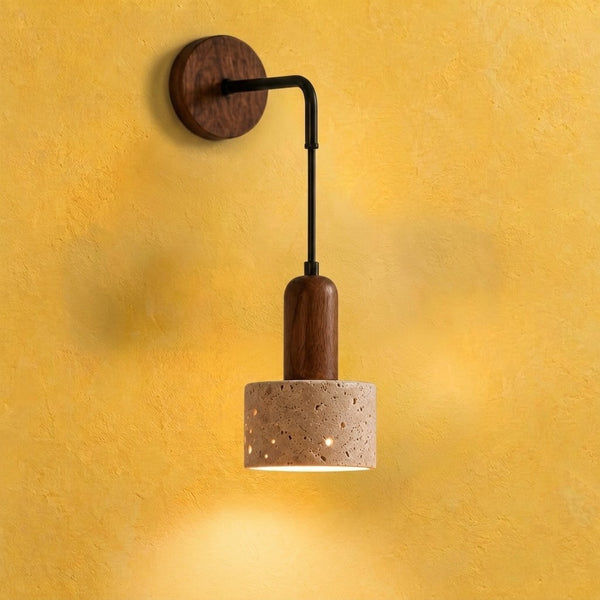
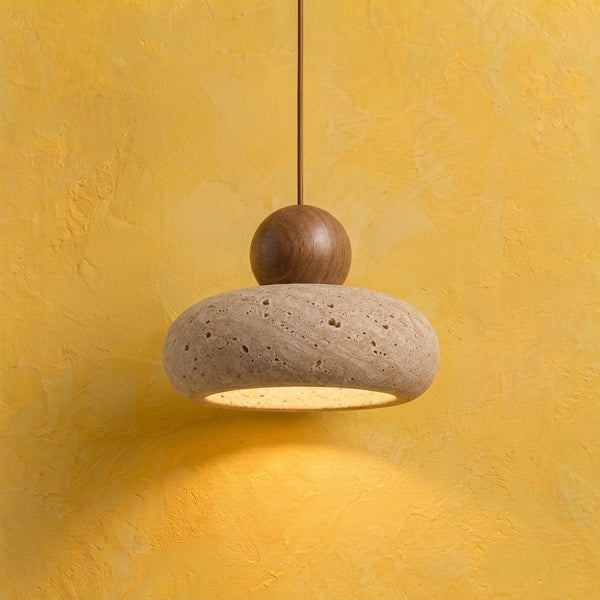
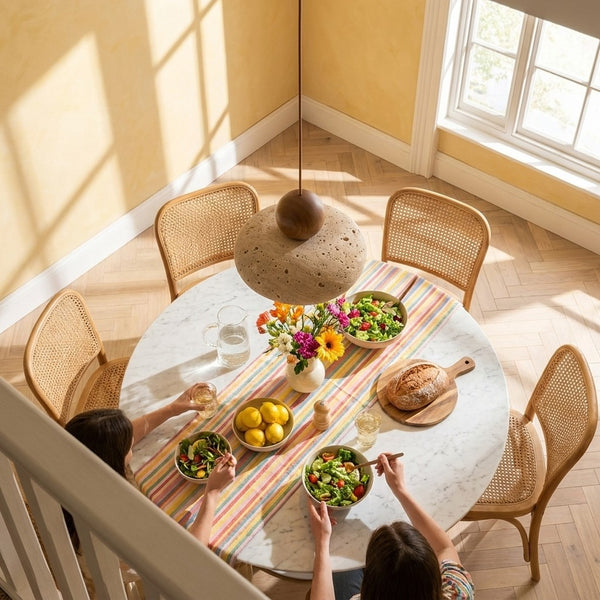
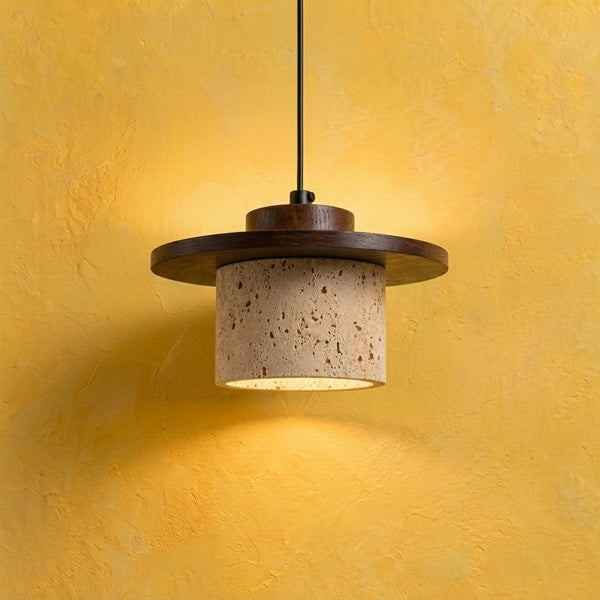
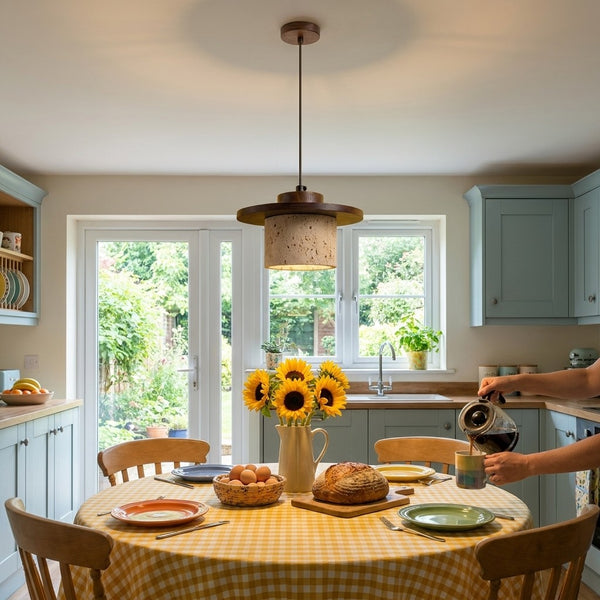
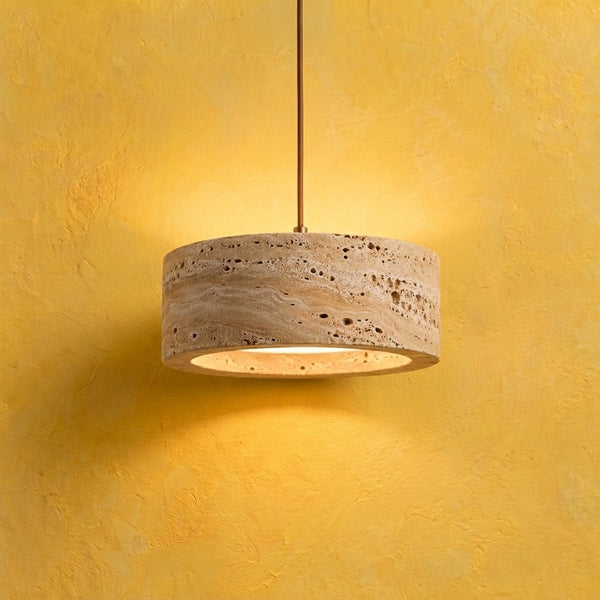
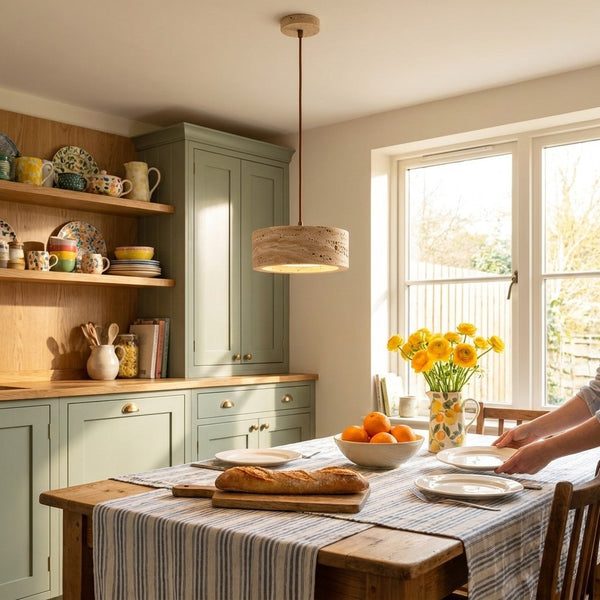
Travertine, rattan, wood or black metal: a well placed pendant above the seating area becomes the highlight of the room.
Discover our pendant lights6. Multiple pendants: spacing and alignment
When you line up several pendants above a large sofa or in a long living room, three rules avoid a cluttered look.

| Rule | Guideline |
|---|---|
| Spacing between two pendants | At least one light's diameter between the edges, often 60 to 90 cm between centres |
| Margin at the ends | About 30 to 40 cm between the last pendant and the end of the sofa or table |
| Alignment | On the axis of the sofa or coffee table, not the axis of the room |
| Height | The same for all in a row, varied by 10 to 20 cm in a cluster |
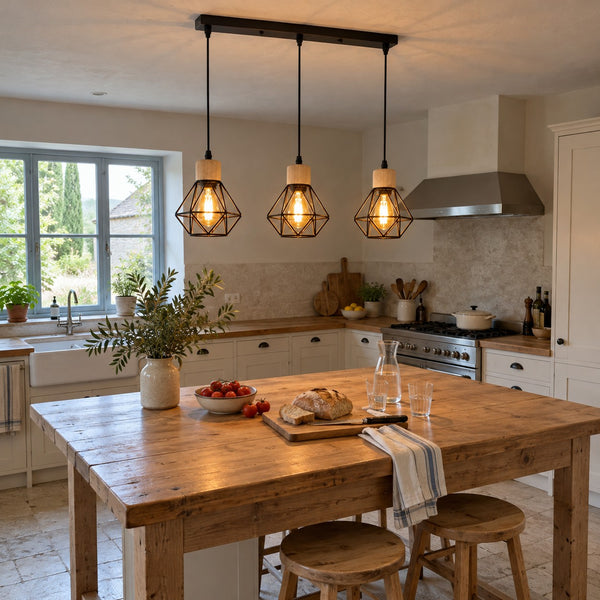
Two identical pendants give a calm, symmetrical effect; three give more rhythm. Beyond that, choose a bar or a multi-light pendant: our guide to the 3-light pendant and multi-light pendant compares these formats.
7. Cluster or multi-light pendant
A cluster, several pendants at different heights grouped at the same point, is ideal under a high ceiling or in a corner of the living room. It fills the volume without feeling heavy. A multi-light pendant, on the other hand, keeps a single fixing point and a single supply cable, which makes fitting easier.
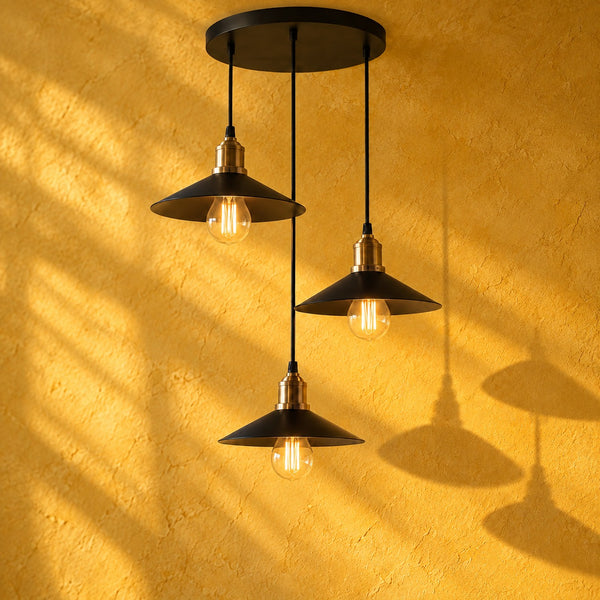
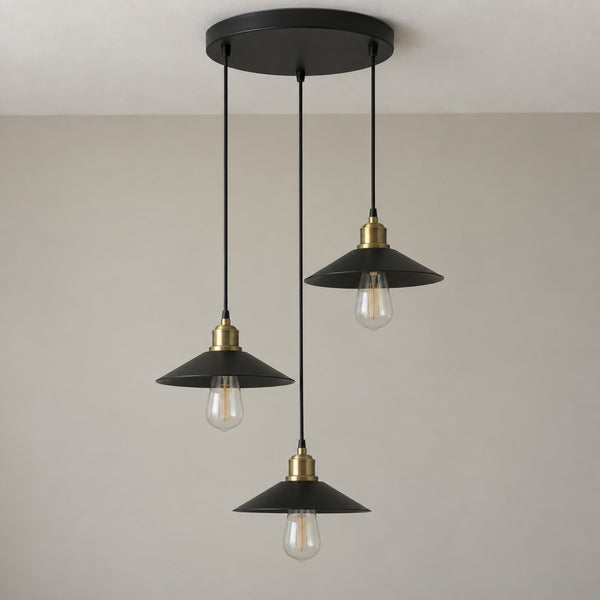
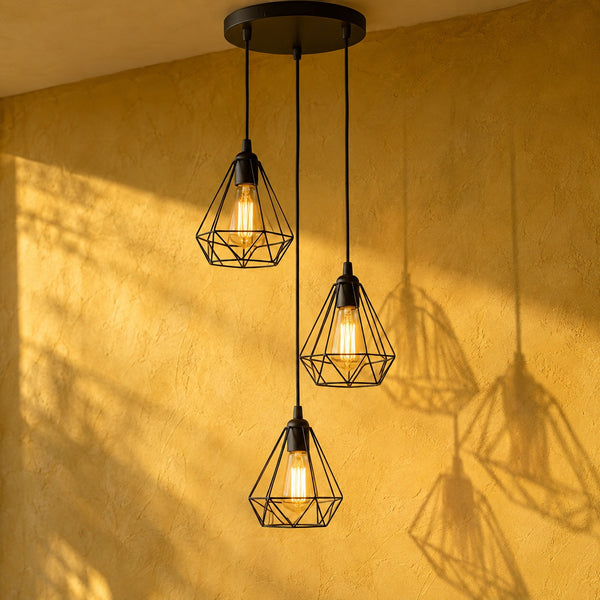
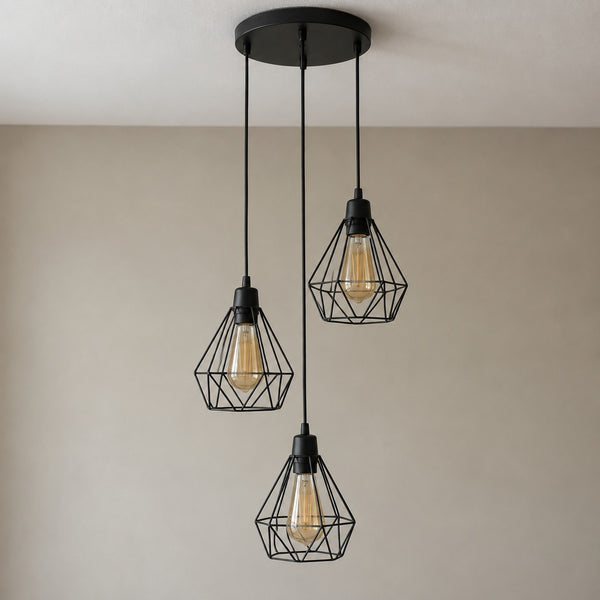
Our three-light chandeliers, such as the 3-light diamond-shaped black iron chandelier, illustrate this graphic approach. A multi-light metal model weighs more than a fibre dome: check the fixing with the help of our article on fixing a heavy chandelier to the ceiling.

8. The right output
For the general light in a living room, allow 100 to 150 lumens per m², all sources combined. The pendant often provides half of that, the rest coming from wall lights and lamps. For a 20 m² seating area, that means 1,000 to 1,500 lumens for the pendant, spread over one or more bulbs.
Stick to a warm white of 2,700 to 3,000 K, and plan a dimmer: the same living room needs to work for an evening with friends and for a film in soft light.
9. Never dazzle from the sofa
A living room pendant is looked at from a seated position, often from less than two metres away. A bulb visible from the sofa quickly becomes tiring. Three solutions:

- a shade or dome that hides the source from below;
- opal or low-luminance bulbs if the bulbs remain visible;
- a height set from a seated position, not a standing one.
Our article on glare (UGR) explains why this criterion matters as much as output.
10. Coordinating pendant, wall lights and lamps
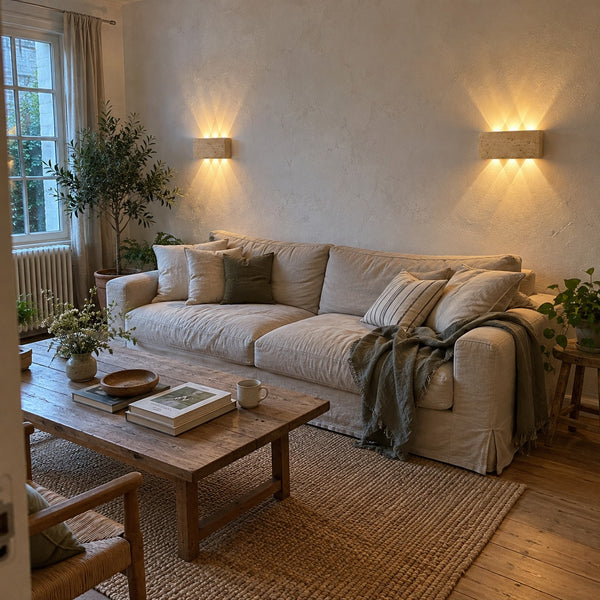
A pendant should never be alone in a living room. Wall lights on the side walls and a lamp near the sofa create several levels of light, which gives the room depth. Our article how many wall lights in a living room helps you size this addition.
For harmony, repeat a material or finish: the stone of the pendant echoed on a wall light, black metal on a lamp base.
Pendants with clean lines, for a contemporary living room and controlled light.
Discover our modern and design collection11. In short
A living room pendant lights the seating area, not the whole room. Single in a medium-sized living room, multiple in a large space or a long living room, it is centred on the coffee table or the sofa. In a walkway, its bottom stays at 2.10 m; above the coffee table, it comes down to about 1.40 to 1.60 m. Space multiple pendants at least one diameter apart, hide the source and add wall lights.
Frequently asked questions
Where should a pendant go in a living room?
Above the seating area, centred on the coffee table or on the space defined by the sofa and armchairs, not in the geometric centre of the room. An offset cable lets you move it if the light point is badly placed.
At what height should a light hang above a coffee table?
The bottom of the light is generally between 1.40 and 1.60 m from the floor. Nobody walks over the coffee table, so the 2.10 m rule does not apply.
One or several pendants in a living room?
One in a medium-sized living room, for a strong focal point. Two or three in a row in a long living room or above a large corner sofa.
What spacing between two pendants in a living room?
Leave at least one light's diameter between the edges, often 60 to 90 cm between centres. Keep a margin of 30 to 40 cm at the ends of the sofa or table.
How many lumens for a living room pendant?
For a 20 m² seating area, 1,000 to 1,500 lumens for the pendant, with the rest of the 100 to 150 lumens per m² coming from wall lights and lamps.
Can you hang a pendant above a sofa?
Yes, as long as you keep to 2.10 m if people walk behind it, and do not place the source right above people's heads. A slight shift towards the coffee table is often more comfortable.
How do you avoid glare from a pendant?
Choose a model that hides the bulb from below, opal bulbs, and set the height from a seated position. A dimmer also lets you lower the brightness in the evening.
Which pendant for a low living room ceiling?
Under 2.40 m, a short pendant above the coffee table, where nobody walks, or a ceiling light. Avoid long pendants in walkways.
Our lights for your home
Stone, wood, metal, rattan: real materials. Free delivery across the UK, returns within 90 days.
 -8 %
Travertine pendant light for living room, Japanese wabi-sabi, stone Ø 15 cm
£141.00
 -21 %
Travertine and wood pendant light for living room and dining room, Ø 20 cm
£141.00
 -25 %
Yellow travertine pendant light for living room, natural stone Ø 20 cm
£154.00
 3-light pendant light for living room, black metal, vintage, E27 fitting
£73.00
 Pendant lights
 Pendant lights
 Pendant lights