




Integrated LED, LED bulb, halogen, filament: home light sources compared
 By the Alméa team
8 min read
Sommaire
Integrated LED, LED bulb, halogen or filament: this comparison of home light sources puts energy use, lifespan, colour rendering, heat and atmosphere side by side. Everything you need to choose the right technology for each light, without getting it wrong.
On a product sheet, the light source often fits on one line: “integrated LED”, “E27 fitting”, “bulb not included”. Yet this choice determines your electricity bill, the quality of the light and the lifespan of your light fitting. Here are the practical guidelines, with a big comparison table and advice room by room.
Contents
- The four light sources in brief
- The big comparison table
- Integrated LED: the light and its source are one
- LED bulbs: the freedom to change
- Halogen: a technology on its way out
- Filament: retro charm, in LED
- Wattage equivalents
- Colour rendering, colour temperature and dimmers
- Which light source for which room?
- In short
- Frequently asked questions
1. The four home light sources in brief
An integrated LED is a light module built into the fitting, with no bulb to screw in. An LED bulb screws or clips into a lampholder (E27, E14, G9, GU10) and is replaced like a standard bulb. Halogen is an improved incandescent bulb, very hot and power-hungry. Finally, filament today mainly refers to the LED bulb with visible filaments, which imitates old bulbs while using LED levels of energy.
To decode the units used in this article, keep our lumens, watts and kelvins decoder to hand.
2. The big light source comparison table

| Criterion | Integrated LED | LED bulb | Halogen | LED filament |
|---|---|---|---|---|
| Efficiency | Very high | High, 80 to 150 lm/W | Low, 15 to 20 lm/W | High, often 100 lm/W or more |
| Wattage for 806 lm | Depends on the model | 6 to 8 W | About 42 W | 6 to 7 W |
| Stated lifespan | High, tied to the fitting | 15,000 to 25,000 h | About 2,000 h | 10,000 to 15,000 h |
| Heat given off | Low, dissipated by the housing | Low | Very high | Low |
| Colour rendering (CRI) | 80 to 90 and above | 80 to 90 and above | 100 | 80 to 90 |
| Replacement | Rarely possible | Instant | Instant | Instant |
| Dimming | Depends on the driver | If marked dimmable | Always | If marked dimmable |
| Strength | Slim design, controlled light | Versatility | Perfect colour rendering | Visible retro look |
These values are typical orders of magnitude: always check the bulb label or the light's product sheet.
3. Integrated LED: the light and its source are one
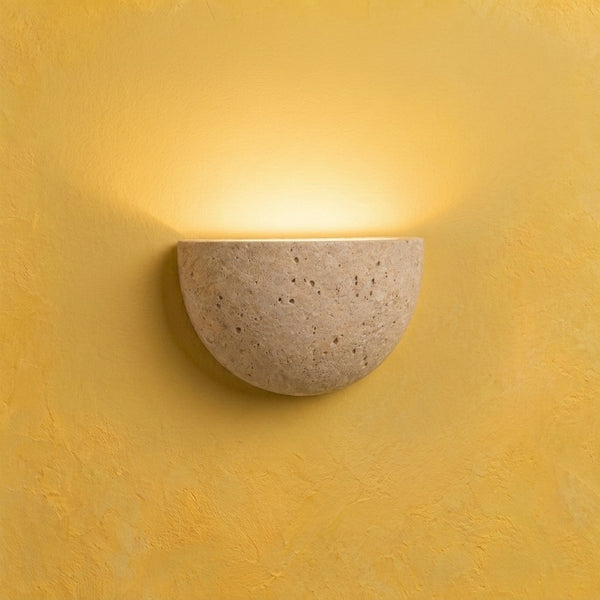
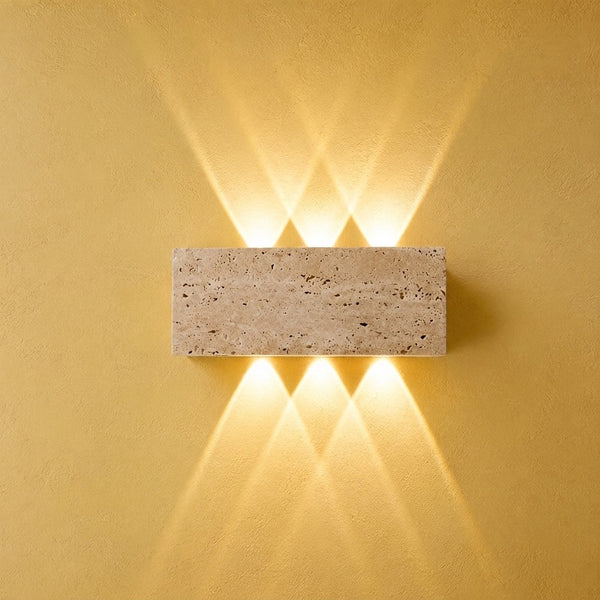
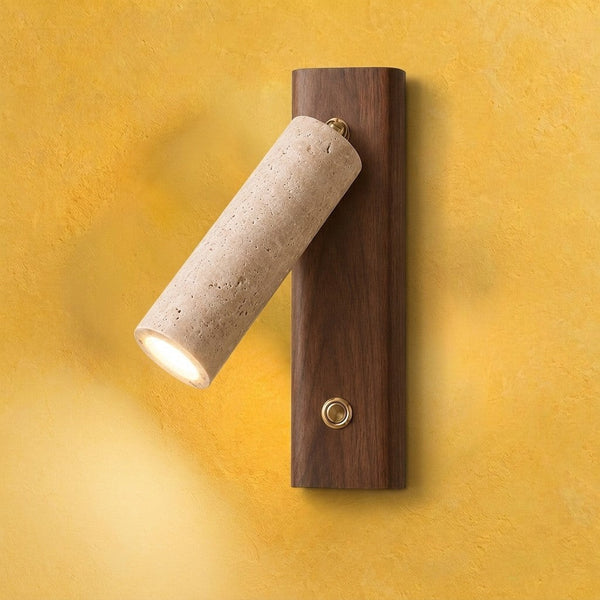
With an integrated LED, the light is designed at the same time as the fitting. That is what makes very slim wall lights, light bars, up-and-down lighting and shapes that would be impossible with a bulb. The housing, often metal, dissipates the heat, which protects the lifespan of the diodes.
The downside: when the module or its driver wears out, you do not change a bulb, you repair or replace the light. The pros and cons are detailed in integrated LED or replaceable bulb.
4. LED bulbs: the freedom to change
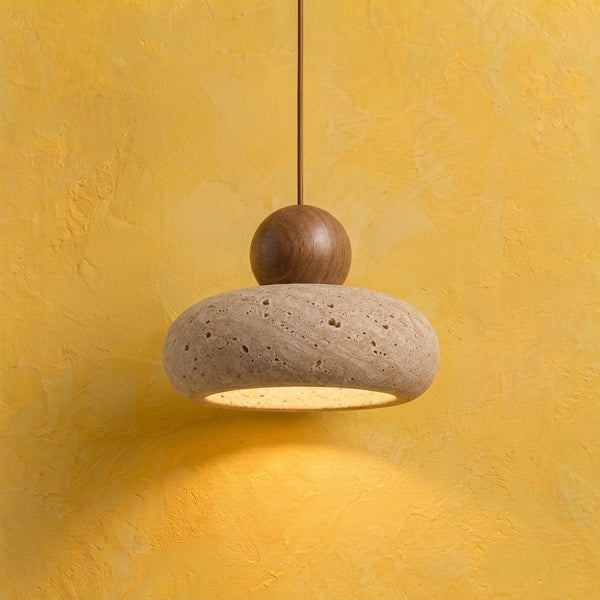
The LED bulb fits a standard lampholder. You choose the output, the colour temperature and the shape, and you can change everything in a few seconds. It is the most flexible solution for pendant lights and wall lights with a lampholder, and the easiest to maintain over the long term.
The bulb base must match the lampholder: our guide GU10, E27, E14, G9 helps you avoid mistakes. For an E27 fitting, our warm white E27 LED bulbs suit most wall lights and pendant lights.
5. Halogen: a technology on its way out
Halogen produces light with perfect colour rendering, but with very low efficiency: most of the energy is lost as heat. In the European Union, most halogen bulbs can no longer be placed on the market: standard models since 2018, and most remaining formats, such as G9 capsules, since 2023. The UK has followed a similar path since 2021. Some stock is still around, but replacing them with LEDs is cheaper to run and safer.
Their heat makes them particularly unsuitable in rattan, wood, paper or fabric shades.
6. Filament: retro charm, in LED
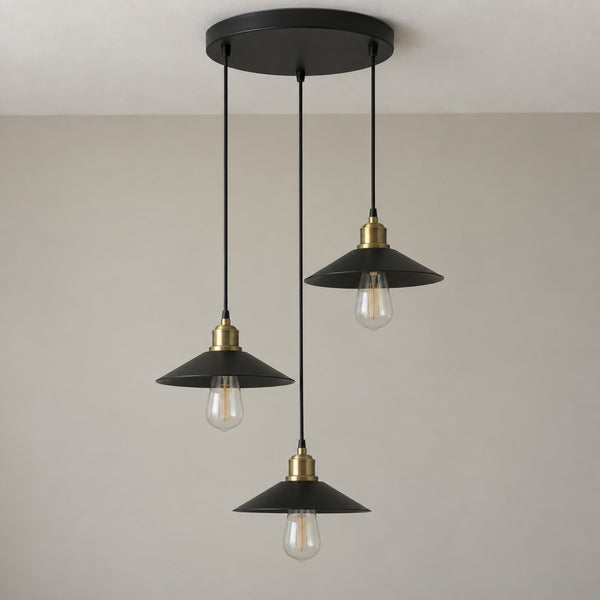
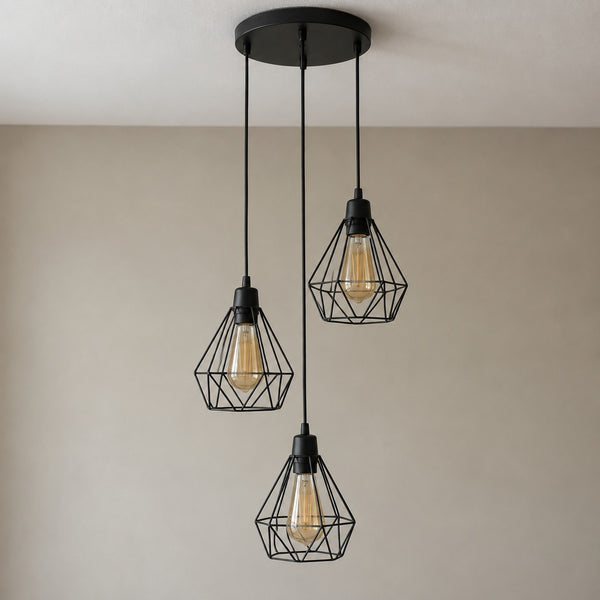
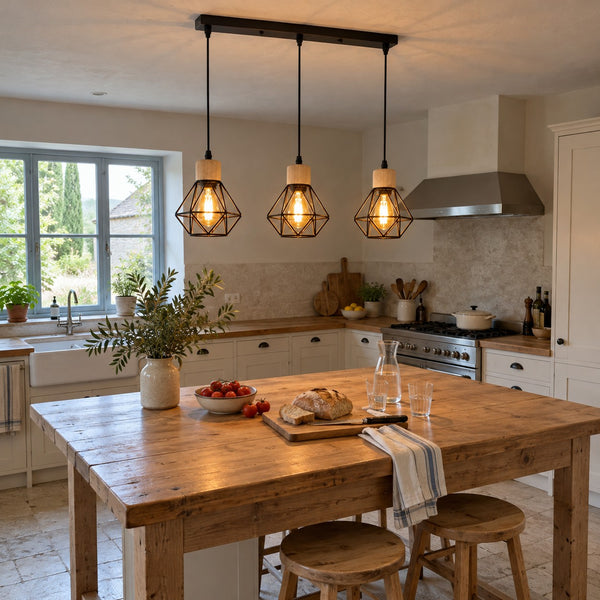
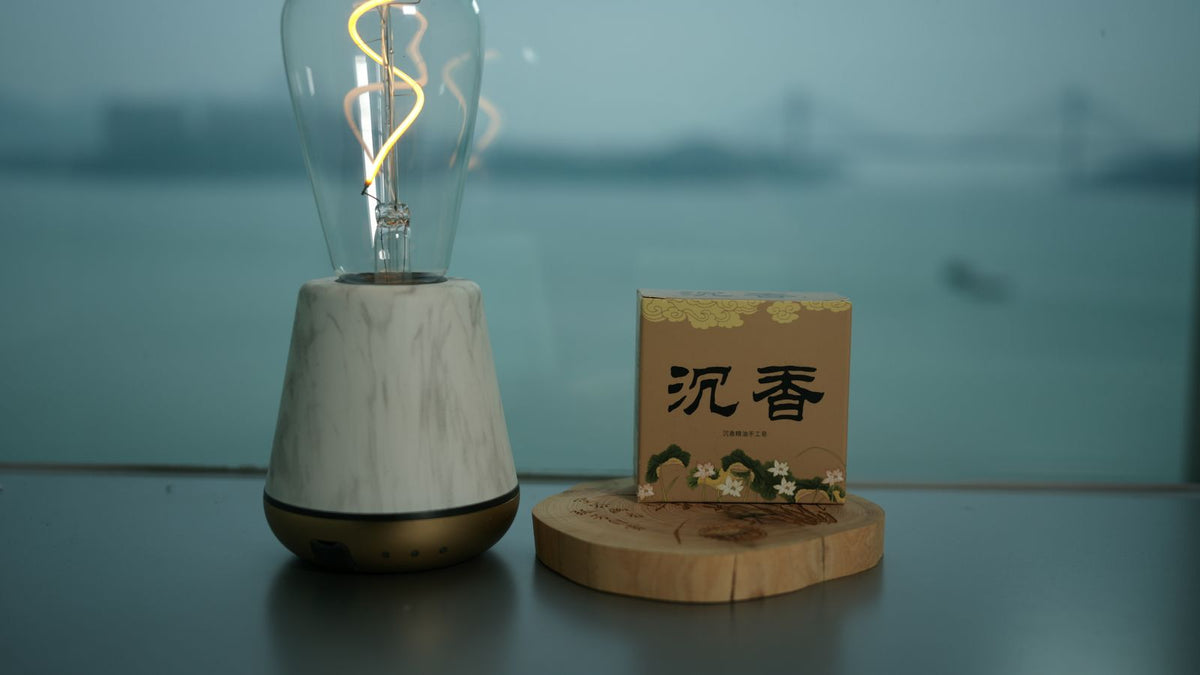
The carbon or tungsten filament bulbs of the past have left the shelves for general lighting. LED filament bulbs take up their look: thin glowing rods visible through clear or amber glass, with LED energy use. They are ideal in pendants with a visible bulb and in industrial-style chandeliers.

Often offered in very warm white, around 2200 to 2700 K, they create a muted atmosphere. Everything is explained in LED filament bulbs: retro charm without the energy bill, and globe, tube or giant shapes in our article on decorative bulbs.
LED bars, clean shapes, up and down light: discover our modern design lights.
Discover our modern and design lights
7. Wattage equivalents between light sources
Today we think in lumens, not watts. Here are the usual equivalents for replacing an old bulb.
| Luminous flux | Old incandescent | Halogen | LED |
|---|---|---|---|
| 250 lm | 25 W | 18 W | 2 to 3 W |
| 470 lm | 40 W | 28 W | 4 to 5 W |
| 806 lm | 60 W | 42 W | 6 to 8 W |
| 1,055 lm | 75 W | 53 W | 9 to 10 W |
| 1,521 lm | 100 W | 70 W | 11 to 14 W |
A simple example: a wall light on for 3 hours a day with a 60 W bulb uses about 66 kWh a year; with a 7 W LED, about 8 kWh. To find out more, see how much energy an LED wall light really uses.
8. Colour rendering, colour temperature and dimmers
CRI measures how faithfully colours appear under a light, out of 100. Halogen reaches 100; a good LED exceeds 90, a standard LED is around 80. For a kitchen or a bathroom mirror, aim for a CRI of 90 or more. Our article on CRI explains why.
As for colour temperature, 2700 K gives a warm, intimate light, 3000 K a crisper warm white, 4000 K a neutral white for work areas. If you want to vary the brightness, check for the word dimmable: an LED not designed for it flickers or buzzes on a dimmer. See dimmable bulbs: how to tell.
9. Which light source for which room?

| Room | Recommended source | Colour temperature and guideline |
|---|---|---|
| Living room | LED or filament bulb, integrated LED for wall lights | 2700 K, dimmable |
| Bedroom | Dimmable LED bulb | 2700 K, moderate output |
| Kitchen | Integrated LED under units, LED bulb in the pendant | 3000 K, CRI 90 and above |
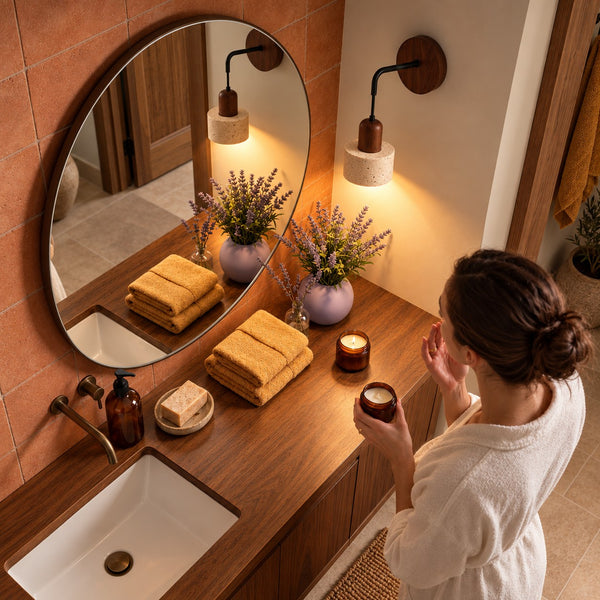
| Bathroom | Integrated LED with the required IP rating | 3000 to 4000 K, CRI 90 and above |
| Outdoors | Waterproof integrated LED | 2700 to 3000 K |
To get the brightness right, our guide how many lumens per room gives the recommended values.
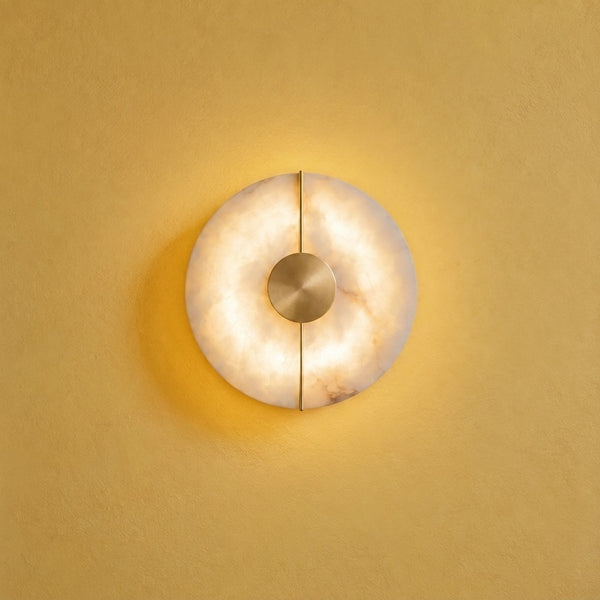
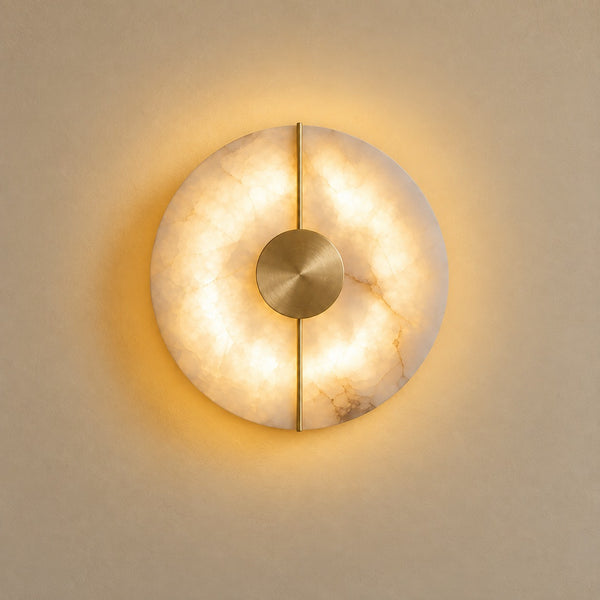
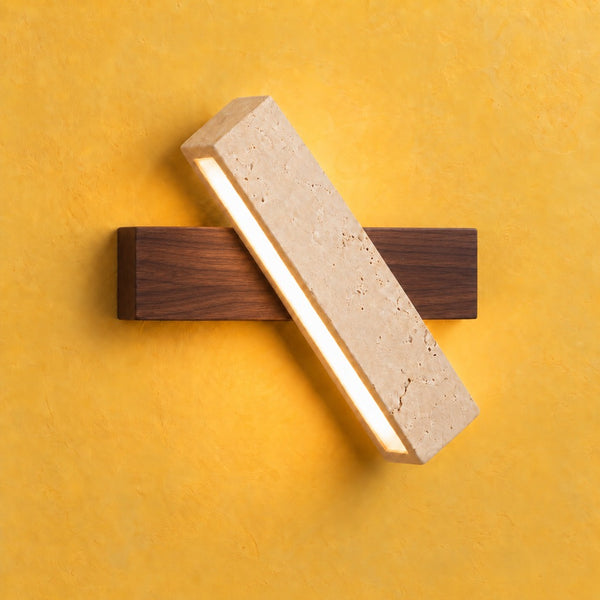
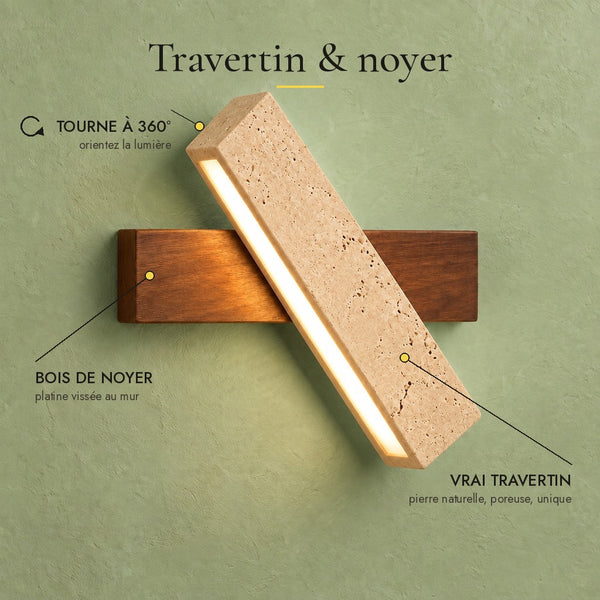
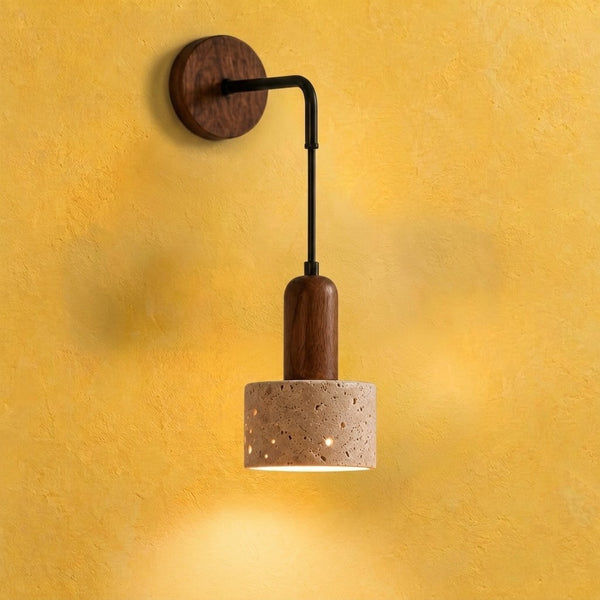
Integrated LED or E27 fitting, in stone, wood or metal: find the wall light that suits you.
See all our wall lights10. In short
Integrated LED offers the slimmest designs and controlled light, the LED bulb the freedom to change everything, the LED filament retro charm without the energy use. Halogen is disappearing: replace it with an LED of equivalent output. Then choose the colour temperature, CRI and dimmer compatibility to suit the room.
Frequently asked questions
What is the difference between an integrated LED and an LED bulb?
The integrated LED is built into the light and cannot be changed like a bulb. The LED bulb screws into a lampholder and can be replaced in seconds. The first allows slimmer shapes, the second more freedom.
How many LED watts replace a 60 W bulb?
An LED of 6 to 8 W, or about 806 lumens, replaces an old 60 W bulb. Go by the lumens shown on the packaging rather than the watts.
Are halogen bulbs banned?
In the European Union, most can no longer be placed on the market, in stages since 2018, and the UK has applied similar rules since 2021. Remaining stock may still be sold, but LEDs are cheaper to run and give off much less heat.
Does a filament bulb use a lot of electricity?
No, if it is an LED filament bulb: it uses as much as a standard LED, about 6 to 7 W for 806 lumens. Only the old incandescent filament bulbs used a lot.
How long does an LED last?
Manufacturers often state 15,000 to 25,000 hours for an LED bulb. The actual lifespan depends on heat: an LED enclosed in a poorly ventilated light ages faster.
Which light source for a bathroom?
An integrated LED or an LED bulb in a light with the IP rating required for the zone, with a CRI of 90 or more near the mirror and a colour temperature of 3000 to 4000 K.
Can you use an LED with a dimmer?
Yes, if the bulb is marked dimmable and the dimmer is LED compatible. Otherwise, the bulb may flicker, buzz or wear out prematurely.
Does halogen give nicer light than LED?
Halogen has perfect colour rendering. A quality LED with a CRI of 90 or more at 2700 K comes very close, for much lower energy use.
Our lights for your home
Stone, wood, metal, rattan: real materials. Free delivery across the UK, returns within 90 days.
 -36 %
Marble wall light for bedroom, natural stone, alabaster white
£110.00
 -38 %
Natural stone wall light for living room, ambient lighting
£101.00
 -42 %
Travertine wall light for bedroom, natural stone, retro
£129.00
 -38 %
Travertine wall light for living room, natural stone, wabi-sabi
From £101.00
 Materials
 Materials
 Wall lights